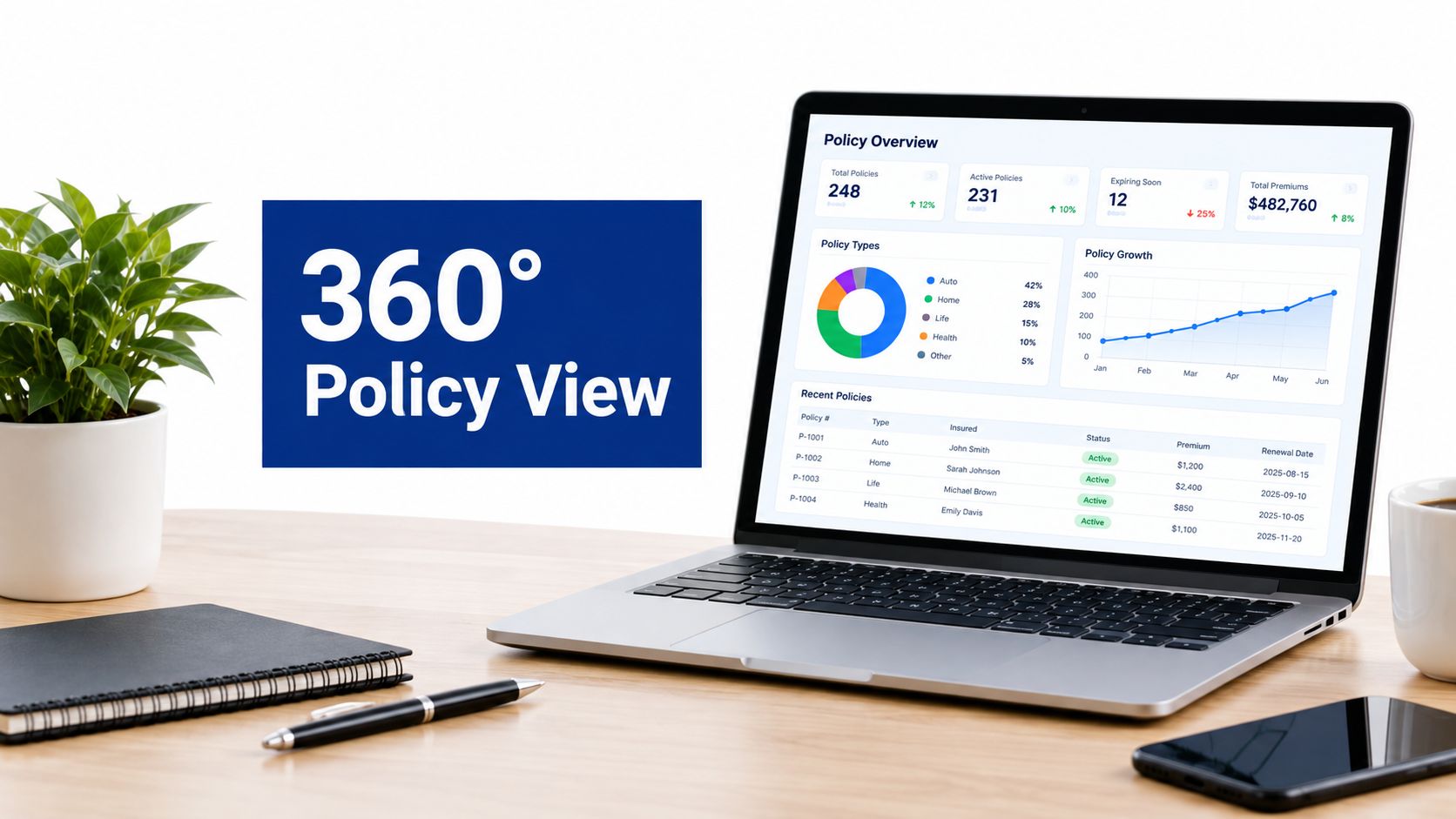


You probably have the same problem most mid-market ecommerce teams have right now. Sales live in Shopify, support sits in email, paid media targets one version of the customer, and the loyalty file tells a different story again. A repeat buyer looks like a stranger in one channel and a VIP in another, and the result is wasted spend, clumsy personalisation, and reporting that nobody fully trusts.
The answer is not another dashboard. It is an ecommerce customer data platform that unifies first-party signals, respects consent, and pushes usable profiles back into the tools your team already relies on. In Canada, that matters even more because the privacy rules are not a side issue; they shape the architecture from day one.
The Fragmented Customer Data Problem
A marketing director sees a loyal customer open an email, browse a product page on mobile, and later abandon a basket on desktop. The CRM shows one record, the email tool shows another, and the web analytics tool treats the same person as three separate sessions. That is not a reporting issue; it is a revenue leak.
Customer data integration stops being a buzzword and becomes operational work. Native platform reports and basic email lists only tell part of the story, so teams miss the thread that connects browsing, purchasing, and service interactions. The practical fix is a system that can combine those touchpoints into unified customer profiles and keep them usable across channels.
Practical rule: if your team cannot recognise the same buyer across email, web, and service, your stack is already working against you.
For Canadian teams, the overlap gets sharper because privacy design affects what you can collect, keep, and activate. Stronger master data practices help, and master data management strategies can be useful when you need to clean up duplicate identities before any activation layer goes live. The same problem shows up in ecommerce journey design, which is why many teams also need a proper integration plan, not just another plugin, as discussed in this ecommerce integration for customer journey resource.
What an eCommerce Customer Data Platform Actually Does
Think of a CDP as the central nervous system of commerce data. It takes signals from storefronts, apps, POS, support channels, and ad platforms, then turns scattered events into a single profile that other systems can use. The value is not in storing data for its own sake; it is in making the data act in time for marketing, service, and merchandising.
The clearest way to understand an ecommerce customer data platform is by its three mechanical phases.
Collection
The platform ingests events from multiple online and offline sources, so browsing, purchasing, and service activity all land in one place. A CDP is packaged software that collects and integrates customer data from multiple online and offline sources, applies identity resolution to create persistent, unified customer profiles, and makes those profiles accessible to other enterprise systems. That definition matters because it separates a CDP from tools that only report on behaviour without fixing identity.
Identity resolution
The platform stitches anonymous sessions and known records together here. A visitor who first arrives on mobile, later signs in on desktop, and eventually buys in-store should not become three records in your stack. Once identity resolution is working, the profile becomes persistent instead of session-based, which is what allows segmentation and personalisation to stay consistent.
Activation
A CDP earns its place when it feeds those profiles back into campaigns, onsite experiences, ad suppression, and service workflows. If the data is trapped in the platform, you have bought storage. If it is pushed into the tools your team already uses, you have bought activation.
A CDP should shorten the distance between a customer action and a relevant response. If that distance is still long, the architecture is wrong.
For growth teams, the practical next step is a data activation guide for growth teams, especially if you need to translate first-party data into usable audiences without creating another reporting silo.
CDP vs CRM vs DMP vs Analytics Tools
Most stack mistakes happen because buyers compare categories by price instead of by job. A CRM, a DMP, an analytics tool, and a CDP all touch customer data, but they do not solve the same problem. If you buy the wrong one first, every later integration becomes more complicated.
| System Type | Primary Data Focus | Identity Resolution | Best Use Case |
|---|---|---|---|
| CDP | First-party behavioural, transactional, and profile data | Yes, persistent and cross-channel | Building unified customer profiles for activation |
| CRM | Known contacts, accounts, and relationship history | Limited, mostly contact-level | Sales, service, and account management |
| DMP | Anonymous audience segments, often cookie-based | Not designed for persistent identity | Media targeting and short-lived audience building |
| Analytics tools | Events, sessions, and reporting datasets | Usually not their main role | Measurement, reporting, and trend analysis |
The distinction is simple in practice. A CRM tells you who you know. A DMP helps you target anonymous audiences. An analytics tool tells you what happened. A CDP is the layer that tries to make those fragments usable together.
What fails without a CDP
If you rely on CRM data alone, ecommerce behaviour stays thin and incomplete. If you rely on a DMP alone, identity is too temporary for durable customer treatment. If you rely on analytics alone, you can measure friction but not correct it in the next customer action.
That is why many teams end up buying overlapping tools and still lack a usable customer view. The ecommerce analytics introduction and analytics metrics KPIs resource is helpful for measurement discipline, but measurement on its own does not create the activation layer a CDP provides.
Core Features and Revenue Benefits for Merchants
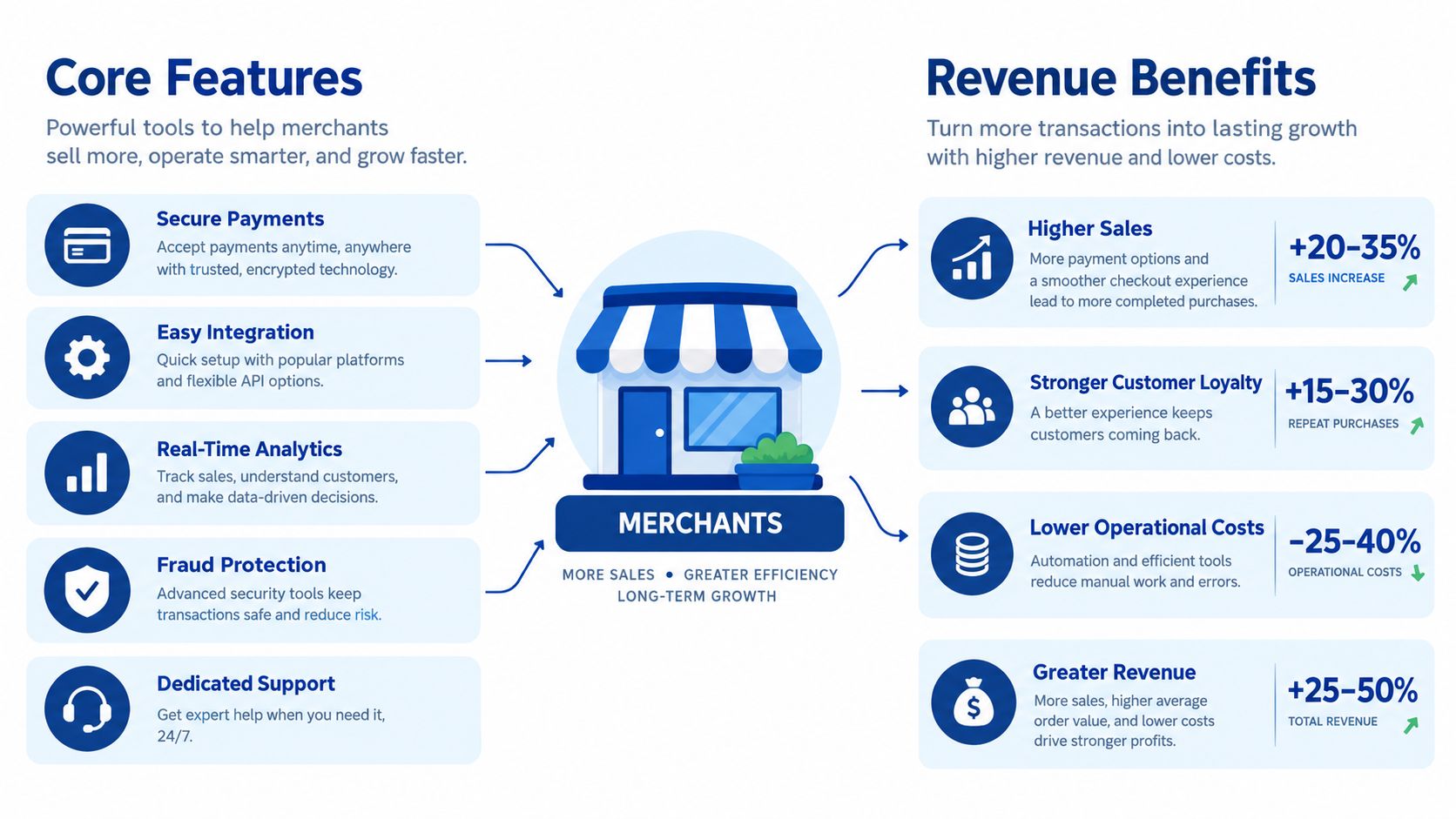
The strongest CDPs do not win because they look advanced. They win because they help merchants act on customer data faster and with less waste. In the Canada CDP market, customer data collection and profile unification accounted for 25.45% of market size in 2025, while customer analytics and insights are projected to grow at a 32.68% CAGR through 2031. That combination tells you where the practical demand sits: unified data first, then insight.
Features that directly matter
Predictive churn modelling helps teams identify at-risk buyers before they disappear from the repeat-purchase cycle. Real-time cart abandonment triggers let you respond while intent is still warm. Consent-aware segmentation prevents you from firing campaigns at profiles you cannot lawfully use. Each of those features only works if the underlying identity graph is clean enough to trust.
Revenue logic that leadership understands
The board does not need the vocabulary of identity stitching. It needs to know that a CDP can suppress known buyers from paid acquisition audiences, which reduces waste, and can feed recommendation engines, lifecycle journeys, and service follow-ups with a stronger customer view. That is how unified customer profiles turn into retention and efficiency.
The practical mistake is buying features before fixing the data model. A merchant can have very polished segmentation logic and still be wrong about who is who. That is why activation should always sit on top of reliable identity resolution, not the other way around.
For teams comparing tools, the most useful lens is often personalisation readiness. The ultimate guide to ecommerce personalisation is a good companion read because personalisation only works when the underlying profiles are current, consented, and connected.
What to look for in practice
Identity stitching: Can the platform keep one customer record coherent across devices, channels, and purchases?
Activation paths: Can marketing and service teams use the profile without asking engineering for every campaign?
Consent logic: Can segments respect opt-ins, regional rules, and suppression lists without manual cleanup?
Data freshness: Does the platform update quickly enough to affect the next customer touchpoint?
Building a Compliant and Scalable Data Architecture
In Canada, privacy is not an add-on. PIPEDA and Quebec's Law 25 push organisations toward purpose-limited collection, auditable consent, and tighter tracking controls, which means a CDP has to be designed for lawful use, not just technical convenience. If you cannot show where data came from, what consent supports it, and whether it can be used for a given activation, the profile is risky to operationalise.
That is why the architecture has to include three things from the start. First, data lineage, so teams can trace a field back to its source. Second, consent-aware segmentation, so audience building respects user preferences. Third, cross-border transfer safeguards, so you do not move data casually across systems or regions.
Implementation steps that actually reduce risk
Start by mapping every source system, including ecommerce, email, support, and any offline record feed. Then define the minimum set of identifiers required for matching, because over-collecting increases risk without necessarily improving accuracy. Finally, decide which events can activate immediately and which need review before use.
Keep the lawful use case as close to collection as possible. If consent review happens after activation, the stack is already in the wrong order.
Historical data migration deserves special caution. Old records often contain duplicates, stale permissions, and inconsistent field names. Cleaning them before import usually takes longer than teams expect, but skipping the cleanup creates a profile layer that looks unified while still behaving inconsistently.
A compliant architecture is also a scalable one, because teams spend less time reconciling bad data later. The point is not to slow growth; it is to build a platform that can survive legal scrutiny and still power useful eCommerce analytics.
Choosing the Right Approach for Your Business Size
Canada's vendor market is fragmented, with 248 customer analytics platforms and 95 ecommerce analytics platforms headquartered in Canada, yet much of the market content still avoids the hardest question: which subset solves identity resolution and consent for mid-market retailers. That fragmentation creates choice, but it also creates overlap. Many teams buy analytics before they buy identity, then end up duct-taping the stack later.
A practical decision matrix
Small merchants usually need speed and simplicity. A lighter CDP or a packaged activation layer can make sense if the catalogue is modest and the team is small.
Mid-market retailers need a stronger balance of integration, consent controls, and usable profiles. A true CDP matters most here, because the stack is already complex enough to create identity drift.
Enterprise teams often need composability, governance, and deeper control over routing. They may pair a CDP with warehouses, orchestration tools, and custom data services.
Build, buy, or combine
Buying a packaged CDP works when your team wants faster activation and fewer engineering dependencies. Building custom pipelines makes sense when you need unusual control or deep system-specific logic. A combined approach works when the organisation already has strong internal data capability but still needs a clean activation layer for marketing and service.
One practical option is to use a partner that can design the integration layer rather than forcing your team to bolt tools together blindly. Cleffex Digital Ltd, for example, builds ecommerce systems that consolidate customer data from ecommerce platforms, CRM, marketing tools, and analytics software into a single place for predictive analytics and personalisation. That type of work fits better than a generic plugin when your stack is already messy.
Launching Your Pilot and Measuring Success
A CDP pilot should prove one thing: that your team can recognise customers more accurately and activate them faster than before. Keep the scope narrow. One or two sources, one clear audience, and one activation use case are enough to validate the architecture without turning the project into a long IT programme.
What to measure
Track match quality, time to activation, and the quality of the audience that comes out of the system. If the platform can unify profiles but your team still waits days to use them, the operational value is weak. If consent checks are unclear, the pilot has already exposed a governance problem.
A useful pilot also needs a simple operating rhythm. Data owners should audit sources before go-live, marketers should define the exact trigger use case, and the technical team should verify that suppression rules work as intended. That combination tells you whether the CDP is becoming part of day-to-day commerce.
What good looks like
Clean source map: Every connected feed has a named owner and known purpose.
Single activation test: One campaign, one audience, one expected outcome.
Consent check: Every profile used in the pilot can be used lawfully.
Feedback loop: Marketing, analytics, and engineering review the same results.
If the pilot works, expand slowly. Add one new source, then one more use case. That pace is boring, but it is how teams avoid reintroducing the very fragmentation they were trying to remove.
Cleffex Digital Ltd helps ecommerce teams design the integration layer behind unified customer profiles, from customer data consolidation to activation across sales and marketing systems. If you're planning a CDP pilot or trying to untangle overlapping tools, visit Cleffex Digital Ltd and see how its ecommerce development services can support the architecture behind your data strategy.