

The referral leaves the family physician's desk late on a Tuesday. It's a fax, because the specialist's office still prefers fax, and nobody can tell whether the machine at the other end printed it, filed it, or dropped it into a tray that gets cleared once a week.
Three weeks later, the patient rings the clinic to ask why no one has called. The specialist has no record of the referral. The patient books elsewhere, the slot goes empty, and the practice loses a relationship it spent years building.
That's the ordinary failure mode of a paper referral, and it costs more than one missed appointment. Duplicated tests, repeated histories, a referring clinician who stops sending patients, and a patient who tells everyone the system didn't work. Software won't fix this on its own, but the right software closes the loop that fax leaves open.
The market now holds dozens of healthcare referral management software products, and most comparison lists treat them as interchangeable. They aren't. A provincial central-intake platform and a five-provider speciality clinic need completely different things, and buying the wrong shape of tool is the most common way these projects stall.
This review groups ten products by the operating model each was built for: regional central intake, community care navigation, speciality practice pipelines, and post-acute intake. Every entry is judged on workflow depth, EHR referral integration and healthcare API integration, patient referral tracking, analytics, security, and the organisation it suits.
1. OceanMD – Ocean Provider Network
If your clinic sits in Ontario, Ocean is less a product decision than the plumbing your referrals already run through. The provincial eReferral program is built on it, so the provider directory, the destination list and the status updates your specialists see are the ones the network maintains.
The case for it starts with the size of the problem. An Ontario study of specialist referral waits reported a median wait of 11.3 weeks for nonurgent referrals and 7 weeks for urgent ones. The same body of Canadian eConsult evidence found that 51% of contemplated referrals were avoided once a specialist answered a structured question, which is the strongest argument for running eConsult beside eReferral rather than as a separate project.
What you get
EMR-integrated eReferrals sent without a fax cover sheet
Searchable provider network with destinations and wait times
Referral status tracking and secure messaging
eConsult, eOrder and eSubmission in one workflow
Trade-offs
Coverage varies by region. A destination in one network may not exist one town over.
Not a growth CRM. It won't manage referral-source relationships for you.
Central intake needs more. Enterprise deployments require configuration beyond the base product.
Practical rule: Audit your top 20 referral destinations against the network directory before signing. Anything missing stays on fax, and that's the volume you'll still be chasing manually.
The wider lesson is about healthcare data sharing between systems: a referral network is only as useful as the number of recipients who have joined it.
2. Novari Health – Novari eRequest
Hospital and health-region buyers need something a clinic never does: a system that receives referrals from hundreds of senders, triages them against real capacity, and answers to a ministry about a wait list.
New Brunswick's plan shows the mechanics worth copying. The province's Virtual Care Action Plan specifies a closed-loop eReferral process that follows a referral from the primary-care provider through specialist acceptance to completion of the specialised service, with status visible to primary care, specialists and program staff at every stage. It records a "Wait 1" interval, the gap between the primary-care referral and the patient's first specialist appointment, and embeds the eReferral solution in the provincial EHR under a central-intake model.
Where it fits
eRequest is configurable intake software rather than a fixed product, which is its strength and its cost.
Strengths
Configurable referral pathways across surgery, imaging, mental health and speciality care
Status dashboards and alerts spanning multiple sites
Wait-list and care-coordination workflows built for regional operations
HL7 and FHIR integrations with existing hospital systems
Watch for
Heavier implementation than any small-clinic tool, with discovery time you must budget for
Pricing isn't published, so build your own cost model from scope
Rollout timelines need confirming against your procurement calendar
Central intake fails when the routing rules come from vendor defaults instead of the clinicians who actually triage. Write those rules down before configuration begins.
3. Caredove
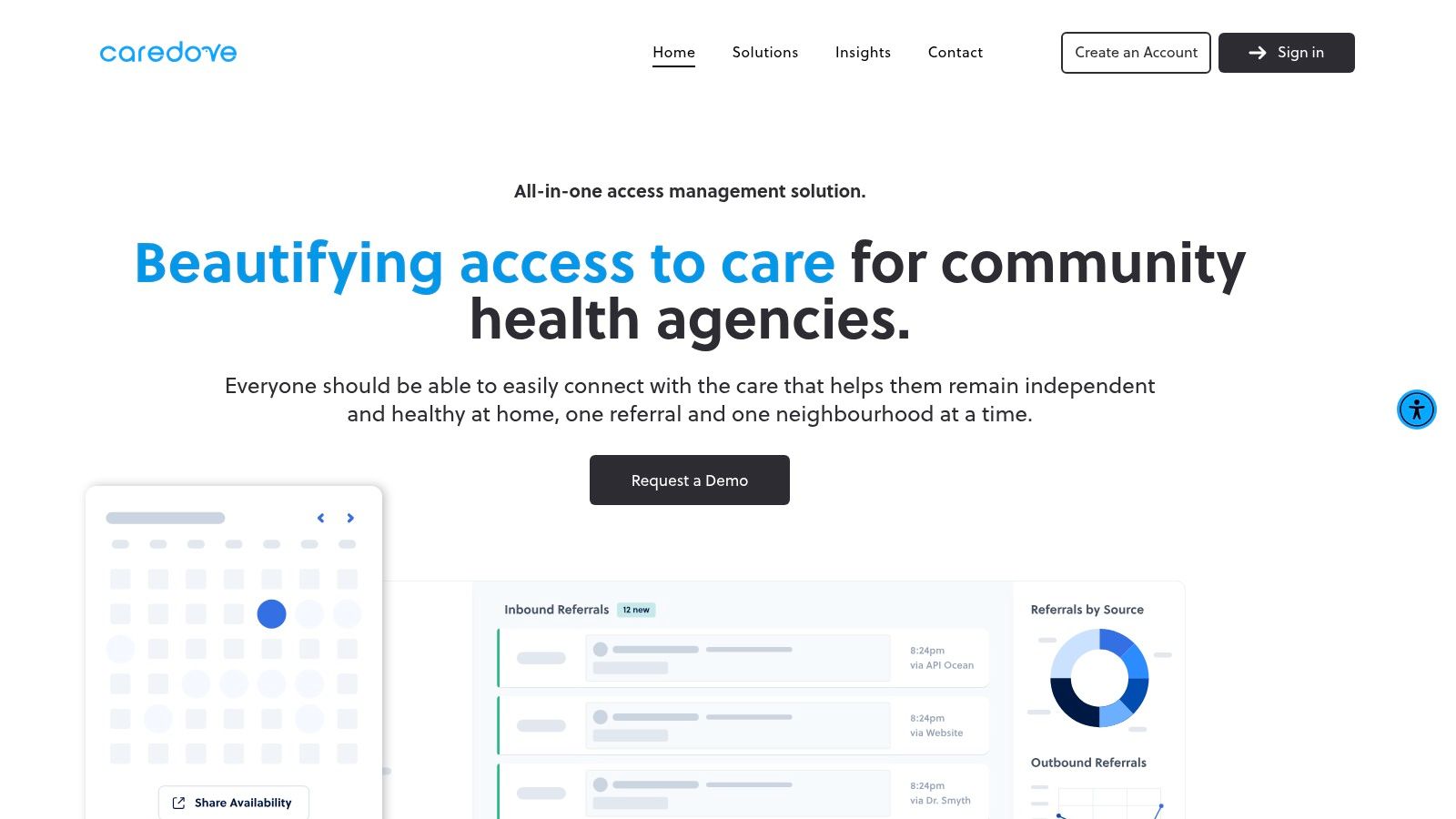
Different problem entirely. Here the question isn't which specialist, it's which community service exists, whether it has room, and whether the patient or the clinician can find it at all.
Caredove publishes services, receives requests, and manages referrals and appointments, with a focus on community care: mental health, home care, child development and community support. Canadian waits in that sector explain why discovery matters. CIHI reported that in 2023-2024, half of Canadians referred to publicly funded community mental-health counselling had their first scheduled session within 25 days, while 10% waited at least 143 days. Route that referral to a service without capacity and the patient loses months.
Strengths
Online service listings that patients and referrers can browse
Configurable referral forms and a referral inbox instead of one generic email address
Appointment booking attached to the request
HL7 FHIR R4 integration for organisations that need it
Watch for
Not a speciality-clinic CRM. If you're chasing referral-source volume from surgeons, this isn't the shape you want.
Network features need a configured initiative, which means a lead organisation behind them.
Confirm data-retention terms for your selected plan before you store patient information.
A directory nobody updates is worse than no directory. Assign one named owner per service listing and review it quarterly.
4. Excelicare Referral Management Solution
Excelicare sits in the awkward middle that most hospitals occupy: it needs to speak to Ontario's FHIR-based eReferral approach, connect to the Ocean eReferral Network, and still feed the hospital's own systems.
That middle ground matters because fragmentation is expensive. CIHI's account of connected health information describes records that often don't move between hospitals and clinics in the same city, causing delays, lost paperwork and faxes, duplicated tests, and patients carrying their own histories from appointment to appointment. The consequence shows up in national waits: time from GP referral to elective treatment rose from 25.6 weeks in 2021 to 27.4 weeks in 2023, with poor IT integration and limited interoperability among the contributors. CIHI was also reviewing version 2 of the Pan-Canadian Health Data Content Framework and Canadian Core Data for Interoperability in late 2025, so the standards you build against today will keep moving.
Where it fits
Strengths
Location and service-based assignment that distributes referrals without a human sorting pile
Configurable forms and status tracking across complex pathways
Two-way updates and document exchange back to referring providers
HL7, FHIR and API connections to regional systems
Watch for
Pricing is not public, and integration scoping is a real project cost
Technical discovery is mandatory before you can promise a go-live date
More capability than a small practice needs, which usually means paying for unused configuration
5. ReferralMD
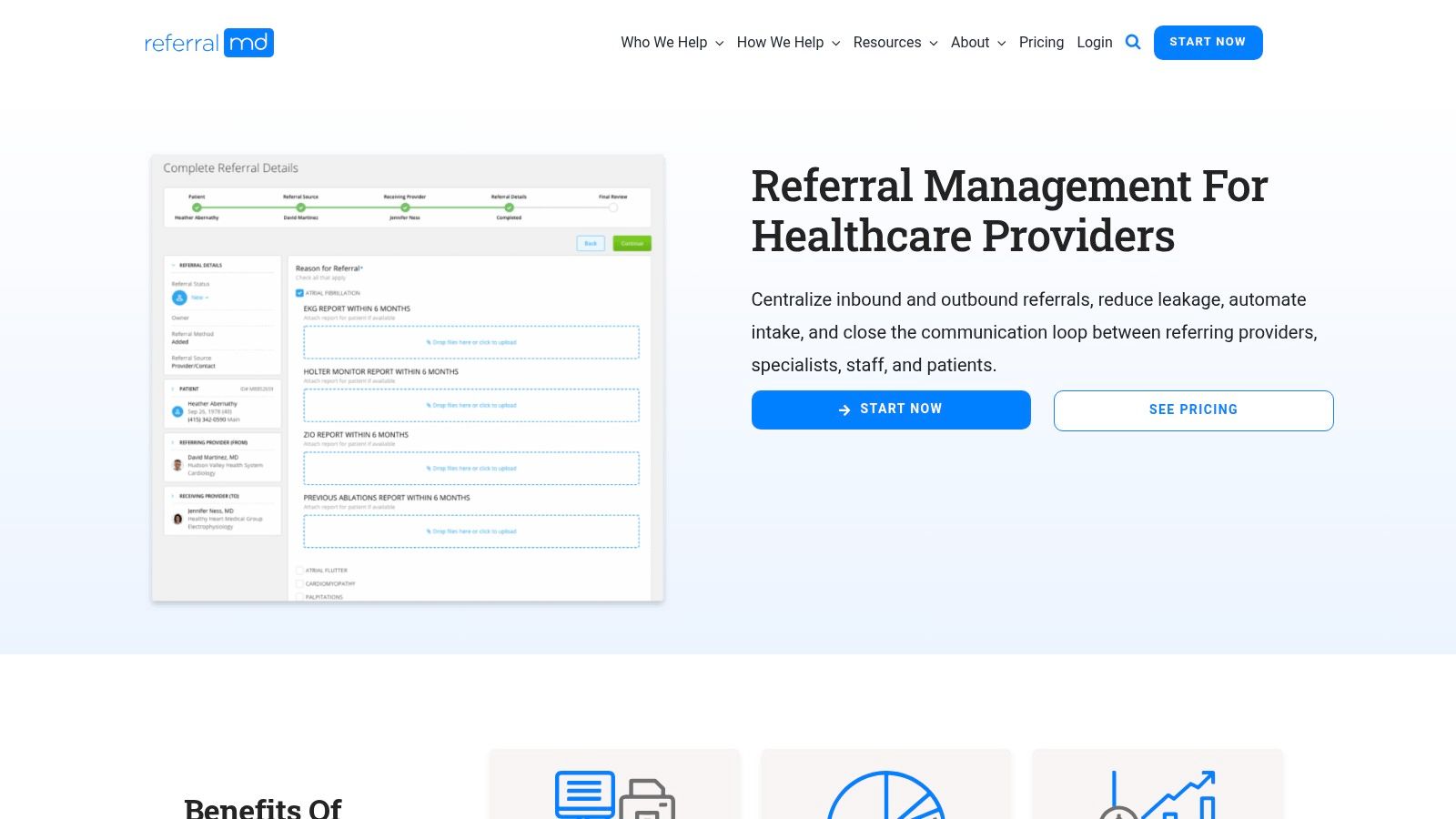
ReferralMD is the option I'd shortlist when a network wants one inbox covering intake, triage, routing and provider-network management, and is willing to buy a product family rather than a single feature.
The business case is usually framed around user satisfaction, so be careful with it. Alberta's eReferral evaluation found that 89% of surveyed users agreed the system improved access to information about service availability and wait times while enabling referral tracking, and 81% agreed eReferral was an efficient way to request health services. The same evaluation cautioned that it did not contain enough quantitative data to prove changes in referral wait times. That's the honest position for most deployments: users feel the difference before the wait-time data proves it.
Strengths
Multi-channel intake from fax, forms and other sources into one queue
Provider matching and messaging alongside task management
Separate offerings for practices and larger networks, so the entry point isn't enterprise-only
Several interoperability approaches rather than a single locked path
Watch for
Enterprise pricing is custom, which slows comparison shopping
Automation and integration often sit in paid tiers
Canadian buyers must verify hosting and privacy terms and confirm the integrations named in the demo are available in Canada
6. LeadingReach Core
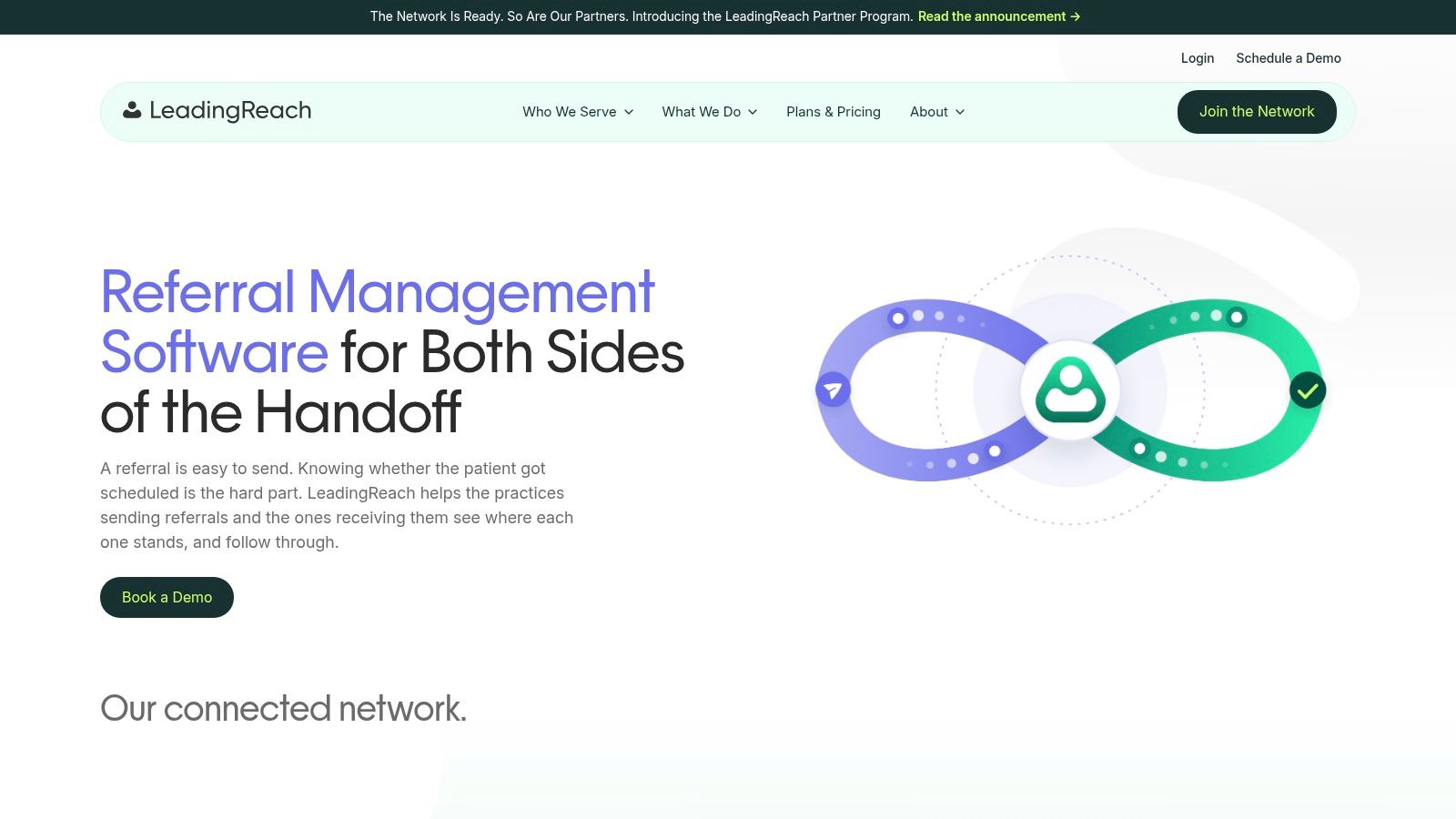
Not every practice needs a regional platform. Some need to stop losing referrals somewhere between the front desk and the scheduler, and that's a pipeline problem before it's an interoperability problem.
Volume changes faster than most buyers expect. An Ontario bariatric-surgery study found average annual referrals rose from 244 in 2011 to 671 in 2015 after an eReferral system was implemented, while reviews of electronic referral systems found structured digital workflows reduce missing or incomplete information and the back-and-forth that follows it, as reported in this analysis of Canadian eReferral evidence. Size your queues for growth, not for today's numbers.
Strengths
Custom referral statuses and pipeline dashboards that show where things stall
Digital intake instead of a printed form and a scanner
Team tasks and messaging attached to the referral record
Patient reminders and optional fax processing for the inbound backlog
Watch for
EHR connectivity is an add-on in most configurations, not the default
Integrations are limited to named systems, so check yours specifically
Canadian organisations should confirm regional coverage and privacy fit before a pilot
A referral that's been "sent" isn't a referral that's moving. Track the date of last meaningful contact, not the date you transmitted it.
7. Luma Health – Referrals
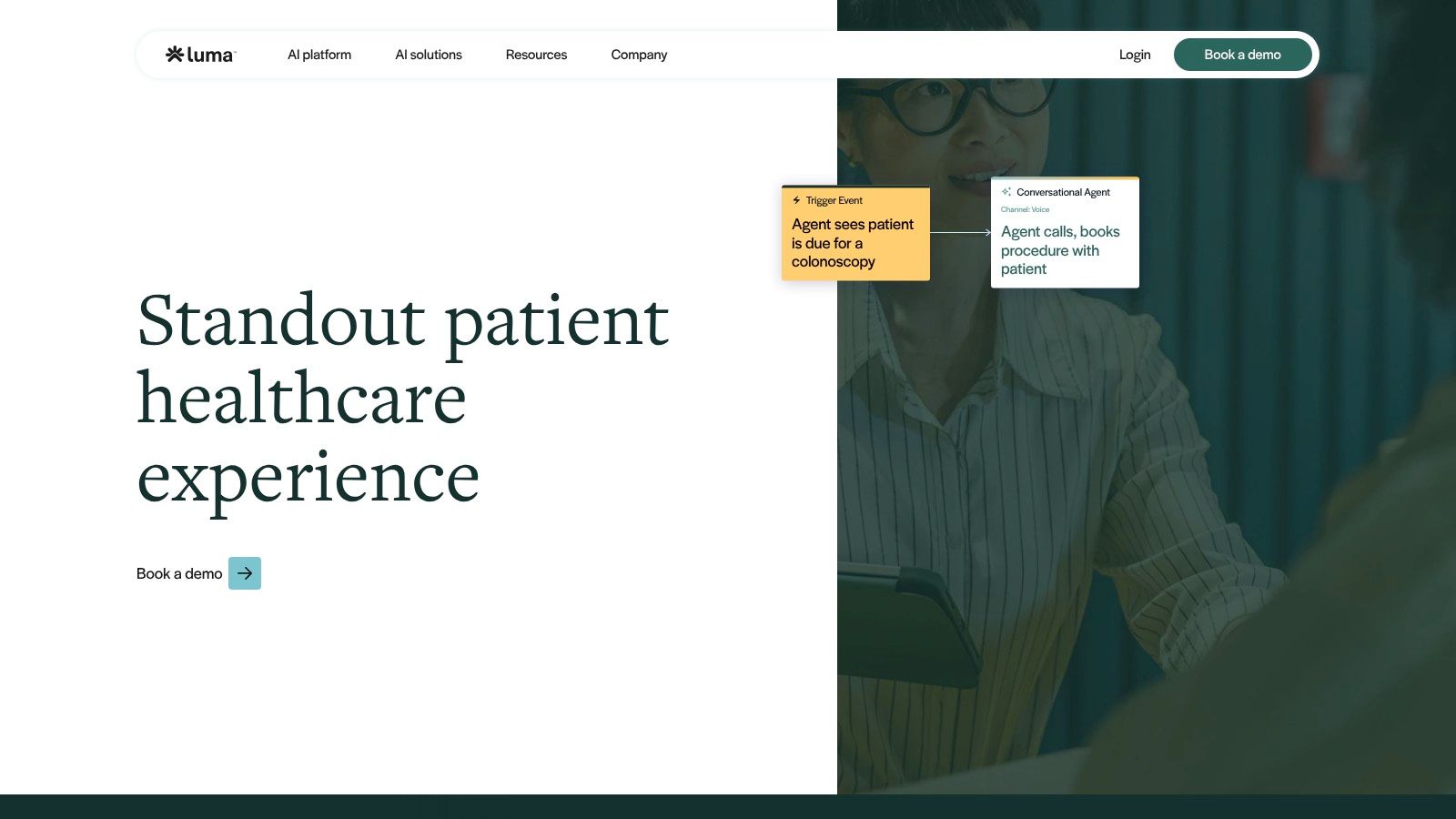
Luma's referral capability is really a booking engine wearing a referral badge, and that's a fair description rather than a criticism. It exists to move a referred patient from "received" to "scheduled" using texts, self-scheduling links and outreach automation.
The case for automating that step is in the distribution. Statistics Canada reported that among Canadians who received an initial specialist consultation in 2024, 34.5% waited less than one month, 29.7% waited one to less than three months, and 17.6% waited three to less than six months. The difference between joining the first group and the third is usually decided in the first few days, when someone does or doesn't reach the patient.
Where it fits
Strengths
Referral pipeline management with outreach attached to each stage
Text-based scheduling pathways that don't depend on a phone call answered
Fax and EHR workflow options for teams still receiving paper
Adjacent patient-access modules if reminders and intake are also on your list
Watch for
Pricing isn't listed, so value depends heavily on how many modules you adopt
Some functions may depend on integrations rather than being generally available
Verify the referral-specific depth against a scheduling platform, because the centre of gravity is access, not referral analytics
8. Carethink – Referral Automation
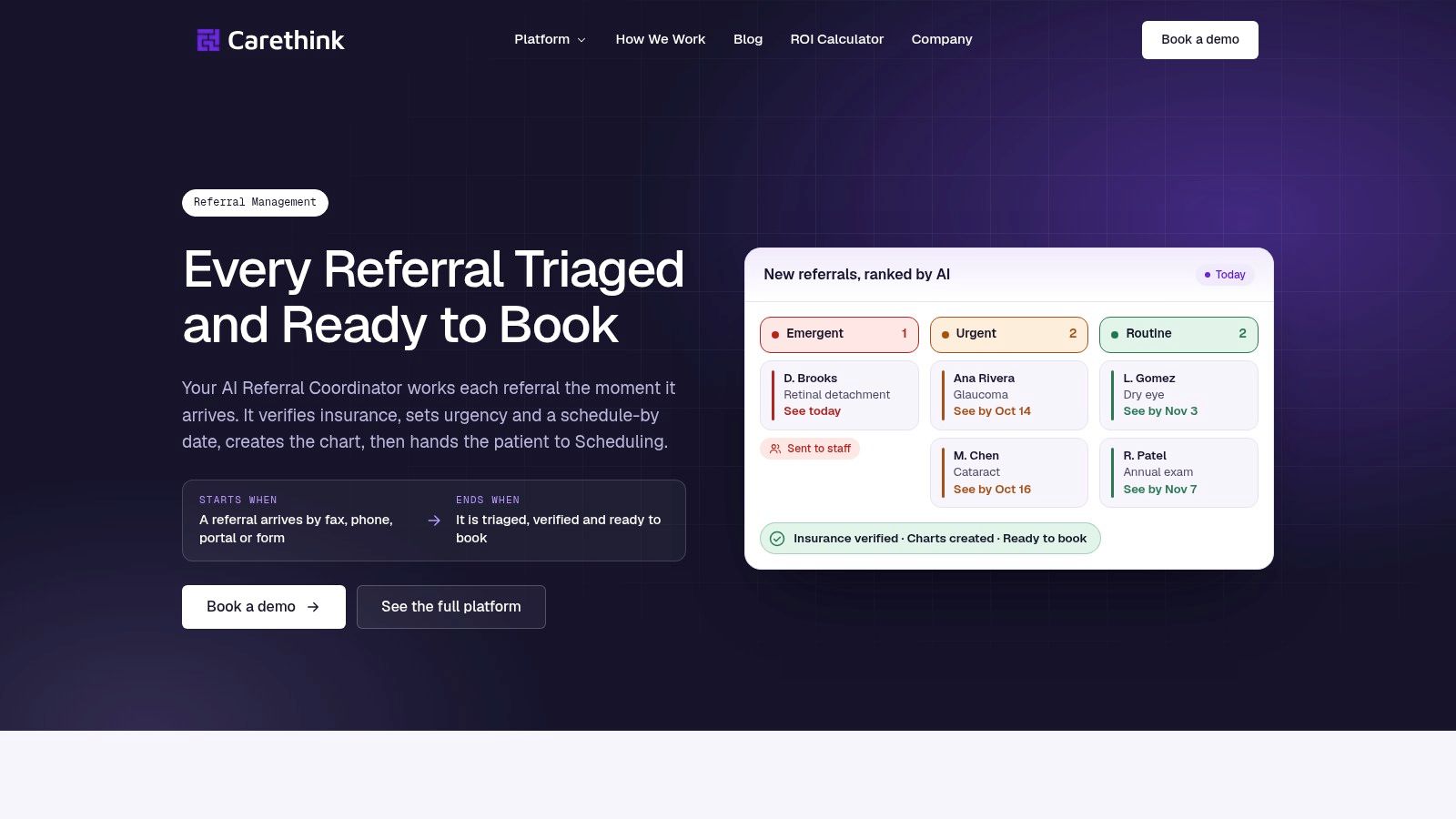
Every speciality practice has a version of the same list: referrals received, none contacted, sorted by who shouted loudest rather than who has waited longest.
The queue is real. A 2025 Canadian analysis put the median wait from GP referral to treatment at 28.6 weeks, including 15.3 weeks from referral to specialist consultation, in this report on Canadian medical wait times. Software cannot manufacture specialist capacity. It can stop referrals ageing unnoticed and show which ones are about to slip out of the process.
Carethink fits the speciality-practice end of the market: a clinic or network where the work is triaging inbound demand, ordering the queue and proving to referrers that their patients moved. It is less suited to regional central intake or post-acute intake, where the harder problems are shared waiting lists and discharge handoffs.
Prioritisation is the sensitive part. Digital triage can disadvantage patients without portal access, stable internet or a regular primary-care provider, so urgency rules need to be transparent, auditable and paired with a phone path. A scoring model that cannot be explained to a clinician or a referrer will create mistrust faster than it clears backlog.
What it handles
Queue management with urgency and priority indicators
Ageing-referral flags for items nobody has touched
Referrer communication and conversion reporting by source
EHR integrations described by the vendor across several systems
What to test in a demo
Pricing is not published, and outcome statistics are vendor-reported
Implementation timelines should be checked against your own systems, not taken from a demo
Prioritisation rules need clinical sign-off, not an operations guess
If the intake-to-booking gap is your real bottleneck, map the workflow patterns in this guide to healthcare referral automation before you buy.
9. HealthViewX – Referral Management
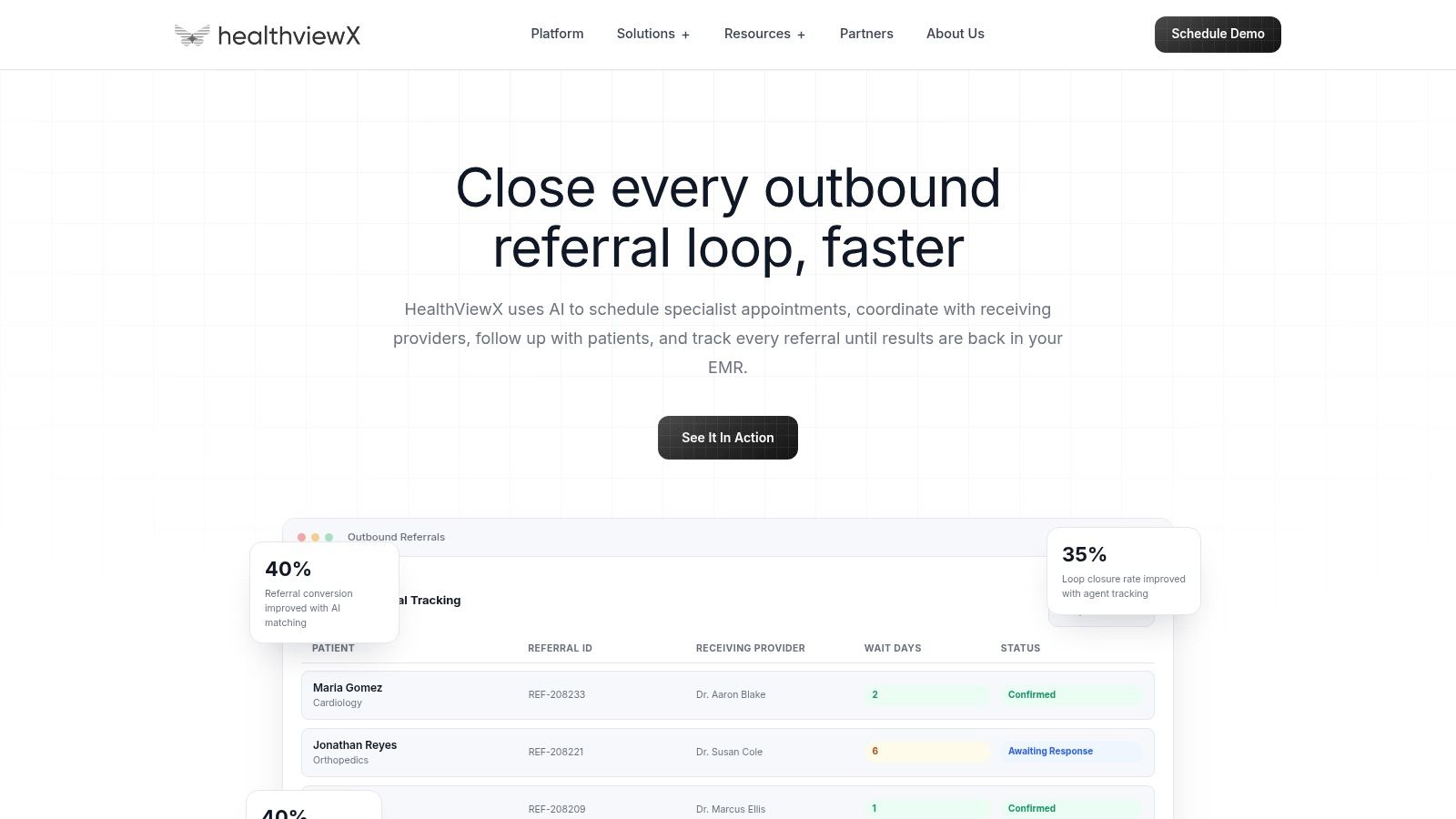
HealthViewX treats a referral as a chain with a financial gate in the middle: sync from the EMR, obtain authorisation, match a specialist, contact the patient, then track the result back to the record.
That chain is where API discipline matters. The Competition Bureau's review of health data explains that interoperability between systems requires a common language and can be enabled through web services or application programming interfaces, naming HL7 FHIR as one standard that helps systems exchange health data. It also notes that API access can let third parties obtain personal health information, which makes authorisation, authentication, audit logging and minimum-necessary exchange essential when you connect referral software to an EHR.
Strengths
EMR synchronisation so referrals don't start life as a re-typed form
Prior-authorisation workflow built into the referral rather than bolted on
Specialist matching against network and availability data
Standalone or integrated deployment, which helps mid-sized groups
Watch for
Pricing is not listed, so scope the authorisation volume before you ask
Technical assessment is essential to confirm which integrations are live
Canadian buyers should verify hosting, privacy and payer-workflow fit, because the product assumes a US payer model in places
Map referral fields to agreed data resources, not to screen positions. Patient identity, reason for referral, urgency, attachments, provider details and appointment status should each have a defined home.
10. WellSky Enterprise Referral Manager
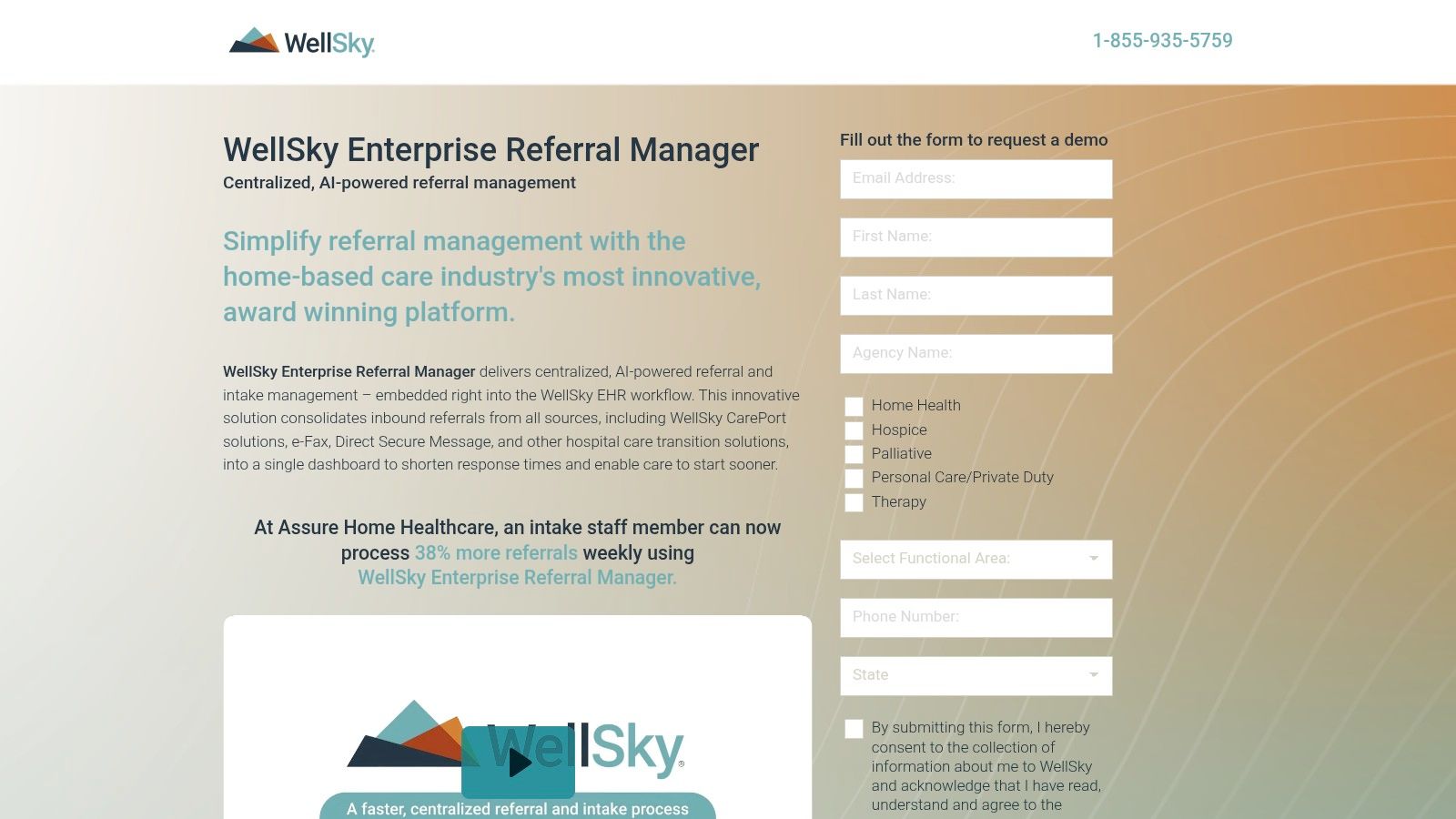
Post-acute intake is a different sport. Referrals arrive from hospitals, clinics, physicians and e-fax all day, and the clock starts on response time rather than on clinical urgency.
Consolidating those channels is necessary but not sufficient, because the underlying problem is cross-setting exchange. CIHI's survey of provider digital health use reported that in 2025 more than 90% of Canadian health providers had access to a digital health system, yet only 52% said they electronically shared patient clinical information with providers outside their practice setting, and 17% said they weren't routinely accessing electronic health information sent by providers in other care settings because of barriers. A referral is a cross-setting workflow, so an intake dashboard inside one vendor's ecosystem solves the inbox while leaving the exchange problem intact.
Strengths
Centralised inbound dashboard across e-fax, Direct Secure Messaging and CarePort sources
Intake workflow built into the WellSky EHR rather than sitting beside it
Multi-channel referral capture for high-volume home-health teams
Vendor-published customer example you can ask about directly
Watch for
Best suited to home-based care and the WellSky ecosystem
Pricing is not published
Organisations outside post-acute care should compare broader options first
If your constraint is throughput across beds, staff and visits rather than referral receipt alone, the approaches in this piece on healthcare capacity management will tell you whether intake software is even the right first purchase.
Healthcare referral management software at a glance
Use this as a shortlist by operating model, not a ranking: who receives the referral, which system must write status back, and whether authorisation or scheduling sits in the same workflow.
| Product | Best for | EHR integration approach | Standout capability | Pricing transparency |
|---|---|---|---|---|
| OceanMD – Ocean Provider Network | Canadian providers replacing fax-based referrals | Connects with participating EMRs | Ontario eReferral network and referral status tracking | Not publicly listed |
| Novari Health – Novari eRequest | Hospitals and health regions needing central intake | HL7 and FHIR integrations | Configurable pathways and wait-list management | Not publicly listed |
| Caredove | Community care service discovery and referrals | Includes HL7 FHIR R4 integrations | Online service listings and appointment booking | Not publicly listed |
| Excelicare Referral Management Solution | Hospitals and networks needing configurable workflows | HL7, FHIR, APIs, and Ocean eReferral Network | Automated assignment and two-way referral updates | Not publicly listed |
| ReferralMD | Practices and networks managing referrals across organisations | EHR integrations and multiple interoperability options | Referral intake, routing, and provider-network management | Not publicly listed |
| LeadingReach Core | Practices needing visibility into referral progress | Optional EHR automation; check system compatibility | Pipeline dashboards highlight stalled referrals | Not publicly listed |
| Luma Health – Referrals | Organisations connecting referral follow-up with patient access | Fax and EHR workflow options | Automated outreach with text-based scheduling | Not publicly listed |
| Carethink – Referral Automation | Speciality practices reducing intake backlogs | Integrations with several EHRs | Urgency indicators and follow-up tracking | Not publicly listed |
| HealthViewX – Referral Management | Organisations coordinating authorisation and specialist referrals | EMR synchronisation and integrations with numerous EHRs | Tracks referrals through returned results | Not publicly listed |
| WellSky Enterprise Referral Manager | Home-health and post-acute organisations handling inbound referrals | Integrates with WellSky EHR and CarePort workflows | Centralises referrals from multiple channels | Not publicly listed |
Choosing the Right Fit and How to Connect Referral Management Systems With Your EHR
Sort the ten by operating model before you compare a single feature. Regional central intake covers Novari eRequest, Excelicare and the enterprise tier of ReferralMD. Community care navigation is Caredove's territory. Speciality practice pipelines are where LeadingReach Core, Carethink and Luma Health compete, with HealthViewX joining them when authorisation sits in the middle of the workflow. Post-acute intake belongs to WellSky, and OceanMD occupies the EMR-network lane for Canadian providers inside a provincial program.
Then run an implementation checklist that's honest about effort.
Confirm EHR referral integration is write-back, not screen scraping: Verify the receiving system accepts structured data and returns status without a clerk re-keying it.
Test healthcare API integration before signing: Documented endpoints, version control, consistent error handling, rate limits and monitoring all belong in the contract, per Canada's API guidance for digital services. Define what happens when a call fails: queue it, flag it for staff review, and send the originating practice a confirmation rather than assuming delivery.
Map referral workflow automation to your staff process: Decide who triages, who can override priority, and what the escalation path is when a referral sits untouched for five days. Software that doesn't match the triage meeting won't survive month two.
Define patient referral tracking and analytics up front: Median time from creation to triage, percentage returned for missing information, time to specialist acceptance, abandonment rate, and closed-loop confirmation back to the referring provider.
Verify security, hosting and breach obligations: Cleffex prioritises compliance with global standards such as GDPR and HIPAA, with encryption, secure data storage, anonymisation and access control built into the development process. Federally, an organisation must assess whether a breach creates a real risk of significant harm and, if so, notify affected individuals and report the breach to the Privacy Commissioner of Canada as soon as possible, keeping records of every breach.
Off-the-shelf tools stop short when your pathway crosses systems nobody wrote a connector for. That's when a custom integration layer earns its budget. Cleffex Digital builds healthcare software integration for North American healthtech companies, covering hospital connectivity, compliance and scalable platforms, including a web-based MDT treatment planning app for hospitals that supports real-time treatment discussions among specialists and handles large CT scan files on desktops and iPads with strong access control.
Start with the Cleffex homepage for context, then look at healthcare software integration services for the build side. And if you're a smaller practice weighing an EHR module against a dedicated platform, compare EHR pricing for solo practices before assuming custom work is out of reach.
Frequently Asked Questions
Which referral tool integrates with my EHR?
The one that writes structured data back into the chart, not the one that exports a PDF. Confirm the vendor supports HL7 or FHIR interfaces to your specific EHR version, and ask for a reference site running the same combination.
Can referral software replace fax entirely?
In Ontario's network, mostly. Elsewhere, less often than vendors imply. Keep a monitored fax inbox with a defined triage owner, because some recipients will stay off-network for years.
How long does an EHR referral integration take?
Long enough that you should scope it before procurement, not after. The variable isn't the software; it's interface discovery, security review and the clinical workflow sign-off that has to happen between them.
What security terms should I check before signing?
Data residency, encryption in transit and at rest, role-based access, audit logging, retention and deletion rules, and breach notification obligations. Federal breach reporting rules apply regardless of what the vendor's contract says.
Cleffex Digital Ltd builds secure healthcare software integration for North American healthtech companies, connecting referral and clinical workflows to hospital systems, compliance requirements and AI diagnostics without disrupting how staff already work. If your organisation needs referral routing, patient referral tracking and healthcare API integration built into an existing EHR or practice-management setup, we can scope and deliver it. Visit Cleffex Digital Ltd to start the conversation.