


You're about to launch a new EMR, add telehealth, or hand billing to a vendor, and suddenly the privacy question gets bigger than the product roadmap. That's the point where PIPEDA healthcare compliance stops being a policy document and becomes an operations project. For a clinic, startup, or small health-tech team, the actual work is not memorising the law; it's proving that patient data is mapped, protected, and handled the same way every time.
The good news is that PIPEDA gives you a workable structure. In Canada, it sets 10 fair information principles for private-sector handling of personal information, and it reaches beyond one province or one kind of business, including federally regulated activity and cross-border personal information flows (Office of the Privacy Commissioner summary of PIPEDA). For healthcare-related work, that means your audit is really about whether your team can show control over consent, safeguards, access, retention, and breach response.
Your Practical Path to PIPEDA Compliance
A small clinic signs up for a new patient management system on Monday. By Friday, the owner is staring at onboarding forms, cloud storage settings, a billing vendor, and a privacy questionnaire from the software provider. That's the normal starting point for PIPEDA healthcare compliance, not a failure.
Organisations often err by trying to “finish privacy” with a single policy. PIPEDA compliance is a working model, not a filing cabinet. You need a privacy officer, a data map, consent language that matches actual workflows, and incident handling that staff can follow without guessing.
Practical rule: if a control can't be explained to front-desk staff, nurses, contractors, and developers in plain language, it won't survive an audit.
For healthcare providers and vendors in Canada, the workload is especially process-heavy. PIPEDA isn't a one-province rule, and it isn't limited to one kind of record. It affects clinics, insurers, health-tech firms, and service providers that handle patient or customer data in Canadian markets PIPEDA brief. In practice, that means your first audit should look less like a legal review and more like a project plan with owners, deadlines, and evidence.
The easiest way to think about it is this. First, identify what data exists and where it moves. Then, make sure the collection is justified, the access is controlled, and the response path is ready if something goes wrong. That sequence is what keeps a startup from building privacy retroactively, which is always more painful.
Laying the Foundation with PIPEDA's 10 Principles
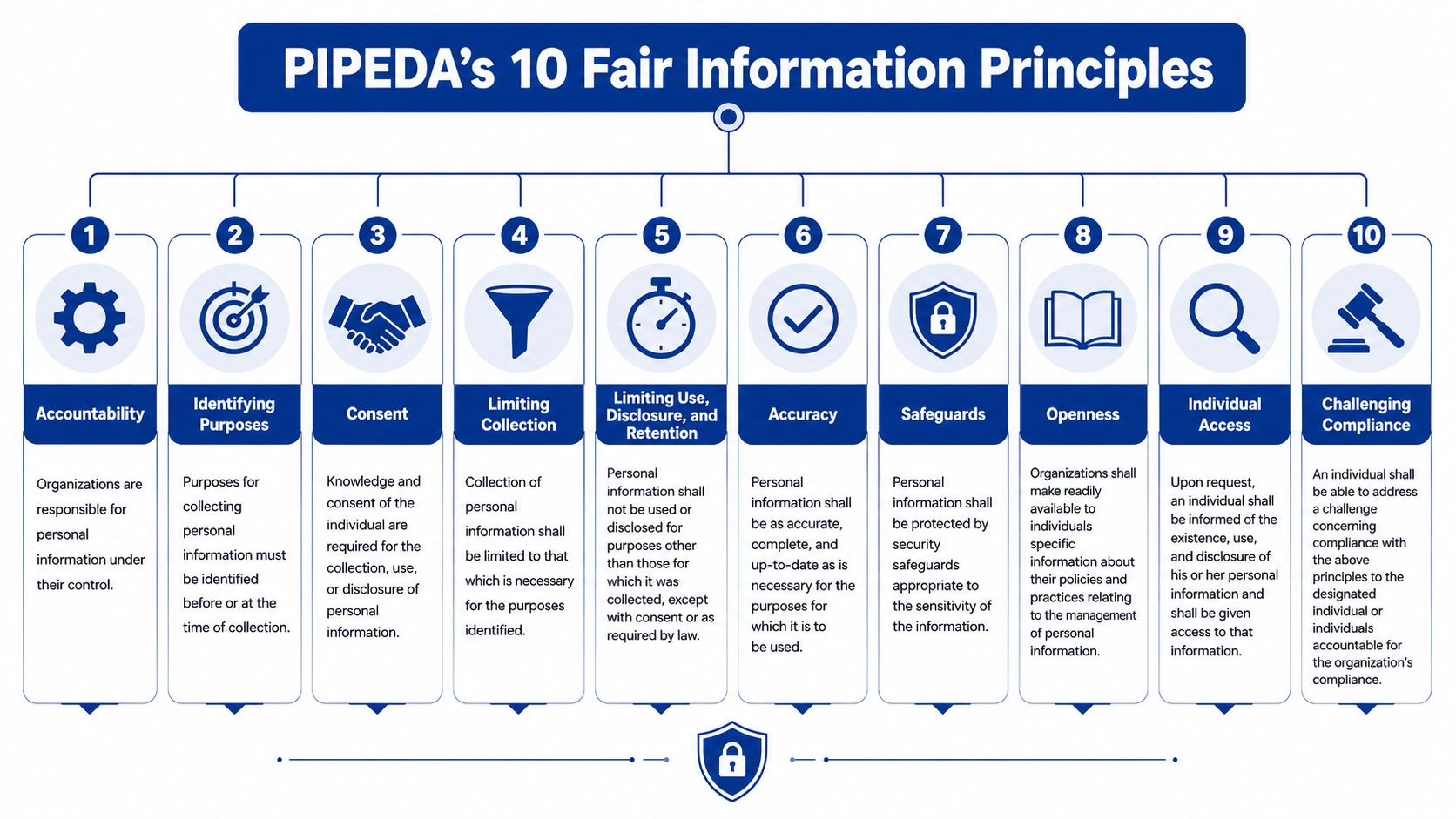
PIPEDA's 10 fair information principles are easiest to use when you treat them as operating instructions, not legal poetry. In a healthcare setting, each principle maps to a task someone on your team has to own, test, and document.
The principles in clinic language
Accountability means one person, usually a privacy lead, is responsible for privacy decisions and evidence. In a telehealth platform, that person should know who approved the intake form, who reviewed the vendor, and where the record lives.
Identifying purposes means the purpose for collecting data has to be clear before or at collection. If a receptionist is collecting a patient email for appointment reminders, that purpose should not later be converted for marketing purposes.
Consent means the patient has to understand what's happening and agree to it. Sensitive health information deserves meaningful consent, so your intake process should explain collection and use in plain language, not hide it in a long notice.
Limiting collection is a design issue. If your booking form asks for diagnosis details that the clinic doesn't need yet, the form is asking for too much.
Limiting use, disclosure, and retention keeps data from drifting into unrelated systems or sitting around forever. If a telehealth visit was recorded for charting, that recording shouldn't become a training asset unless you have a lawful basis and a clearly documented process.
Accuracy matters when staff enter patient details, medication lists, or referral notes. A broken intake workflow can create a records problem before a clinician ever sees the file.
Safeguards are the controls that protect the record. In an EMR, that usually means role-based access, logs, encryption, and secure disposal.
Openness means your privacy practices should be easy to find and understandable. Patients shouldn't have to decode a contract to learn how their information is handled.
Individual access gives patients a way to see and request their information. If your team can't pull up a record, explain it, and correct it, access rights are just words on paper.
Challenging compliance means a patient needs a path to raise a privacy concern. That path should lead to a real person, not a dead-end inbox.
Mapping Your Data: A Critical First Step
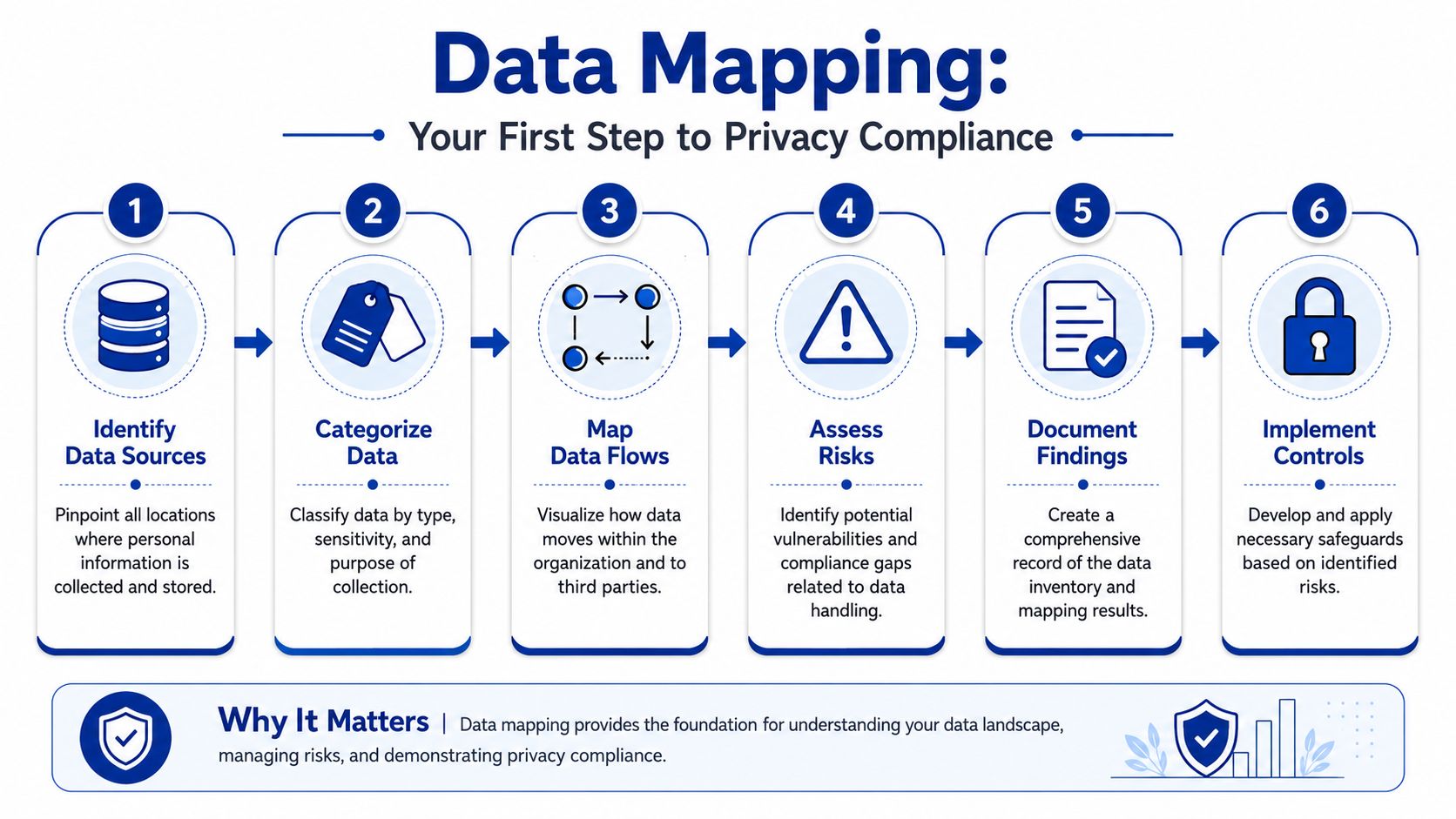
A privacy program that hasn't mapped its data is usually optimistic, not compliant. In a healthcare startup, the data often spreads faster than the team realises, from intake forms to cloud storage to backup copies and outside processors. That's why the first audit task should be a real inventory, not a guess.
Build the inventory from the outside in
Start with every place a patient can enter information. That means reception forms, online booking, contact forms, telehealth systems, billing tools, referral workflows, and any exported reports staff use outside the EMR. Then list each system that stores or touches that information, even briefly.
Next, classify by sensitivity and purpose. A name and phone number used for reminders is not the same as a diagnosis note or prescription history. The purpose matters because it determines what you can justify collecting, who can access it, and how long it stays.
If intake forms, cloud storage, and third-party processors aren't on the map, your controls will always be incomplete.
The most useful output is a simple table that names the data, where it came from, where it goes, who touches it, and when it is deleted or archived. That table becomes the backbone for your PIA, your consent text, and your vendor review. It also stops teams from discovering hidden risk late, which is usually when fixes get rushed.
What a useful map must include
At minimum, include the following:
Collection points: Front desk, website, app, phone intake, and referral channels.
Storage locations: EMR, billing tools, cloud drives, shared inboxes, and local devices.
Transfers: Vendors, processors, consultants, and external clinicians.
Retention paths: Active files, archived records, backups, and destruction routines.
Access roles: Who can see, edit, export, or delete records.
A completed map is not a formality. It is the document that shows you understand your own operation well enough to control it.
Implementing Robust Security Safeguards

Once the data map is clear, the next question is simple. Who can get to the information, and what stops them from misusing it? A technically sound PIPEDA program pairs meaningful consent with safeguards that match the sensitivity of the information, as outlined in PIPEDA and health information guidance.
Organisational, physical, and technical controls
Organisational controls are the habits and rules that shape daily work. Staff need a privacy notice they can explain, training that fits their actual role, and escalation steps for unusual requests or incidents. If your team outsources transcription, billing, or support, those duties need to be written down before any data moves.
Physical safeguards are easy to overlook until a file cabinet or shared workstation causes trouble. Lock rooms, restrict paper records, and control who can access devices that hold patient data. Even in a digital-first clinic, paper still appears in scans, discharge forms, and sign-in sheets.
Technical safeguards are where most startups need to focus first. Use encryption, access controls, audit logging, automatic log-off, and secure disposal. The goal is not to buy every security product. It is to make sure access matches role, and every sensitive action leaves a trace.
Here's the checklist I'd use for a first audit.
| Safeguard Type | Example for a Clinic | Example for a Health-Tech App |
|---|---|---|
| Organisational | Privacy training for front-desk staff and clinicians | Documented access rules for developers and support agents |
| Physical | Locked storage for paper charts and restricted office access | Controlled device handling for laptops and test hardware |
| Technical | Role-based EMR access and audit logs | Encryption, automatic log-off, and secure deletion routines |
PIPEDA-aligned programs also need vendor due diligence, because third-party service providers handling patient data stay inside the compliance perimeter. For teams that need help operationalising cloud access, the SMB guide to cloud security and compliance is a practical resource for comparing access-control habits against a smaller IT budget. If your organisation is building patient-facing software, Cleffex's healthcare compliance software development overview can help you frame requirements around consent, logging, and validation evidence without treating compliance as an afterthought.
For product teams, I also separate the privacy question from the feature question. If a feature cannot be built with role-based access, traceable changes, and controlled export, it probably needs redesign before launch. The same logic applies to clinic tools and workflows, just with fewer developers in the room.
Preparing for the Inevitable Breach Detection and Response
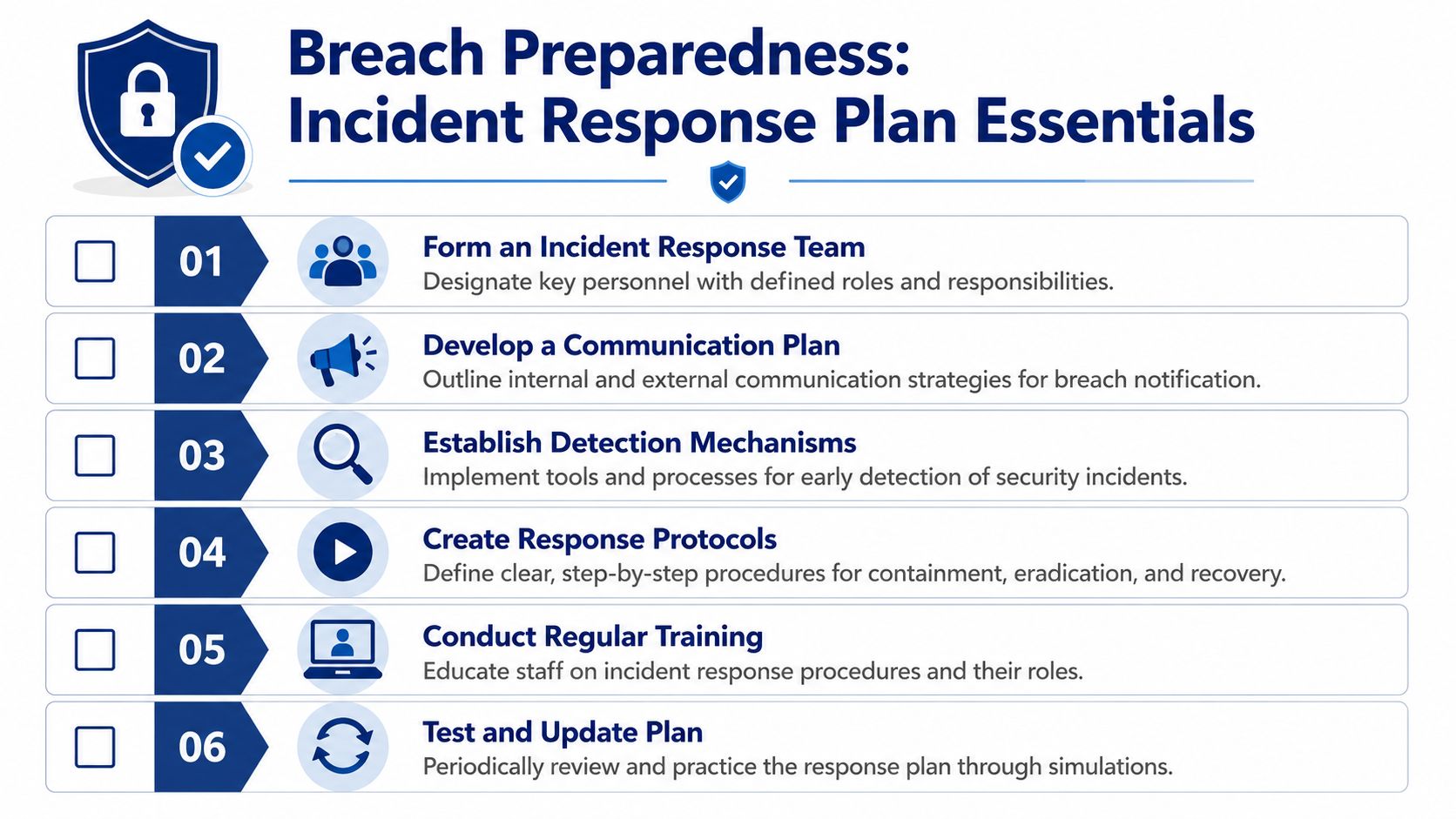
Healthcare records are attractive to thieves and hackers because they carry direct value and often move through many hands. A breach study found large volumes of healthcare privacy incidents across provider settings, with theft and hacking among the most common causes. That makes a breach plan part of daily governance, not paperwork for a binder.
Build the response around decisions, not panic
Once a breach is detected, containment comes first. Staff need clear instructions for isolating a device, disabling access, preserving logs, and stopping the incident from spreading to other systems or users. Investigation follows right away, with a focus on what happened, which records were involved, and whether the event reaches the threshold for notification.
Under PIPEDA, the key test is whether the breach creates a real risk of significant harm. If it does, the organisation must notify the Privacy Commissioner and affected individuals, and it should document the incident even when notification is not required. That record gives you evidence of accountability, shows how the decision was made, and helps spot repeat failure points.
A response plan should name the incident team, define who speaks to staff and patients, and set out a simple logging routine for every action taken. A clinic does not need a room full of jargon. It needs a short procedure that tells the receptionist, the practice manager, and the IT contact what to do in the first hour.
A breach plan that nobody has rehearsed is a draft, not a control.
For teams that want more technical detail, this healthcare data security guide is useful when policy has to turn into logging, access rules, and incident-handling steps. The critical test is practice, not reading the plan aloud once a year. If staff cannot follow the process under pressure, the organisation does not have a breach plan; it has a document.
Maintaining Compliance Through Training, Audits, and Vendor Management
PIPEDA compliance drifts when nobody owns it. A new scheduler comes in, a billing vendor changes, a developer pushes a release, and suddenly the team is operating on assumptions that never got rechecked. The fix is a privacy hygiene programme that repeats on purpose.
Make privacy part of daily work
Training should be role-based, not generic. Front-desk staff need to know what to say during intake and what not to leave visible on a screen. Clinicians need to know how to talk about consent and documentation. Developers and administrators need to understand logging, access, and retention from the start.
Vendor management deserves the same discipline. If a service provider touches patient data, the contract should say what data they handle, why they handle it, what security measures they use, and what happens if there's a breach. The practical test is simple: if a vendor can't answer those questions clearly, the contract isn't ready.
That's especially true when outsourcing routine work. If you're reviewing how to outsource medical billing, don't stop at cost and turnaround time. Ask how the billing partner handles access controls, data retention, and breach notification duties before any files move. The same logic applies if you're selecting a technology partner for software, integration, or managed services. A useful reference point is choosing a healthcare technology partner in Canada, because the critical issue is whether the partner can support your controls, not just your roadmap.
Keep the audit loop short
Internal audits don't need to be grand. Check whether access is still limited to the right people, whether consent language matches current workflows, whether retention rules are followed, and whether incident logs exist for even minor issues. If you spot drift, fix the process, not just the symptom.
Privacy maturity comes from repetition, not announcements.
One practical model is to schedule a recurring review of the data map, training records, vendor list, and incident register. That keeps privacy aligned with new systems, new staff, and new risks. For a small healthcare business, this is the difference between a policy that ages badly and a compliance program that can survive growth.
If you're getting ready for your first audit, Cleffex Digital Ltd can help turn privacy requirements into working software controls, from data mapping and consent handling to access logging, vendor tracking, and validation evidence. Start by reviewing your current workflows against the checklist above, then book a compliance-focused discovery session with Cleffex Digital Ltd, so your next release is built with privacy in place, not bolted on later.