

You're probably in the same spot many fintech teams hit sooner than they expected. The product is working, customers are moving money, and the board wants growth. Then payments slow down under load, support tickets spike, a compliance lead asks for transaction lineage, and suddenly “scale” is no longer a nice word for the roadmap. It's the difference between a platform that keeps earning trust and one that starts leaking it.
A scalable FinTech platform is not just a bigger cloud deployment with more services attached. It's a system that can grow transaction volume, user count, product surface area, and regulatory scope without a re-architecture, while keeping money movement correct and auditable. In Canada, that bar is higher because scale sits beside infrastructure access, privacy, residency, and supervision from day one.
The pressure is real. Canada's payment ecosystem handled 22.5 billion transactions worth $12.2 trillion in 2024, with digital payments accounting for 86% of transaction volume and 77% of value. Contactless usage reached 13 billion transactions, and mobile contactless transactions rose to 3.4 billion, up 28% year over year. That's not a niche environment. It's a national-scale operating context where your FinTech architecture has to survive load, audit, and change at the same time.
Why Building a Scalable FinTech Platform Is Harder Than It Looks
Monday morning starts badly in the way fintech mornings do. A payment rail is throttling, a ledger reconciliation job drifted overnight, a regulator wants transaction lineage by noon, and the board wants to know why onboarding still feels slow. None of that is unusual. What's unusual is that each problem touches the same thing: the platform's ability to move money safely while still changing quickly.
A SaaS team can often add capacity, queue work, or delay a feature without serious harm. Financial software development doesn't get that luxury. Once a transaction is authorised, reversed, settled, or posted incorrectly, the event has consequences that reach support, finance, risk, and compliance.
A scalable financial applications stack has to absorb growth across several dimensions at once. Transaction throughput matters, but so does auditability. User growth matters, but so does data residency. Product scope matters, but so does bank-grade integration.
Practical rule: if a system can't explain what happened to one payment end to end, it isn't ready to scale. It may be fast, but it isn't yet trustworthy.
Canada makes this harder because the bottlenecks aren't only technical. New entrants still face access barriers around core banking services and payments infrastructure, and policy commentary continues to point to slower progress on real-time payments and open banking. That means teams are scaling into a market where the rails, the rules, and the switching incentives all affect architecture. The smart move is to design for the constraints you have, not the ones you wish the market already solved.
Core Architecture Patterns Behind Modern Scalable FinTech Platforms
A good way to think about a modern fintech system is as a restaurant kitchen. Each station does one job well. The order tickets move cleanly between stations. The plumbing, power, and gas let the whole place survive a Friday-night rush without collapsing.
Domain boundaries that protect financial correctness
Microservices only help when the boundaries are drawn around money logic, not team charts. That usually means separate services for ledger, accounts, payments, and risk, with each service owning its own data and rules. If balance logic lives in three places, scale turns into a reconciliation problem.
An event-driven backbone fits the same model. Transactions, settlements, fraud signals, and notifications should move through a durable event bus so one slow consumer doesn't stall the whole platform. That design makes retries, replay, and downstream enrichment much safer than direct synchronous chains.
Infrastructure that can flex without drama
Cloud-native infrastructure gives you the elasticity that traffic bursts need, but it isn't magic. Managed Kubernetes, multi-AZ deployments, and auto-scaling groups are good defaults because they remove avoidable ops work, not because they solve design flaws. If your services are tightly coupled, the platform will still buckle under pressure.
The operational tax rises with every extra service. Keep the service count only as high as your domain actually needs.
A useful external reference for this trade-off is the multi-tenant SaaS architecture guide, especially if you're deciding how much isolation your platform really needs. For a related internal perspective, see enterprise application architecture patterns, which map well to the same service and boundary decisions.
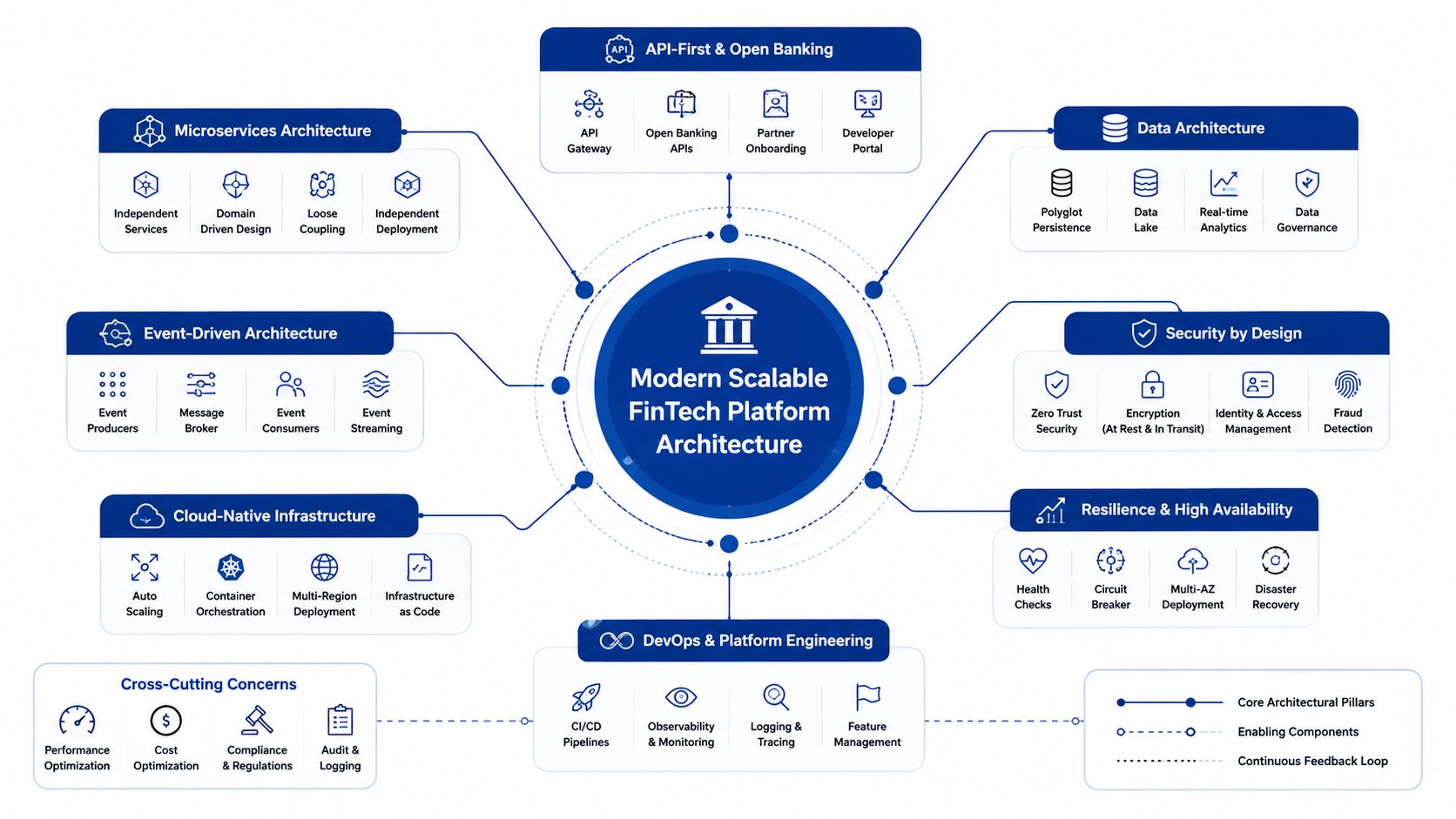
The patterns only earn their keep when the boundaries reflect financial correctness. Team convenience is a weak reason to split services. Ledger integrity is a strong one.
The Vendor Versus Build Decision Framework for Scaling FinTech
The vendor versus build decision should be something a CTO can defend in front of a board without hand-waving. The question is not “can we build it?” It's “what do we need to own to grow, and what can stay commoditised?”
Here's the matrix I'd use before signing off on any major platform decision, and it lines up well with the way teams weigh fintech software development partner options when the roadmap is already under pressure.
| Decision Axis | Early-Stage Startup | Growth-Stage Vertical Player | Established FinTech |
|---|---|---|---|
| Time to first regulated transaction | Buy heavily, move fast | Mix vendors with a few owned core services | Build around the rails that define the business |
| Total cost over 24 months | Accept higher vendor spend to reduce delay | Control spend by building differentiators | Optimise cost by owning critical plumbing |
| Data residency and PCI scope | Prefer vendors to reduce burden | Tighten control over sensitive data paths | Own the sensitive parts that affect risk |
| Product differentiation | Keep building narrow and focused | Build the core that customers notice | Build what creates moat and margins |
| Team size and skill mix | Small team, limited platform depth | Mixed product and platform team | Dedicated platform, security, and compliance teams |
| Exit cost | Keep switching simple | Avoid lock-in on core logic | Control the components that are hard to replace |
What to buy first
Early-stage teams should lean on payment processors, KYC vendors, and ledger-as-a-service products. That choice compresses time-to-market and keeps the team focused on proving demand. If the product fails, it shouldn't fail because the engineering team spent six months building commodity infrastructure.
What to build next
Growth-stage fintechs in one vertical, such as lending or insurance, should build the differentiating core and keep vendors around it. Underwriting logic, risk orchestration, or ledger rules often belong in-house. Everything that looks like undifferentiated plumbing should stay replaceable.
What established players should own
Established firms with bank partnerships and strong margins should build the rails they depend on most. That usually means owning the systems that define customer experience, compliance handling, and operational speed. Commodity layers can still stay with vendors, but the platform's strategic surface area belongs in-house.
Decision rule: buy anything that doesn't appear on your competitive slide, build anything that does.
For teams evaluating the build side of the equation, the internal guide on fintech compliance solutions helps frame where product ambition runs into regulated reality.
Compliance, Security, and Data Residency Built In From Day One
Compliance can't be layered on after launch and still feel credible under audit. In Canada, the platform has to treat PCI DSS, SOC 2, PIPEDA, and OSFI B-13 as architectural inputs, not paperwork. That means controls must map cleanly to the way data moves through the system.
Where each control belongs
At the data tier, encryption and HSM-backed key management should protect sensitive records. At the network tier, mTLS and short-lived service identity reduce lateral movement risk. At the event tier, immutable audit logs preserve the full story of a transaction. At the API tier, tenant-scoped policy engines decide what each caller can see or do.
Data residency stops being a legal footnote and becomes a design choice. The right article on data residency for SaaS is useful context, but Canadian fintechs also have to plan for practical realities like keeping cardholder data in-region on AWS ca-central-1 when that's part of the operating model, and segregating workloads for provincial health or insurance data where obligations differ by use case. For some institutions, records may need to stay in Canada, which changes how cloud, replication, and recovery are structured.
| Control Framework | Data Tier | Network Tier | Event Tier | API Tier |
|---|---|---|---|---|
| PCI DSS | Encrypt card data, limit scope | mTLS between services | Immutable processing logs | Tokenised payment APIs |
| SOC 2 | Access controls and retention | Service identity and monitoring | Change and incident trails | Tenant policy enforcement |
| PIPEDA | Personal data handling and minimisation | Protected transport | Consent and access records | Data access filtering |
| OSFI B-13 | Secure configuration and evidence | Incident-ready controls | Audit and recovery traces | Supervisory reporting hooks |
Threat modelling and SBOM scans should run inside CI, not beside it. Incident runbooks need to be written in a way that an OSFI reviewer can follow without guessing. If your disaster recovery story depends on manual heroics, your architecture is already too fragile.
Performance, Observability, and Cost Working as One System
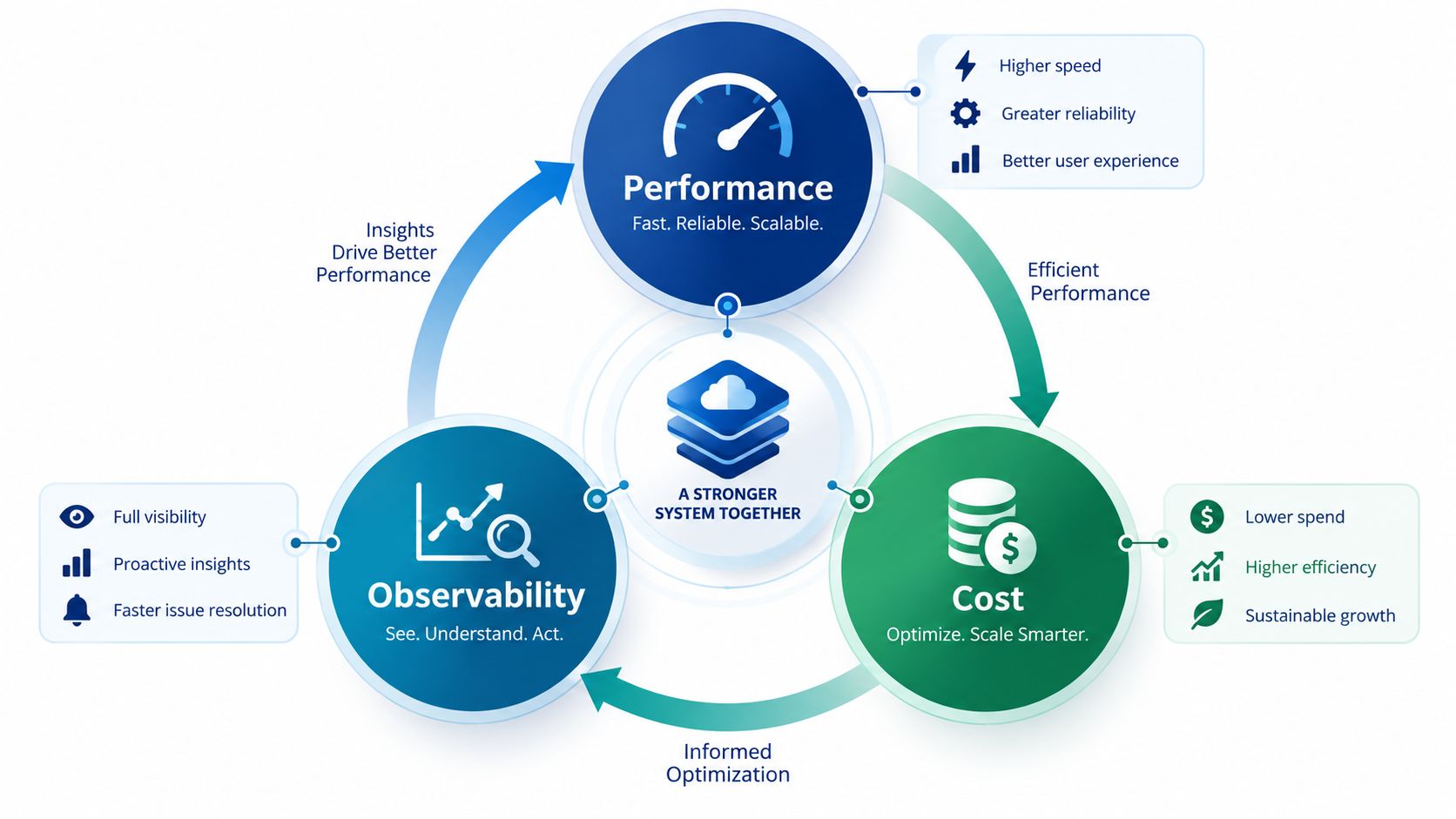
Latency, observability, and cost are usually discussed as three separate programmes. That's a mistake. In a serious payment environment, they're one feedback loop.
What to measure together
Instrument services with RED metrics for requests, errors, and duration, then pair that with USE metrics for utilisation, saturation, and errors at the infrastructure layer. Add distributed tracing so a payout, refund, or transfer can be followed from API edge to settlement path. When billing data sits next to the traces, waste becomes visible.
That matters because cost anomalies often point to architecture issues. Chatty service-to-service traffic, noisy cross-region replication, and over-provisioned compute all show up in the spend dashboard before they show up in a post-mortem.
How mature teams respond
Autoscaling helps, but only if the signals are good. Right-sizing, spot usage where safe, and savings plans all have a place once the workload profile is understood. FinOps reviews should ask whether a spike came from genuine demand or from avoidable platform design.
Practical insight: a p99 spike on payout submissions should trigger a trace review, a cost check, and a capacity decision in the same workflow.
If you're looking for a focused angle on transaction risk, the guide on preventing chargeback spikes is a useful reminder that performance and fraud pressure often travel together. The point is simple: a platform that scales cheaply but can't see itself is still expensive.
What Scaling Looks Like in Production: A Composite Case Study
A Toronto-based lending platform started with a single-region monolith and a managed payments vendor. That was the right call early on. The team needed to launch, learn, and keep the compliance surface manageable while it proved product demand.
The pressure arrived during a tax-season surge, when payroll-related traffic pushed the platform beyond the comfort of its original design. The first change was surgical, not dramatic. The team split the ledger into its own service so balance logic stopped competing with UI and reporting workloads.
The migration path that held up
Next came Kafka-backed event flows for payouts, which let the platform decouple payment submission from downstream processing. That reduced the amount of synchronous work sitting in the critical path. A read-replicated reporting database then took analytics pressure off the transactional store.
The team also learned where discipline mattered most. One blue-green deployment failed because schema migration rules were too loose. The application switched traffic cleanly, but a hidden compatibility issue surfaced in the new release path. That failure cost time, but it also forced a better migration standard.
The wins were visible in operations. Batch jobs that used to take six hours were brought down to twenty minutes after the data and service boundaries were reworked. The team kept the choices that reduced coupling and discarded the ones that only made deployment look elegant on paper.
The decisions they'd repeat were clear:
Vendor first for commodity rails: It kept launch speed high and reduced early platform risk.
Ledger ownership early: It gave the team a stable core around which to build.
Read replicas for analytics: It protected the transactional path from reporting load.
The choices they'd skip were just as clear. A loose schema-change process, overdependence on the monolith, and assuming one deployment strategy would fit every workload all created avoidable pain. Scaling worked once the team treated operational discipline as product work, not platform trivia.
A CTO Action Checklist for Scaling a FinTech Platform in 2026
A CTO doesn't need another abstract framework. They need a quarter's worth of decisions that reduce risk and create room for growth.
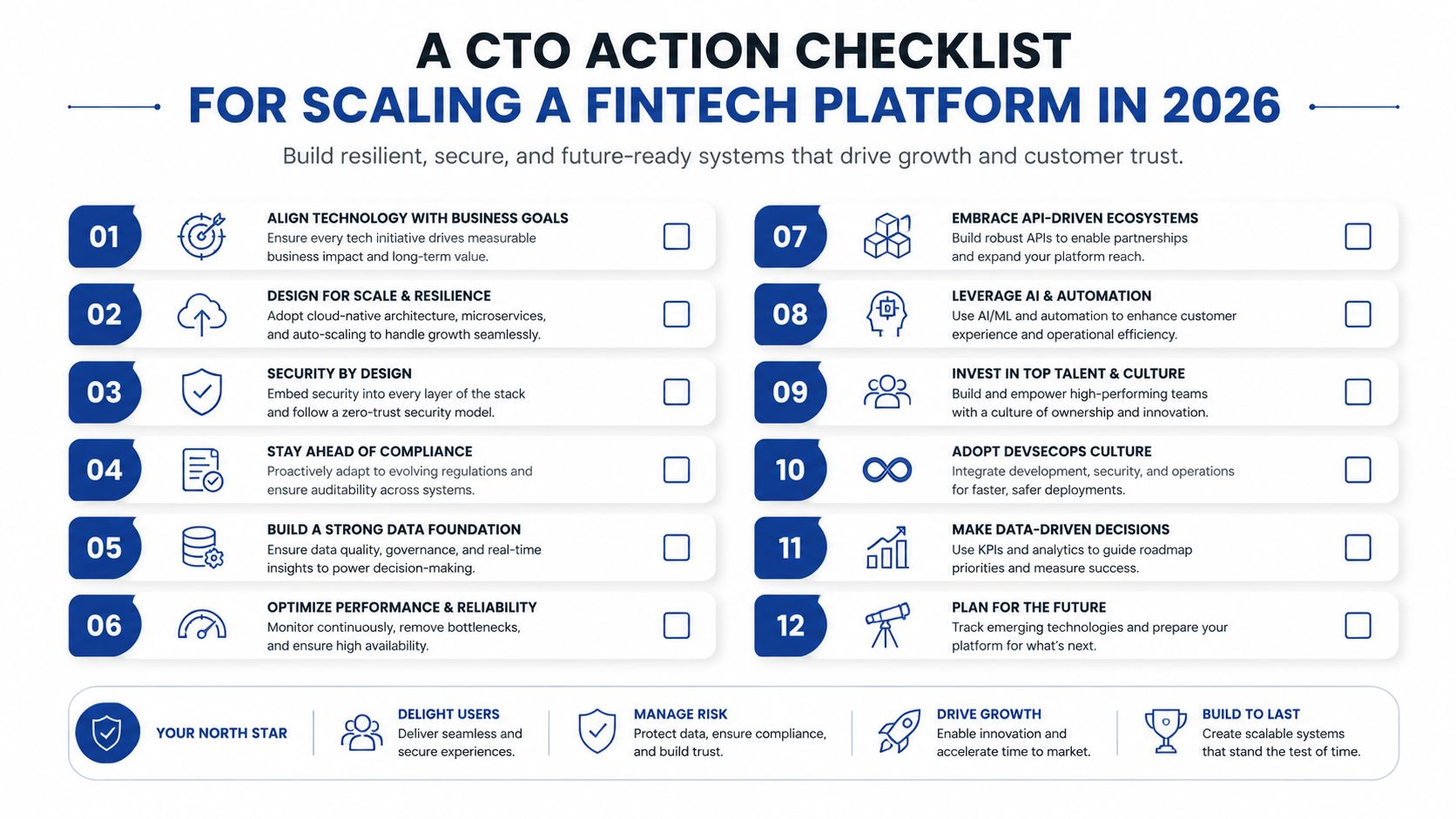
The next 90 days
Audit service boundaries: Confirm that ledger, payments, risk, and accounts aren't sharing logic that should be isolated. Owner: Head of Engineering. Deadline: 30 days.
Map every data flow: Trace card data, personal data, and payment events against PCI, SOC 2, and PIPEDA residency obligations. Owner: Security and Compliance. Deadline: 30 days.
Lock API versioning rules: No partner integrations should go live without a published compatibility policy. Owner: Platform Lead. Deadline: 45 days.
Instrument three signals: Track latency, error rate, and saturation for the flows that generate revenue or create regulatory exposure. Owner: SRE Lead. Deadline: 30 days.
Review vendor dependence: Use the build-versus-buy matrix before renewing anything mission-critical. Owner: CTO. Deadline: 60 days.
Test incident response: Run an OSFI-ready runbook exercise with legal, ops, and engineering in the room. Owner: Risk Lead. Deadline: 60 days.
Check residency posture: Confirm that storage, backup, and replication choices match the business's Canadian obligations. Owner: Infrastructure Lead. Deadline: 45 days.
Set a schema migration standard: Make compatibility part of release gating. Owner: Engineering Manager. Deadline: 30 days.
Connect spend to load: Feed cloud cost reporting into monthly capacity planning. Owner: FinOps Lead. Deadline: 45 days.
Review fraud and chargeback pressure: Ensure observability includes the signals that affect customer trust. Owner: Risk and Payments Lead. Deadline: 60 days.
Document ownership per service: Every production service needs one named owner. Owner: CTO. Deadline: 15 days.
Choose the next build target carefully: Build the component that differentiates the business, not the one that merely fills the roadmap. Owner: Product and Engineering. Deadline: 90 days.
The point of the checklist is not busywork. It's to make sure the platform can survive growth, scrutiny, and the next integration without falling back into firefighting.
Frequently Asked Questions About Scalable FinTech Platforms
When should a fintech team adopt microservices?
Adopt them when a single codebase is slowing releases, team ownership is blurred, or one failure can't stay contained. If your product is still changing shape every week and the team is small, a modular monolith may be safer.
When does cloud-native stop paying back?
Cloud-native stops paying back when services are split for fashion instead of need. If tracing, deployment, and operational overhead are rising faster than resilience or release speed, the architecture has become heavier than the workload justifies.
Should we get PCI Level 1 ourselves or outsource?
If card handling is not central to your differentiation, outsource it to a certified processor and keep your PCI scope small. Build only if the payment path itself is part of your moat and your compliance team can support the burden.
Multi-tenant or single-tenant for regulated Canadian workloads?
Choose multi-tenant when you need efficient scaling and can enforce strict logical isolation. Choose single-tenant when residency, isolation, or client contracts demand stronger separation. The right answer depends on the data class, not the trend.
Cleffex Digital Ltd works with fintech and insurance teams on custom software development, scalable architecture, and incremental modernisation of regulated platforms. If you're planning a scalable FinTech platform and need a team that can shape the architecture around compliance, integrations, and growth, visit Cleffex Digital Ltd to start the conversation.