

You listed the same jacket on your website, a marketplace and the rail in the shop. This morning, the count still said one left, because someone checks stock by hand before opening. By lunch, the jacket has sold twice. One buyer is already angry, and the shelf that looked heavy last week is the reason three channels promised the same unit.
That is the stock problem real-time inventory management software is meant to stop. It keeps one stock figure current across every channel and location, so a sale, a return or a receipt changes what the next channel can sell.
The right platform depends on your sales mix, how many people touch an order, and how much warehouse work sits behind the sale. A seller with one shop and a few dozen SKUs needs speed and clean counts. A wholesaler with marketplaces, a warehouse and purchase orders needs reservations, locations and replenishment rules before it needs flashy reports.
I judge each option on the stock problem it solves, and on where it falls short for a given size and sales mix. Published prices are a starting reference. Confirm Canadian billing, taxes and add-ons before you sign. Cleffex builds software for retail and ecommerce that supports omnichannel operations, and it can integrate AI capabilities into existing CRMs, ERPs and custom software without disrupting current workflows.
1. Cin7
Cin7 is the tool I look at when a product business has outgrown a spreadsheet and a basic shop app, but a full ERP would swallow the team. It holds stock, purchasing, sales and warehouse work in one cloud record, with forecasting and manufacturing on eligible plans. That suits a growing wholesaler or brand selling through several channels, not a one-person shop that only needs a count.
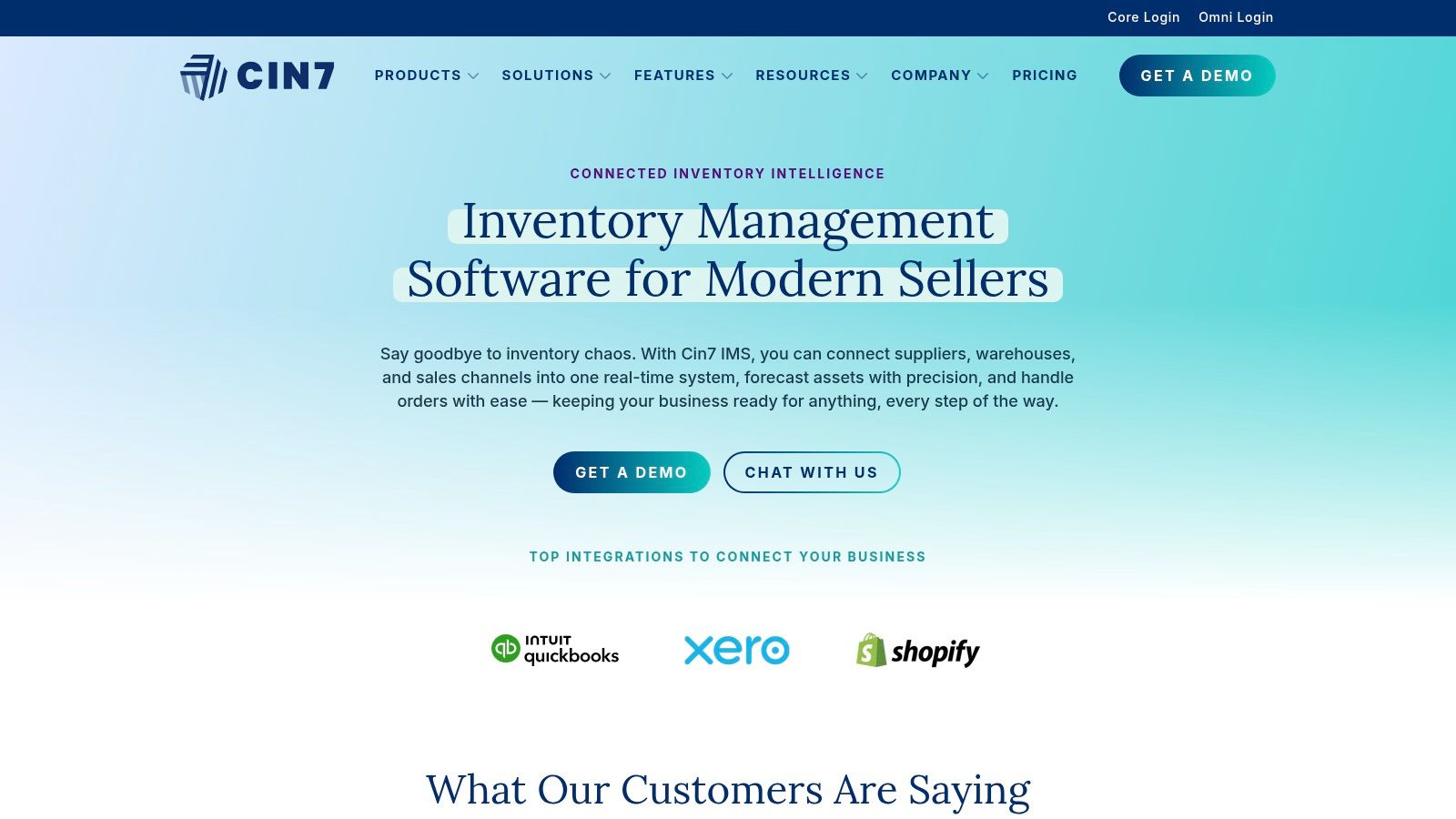
The stock problem it solves is a shared balance that updates across locations and connected channels, including Shopify and Amazon, plus purchasing tied to QuickBooks or Xero. New-customer plans are published from US$349 per month. Treat that as a US starting figure, then confirm Canadian billing and tax.
Where the record has to live
A national total is a poor promise. Statistics Canada's Monthly Retail Trade Survey collects sales, ecommerce sales and location counts by province, territory and selected census metropolitan areas, which is a useful reminder to store SKU, location, available quantity, reserved quantity, incoming quantity, channel and timestamp on every movement.
Cin7 can be more system than a modest catalogue needs. User, integration or order limits may push you onto add-ons. If you only want a cleaner count, read a narrower inventory management software comparison before you commit to warehouse depth you will not use.
2. Zoho Inventory
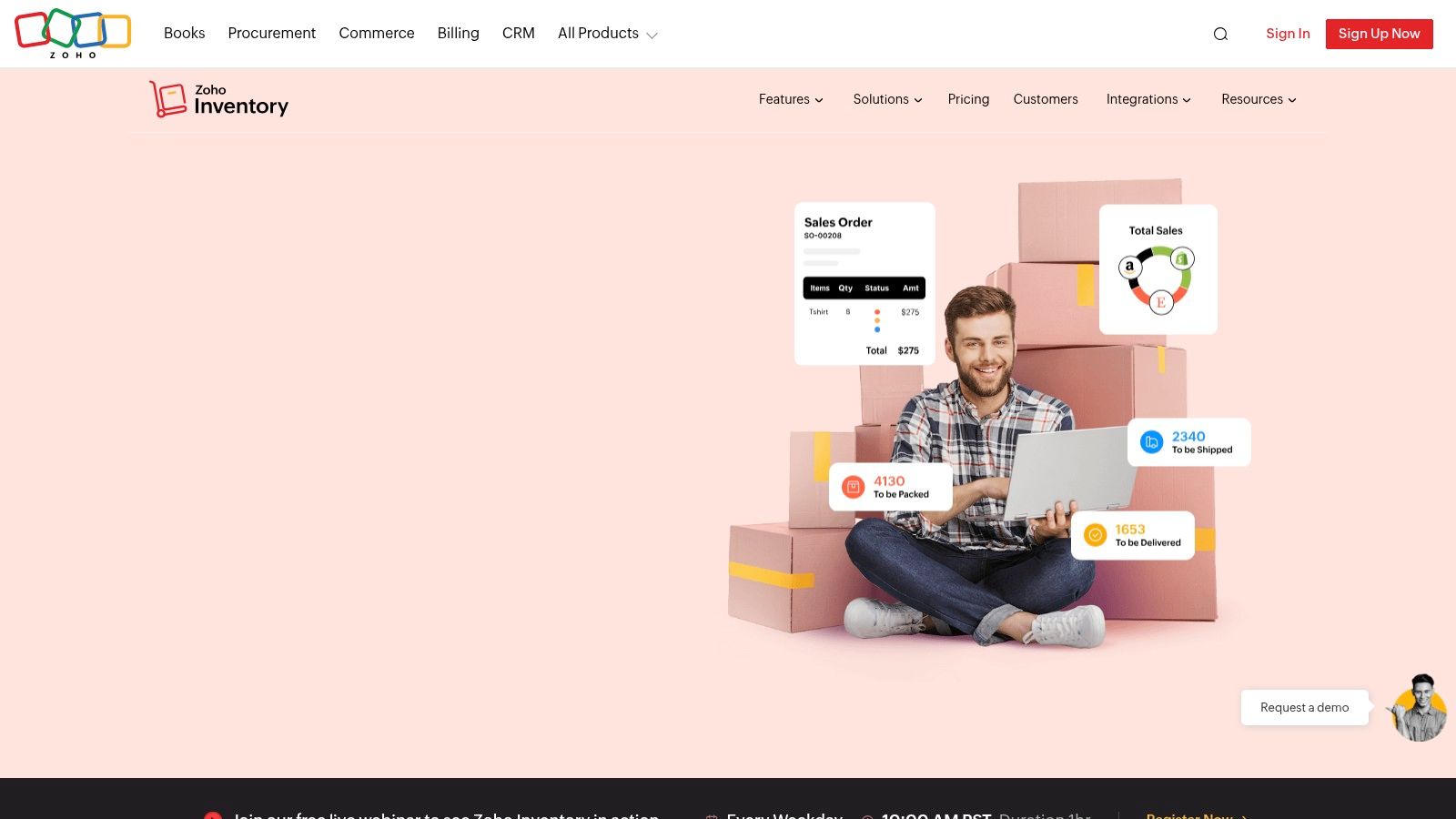
Zoho Inventory is the small-team pick when you want orders and stock without buying a suite you will never open. It fits a small or mid-sized seller, especially if other Zoho apps already hold customers and books. It is a weak fit once you run several warehouses, production jobs or province-by-province lead times.
The Zoho Inventory pricing page lists plans from US$29 per month billed annually, plus a 14-day free trial. Add-ons can buy more orders, users or locations. That entry price is easier than most mid-market platforms, and the bill still climbs when limits are reached. The figure is in US dollars, so confirm Canadian billing and taxes.
Lead times the dashboard will not fix
A live count does not tell a rural seller when the next carton will arrive. Statistics Canada found that 17.3% of rural and small-town businesses faced supply-chain challenges in Q1 2025, up from 11.7% the previous quarter. Among affected businesses, 69.9% cited higher input prices and 54.1% cited delivery delays, and 48.9% expected conditions to worsen over the next three months.
A faster stock screen can create false confidence if reorder points still assume a fixed lead time.
Check whether Zoho's order and location caps, and its warehouse tools, match seasonal carriers and imported parts before you treat the low plan as the actual cost.
3. QuickBooks Online
QuickBooks Online solves a different problem. The books and the count live together, which is what many Canadian small businesses and their bookkeepers already want. Inventory tracking sits on Plus and Advanced, not on every tier. Subscription pricing varies, and the Canadian product information covers GST/HST and CRA-oriented accounting.
On an eligible plan, quantities move when you record a sale or a receipt. You also get low-stock alerts, reorder points, purchase orders and inventory reports. One main location and a short catalogue is the sales mix where this stays honest. A second warehouse, kitting or a busy marketplace feed is where it starts to strain.
This QuickBooks Online software review is worth reading beside the inventory tracking page so you see both the accounting fit and the operational ceiling.
What it will not do well:
Warehouse work: Bin moves, directed picking and shop-floor scans are not the point of this product.
Channel sync: Confirm how each marketplace and your own site posts stock, because "connected" is not the same as reserved-on-order.
Manufacturing: Bills of materials and batch traceability belong in a dedicated app, not in the bookkeeping tier.
If your pain is a late month-end count, this can be enough. If your pain is two channels selling the last unit, it usually is not.
4. Fishbowl
Fishbowl suits businesses that buy, store, move and sell, and that have outgrown an accounting-led count. It is a paid subscription and implementation is required, so setup belongs in the first-year budget beside the licence. Manufacturing and heavier warehouse work sit on separate offerings. The base product is stock control, not a factory system, and I would confirm Canadian billing and taxes before treating any quoted figure as final.
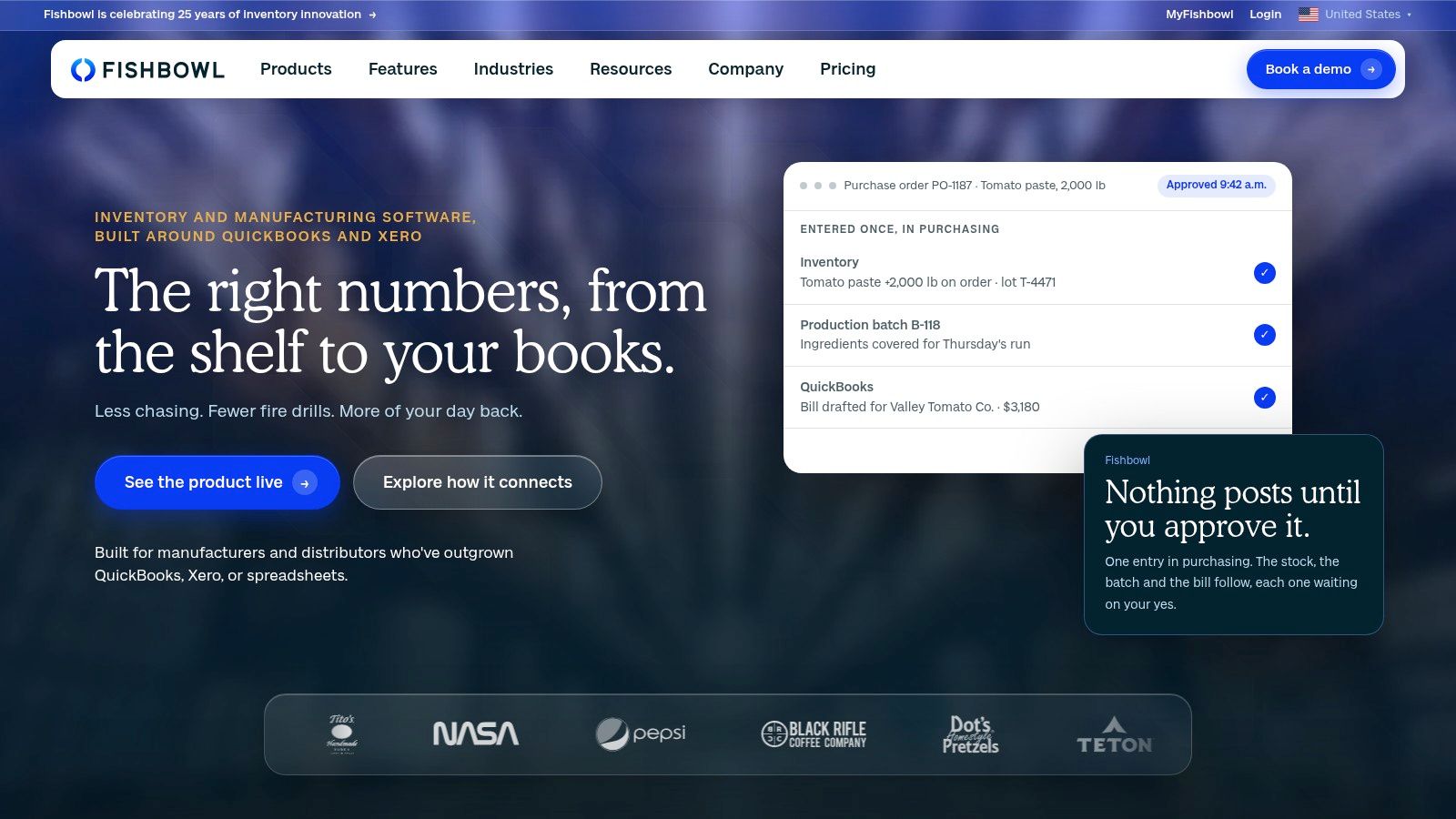
You get real-time SKU tracking, reorder points, mobile barcode scanning and multiple warehouses. Eligible plans add picking, receiving, shipping and ecommerce selling. Higher tiers add lot and batch traceability, audit trails and compliance documents. Integrations with QuickBooks Online and Xero keep stock movement near the ledger.
When the count and the shelf disagree
Canadian inventory often misses the target even when a system exists. In the third quarter of 2024, Statistics Canada reported that 63.1% of inventory-holding businesses had inventories at their desired level, while 18.6% held more than desired and 18.3% held less. Wholesale was the most likely to sit above pre-pandemic levels at 41.1%, against 24.8% in retail and 31.7% in manufacturing.
That gap is the stock problem Fishbowl solves for a multi-channel seller: one count across warehouses, posted by scans as moves happen. It falls short for a very small team, because barcode counts only help if staff scan at the moment of the move. A practical look at how automation benefits inventory counting is the right check before you buy a warehouse suite a three-person team will not run.
5. inFlow Inventory
inFlow is built for small and mid-sized product businesses, especially wholesalers and distributors that sell through a mix of B2B orders and storefront channels. The inFlow site lists an Entrepreneur inventory plan at C$224 per month on monthly billing, with a lower effective rate on annual billing. Treat that as a starting reference and confirm Canadian billing, taxes and onboarding before budgeting.
The stock problem it solves is a shared count across locations and order channels: real-time stock across locations, sales and purchase orders, and pick-pack-ship, with Shopify, Amazon, WooCommerce, QuickBooks Online and Xero integrations. Optional pieces include manufacturing tools, a B2B Showroom, API access and the Stockroom scanning app. The company notes support teams in Toronto and Lisbon, with live chat and email.
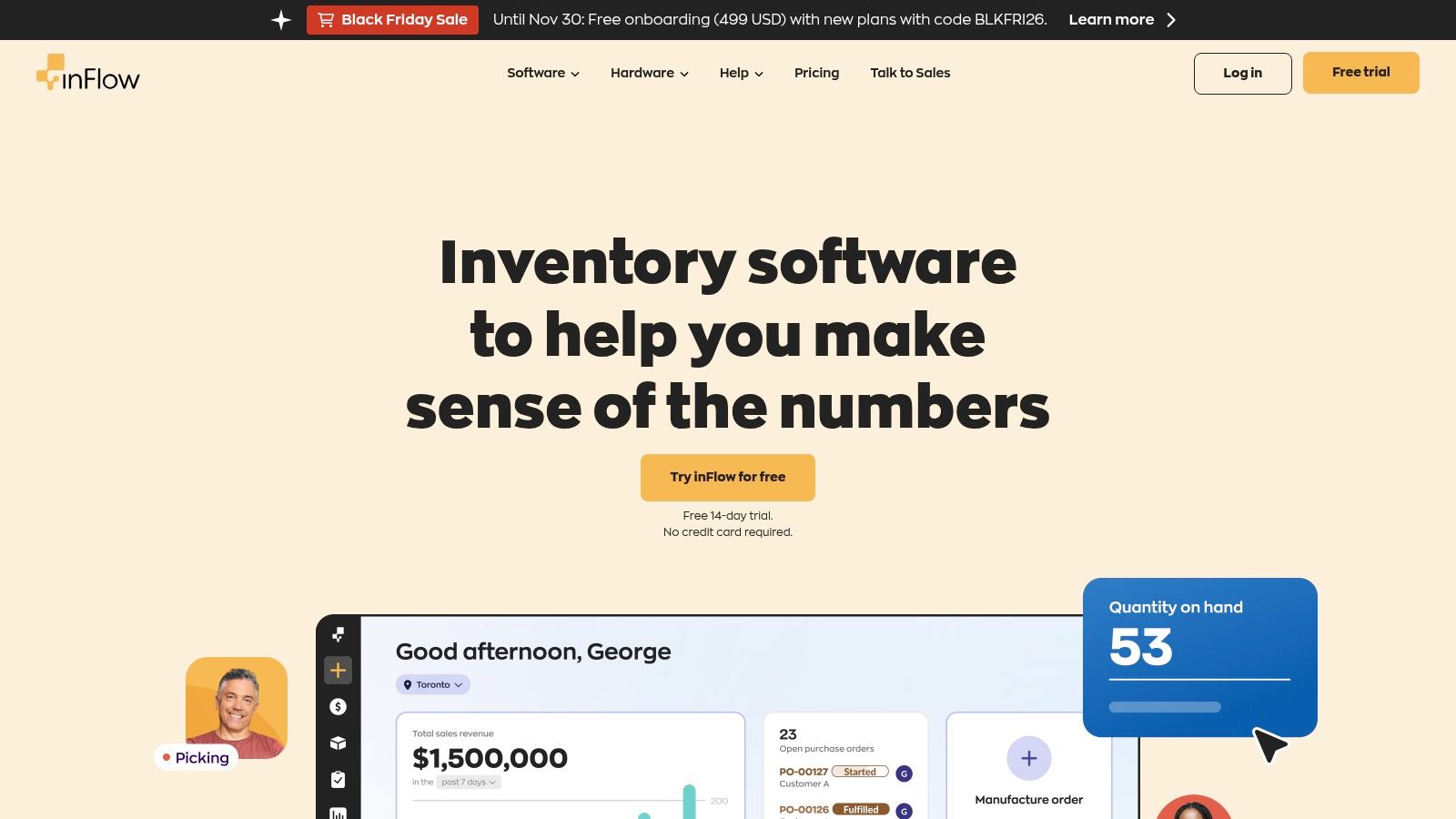
The catch is module creep. Lot tracking, serial numbers and API access may cost extra; annual order limits on lower tiers will pinch a fast seller, and some plans require onboarding. Separate products cover manufacturing and an internal stockroom, so the base inventory plan should not be read as a production system.
Price the scan app, the lot module and onboarding in the same column as the subscription, or the Canadian sticker price will not be the invoice.
It suits a distributor with a few locations and a clear wholesale flow. It is a poor bargain if you need deep production planning on day one.
6. Odoo Inventory
Odoo Inventory is one app inside a modular suite. That is the appeal and the trap. You can start with stock, replenishment rules and a forecast built from on-hand, incoming and outgoing quantities, then add sales, accounting, ecommerce or manufacturing later. Odoo lists a One App Free plan and paid plans from US$24.90 per user per month on the cited page. The free option is one app, under plan terms.
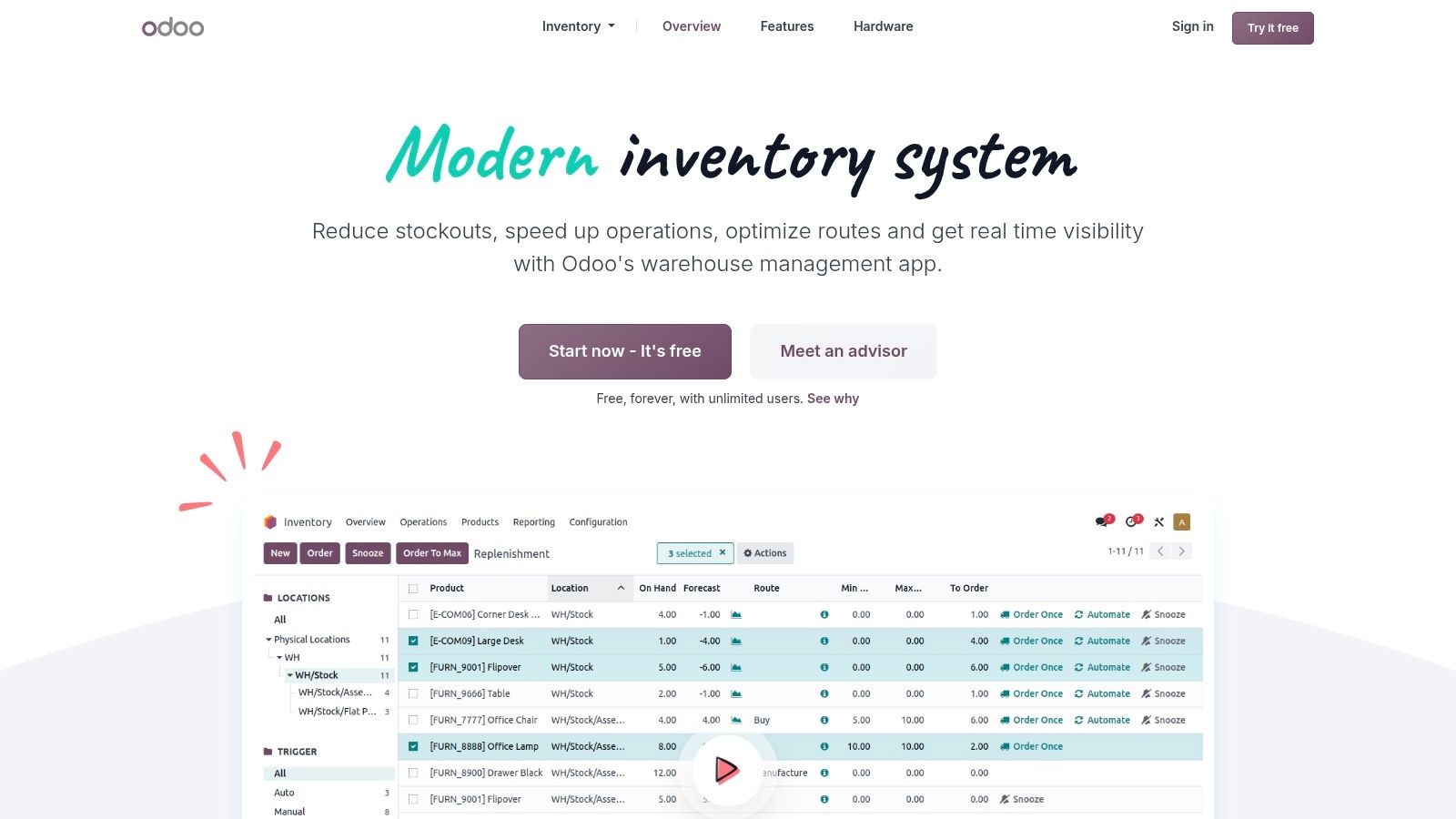
Barcode flows, variants, warehouse routes and inventory valuation sit in the same family as the accounting app. A configured team can make reordering rules raise a purchase, a transfer or a manufacturing order. A team without an implementer often stops at a half-built workflow.
Stocking up can be the rational call
Most software advice says "carry less." Cross-border risk sometimes says the opposite. Among Canadian businesses importing from the United States in Q2 2025, Statistics Canada reported that 33.4% sought suppliers outside the United States, 24.6% increased domestic sourcing, and 19.2% increased inventory or stockpiled goods. Maintaining inventory levels was an obstacle for 12.1% of those US importers, compared with 7.0% of businesses overall.
Odoo can model that only if you store origin, lead time and a service buffer, not just a quantity. Budget implementation, support and customisation besides the per-user fee. Per-user pricing looks small until every warehouse login is on the bill.
7. Shopify
If the website and the till are already Shopify, Shopify is the stock record I would test first. It is a poor standalone inventory system for a business that does not sell there. POS Pro is listed at C$49 per month as an add-on. Ecommerce subscription costs vary by plan. Multi-location visibility depends on setup and plan.
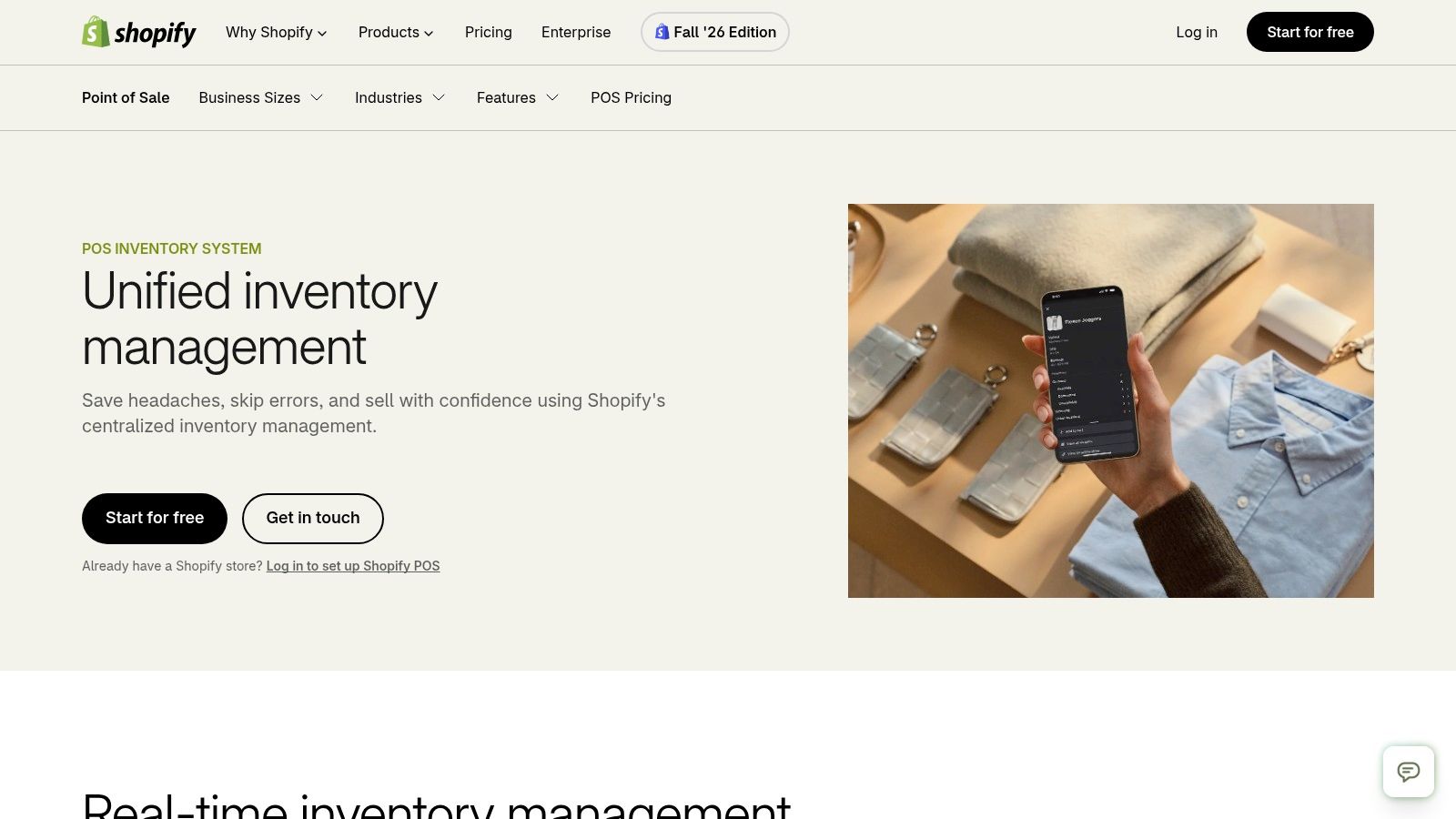
The Shopify POS inventory tools keep a central view across sales channels and locations, and they cut available stock when an online or in-person sale lands. The App Store covers odd workflows the core product skips. Plan limits, location caps and sync with other marketplaces or accounting tools still need a test order, not a screenshot.
The sync failure small merchants already feel
In 2024, 32% of surveyed small and medium-sized Shopify merchants in Canada and the United States named inventory management as a primary focus, while 83% reported difficulty synchronizing inventory, manufacturing and accounting data, according to the Shopify 2024 E-commerce Performance Report as reported by Inside Logistics. That is an ecommerce inventory integration problem, not a theme problem.
Before you add another app:
Reserve on accept: Hold the unit when the order is accepted, not when it ships three days later.
Separate the unsellable: Returns, damaged units and safety stock should not sit in the same available figure.
Watch the failed update: If a marketplace order does not acknowledge, flag it. Do not leave the unit for sale.
Forecasting on top of that record is a different project. A practical primer on AI inventory management for ecommerce helps you see what the native count will not predict.
8. Lightspeed Retail
A retailer selling in-store and online faces a specific problem: the till and the website have to share one stock figure, or one channel oversells the other. Lightspeed Retail is built for that retailer. It is a point-of-sale platform first, with store inventory attached. Plans are priced per month in US dollars, so confirm Canadian billing, registers, locations and payment terms before you budget. The US figure will not be your invoice.
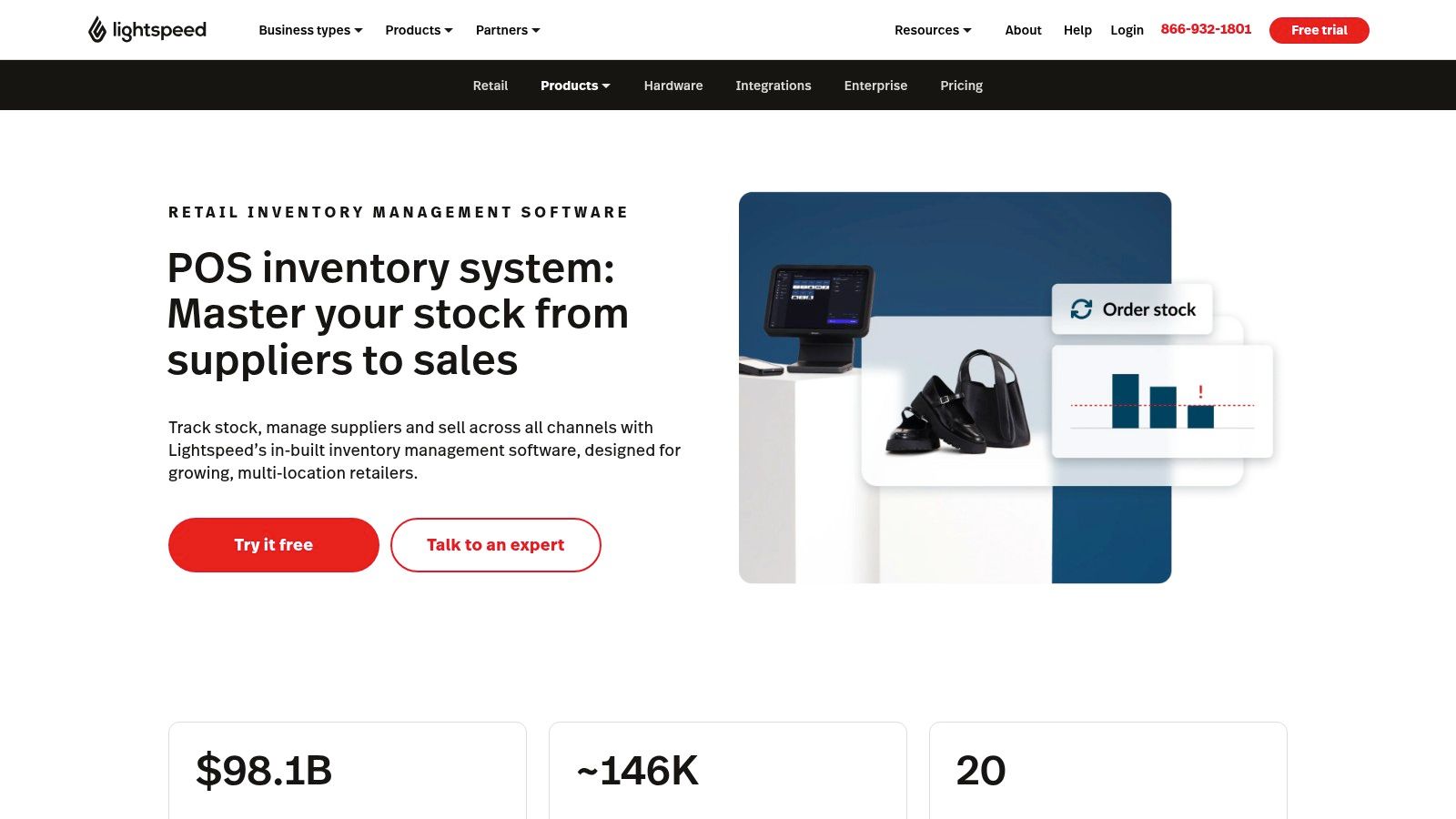
The Lightspeed retail inventory tools cover stock updates for sales, returns and receipts, reorder points, minimum and maximum levels, mobile counts and purchase orders. Pricing and promotions sit next to the same product file, which matters when a shop promotion and a web price drift apart. That shared record is the reason a POS-led seller picks it over a warehouse-led tool.
Canada's retail scale shows why the shared record matters. Statistics Canada reported total retail spending of $865.2 billion in 2024, and retail ecommerce revenue of $73.7 billion, up 9.0% on the year. Digital sales are large enough that a shop-only count will oversell.
Multi-channel inventory management here means the till, the web order, and the transfer all hit one balance. It falls short when you also build products, track lots across a plant, or need warehouse logic deeper than store replenishment. It suits independent retailers and small chains where most volume moves through the till, and ecommerce is a second channel. I would trial it with a real return and a same-day web order on the same SKU.
9. Unleashed
Unleashed is cloud inventory for product businesses that buy, stock, sell and sometimes make. Core inventory is one package. MRP, business intelligence and demand forecasting sit on higher ones. The pricing page lists a 14-day free trial and package prices in US dollars. Confirm the current standard price, onboarding and Canadian taxes, because support packages can move the first-year cost, and the published figure is a starting reference rather than your invoice.
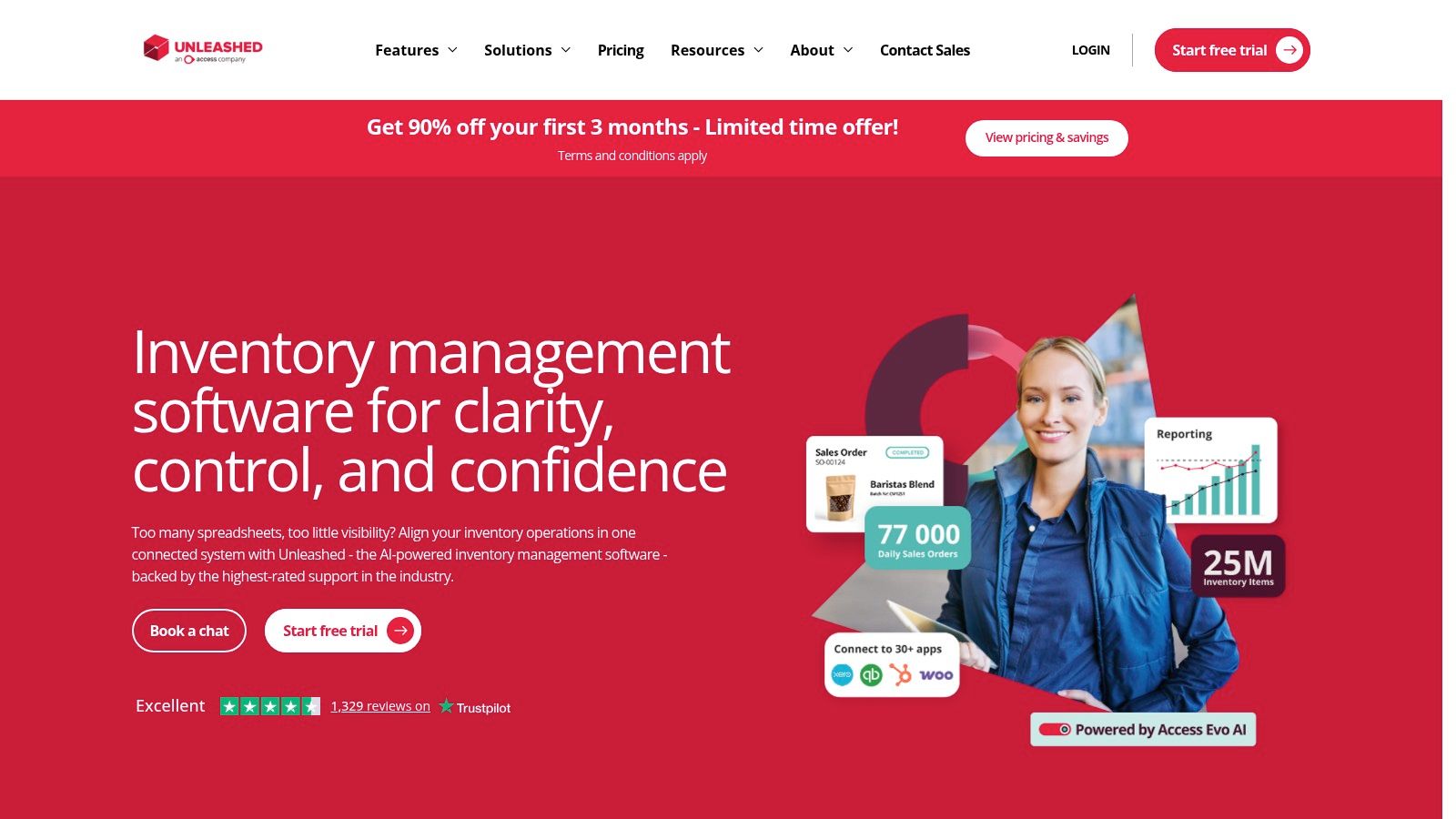
It suits a growing wholesaler or light manufacturer that has outgrown an accounting add-on and needs purchasing through to sales in one place. The Unleashed site lists what each package covers. It is heavy if you only ship finished goods from one room, and a maker should check which tier includes MRP before the trial ends.
Make the available figure a rule, not a feeling
Stale web stock is already a commercial problem. Online sales are a large and growing share of Canadian retail, so one channel working from an outdated balance can oversell even when most orders still ship from the shop floor.
Inventory synchronisation should follow a fixed order. Reserve when the order is accepted. Deduct when it is fulfilled. Restore on an eligible cancel or return. Park damaged units as non-sellable. Available-to-sell is on-hand minus reservations, allocations and safety stock, with incoming stock counted only if you allow pre-orders. That sequence matters most for a wholesaler taking bulk B2B orders beside a web store, because a phone order accepted this morning should pull units before the site sells them again tonight.
Unleashed supports that discipline on the right package. It will not invent it if your team keeps a side spreadsheet for "just in case" units.
10. Katana
Katana is the maker's system. It joins materials and finished goods with production or assembly, which is the gap when you sell on several channels and also build the product. A free plan lets you try it at a limited scale. Core starts at US$299 per month, and the price can move with order volume, locations and add-ons, so a busy season can reprice the tool. Treat that figure as a starting reference and confirm how it bills in Canadian dollars and taxes.
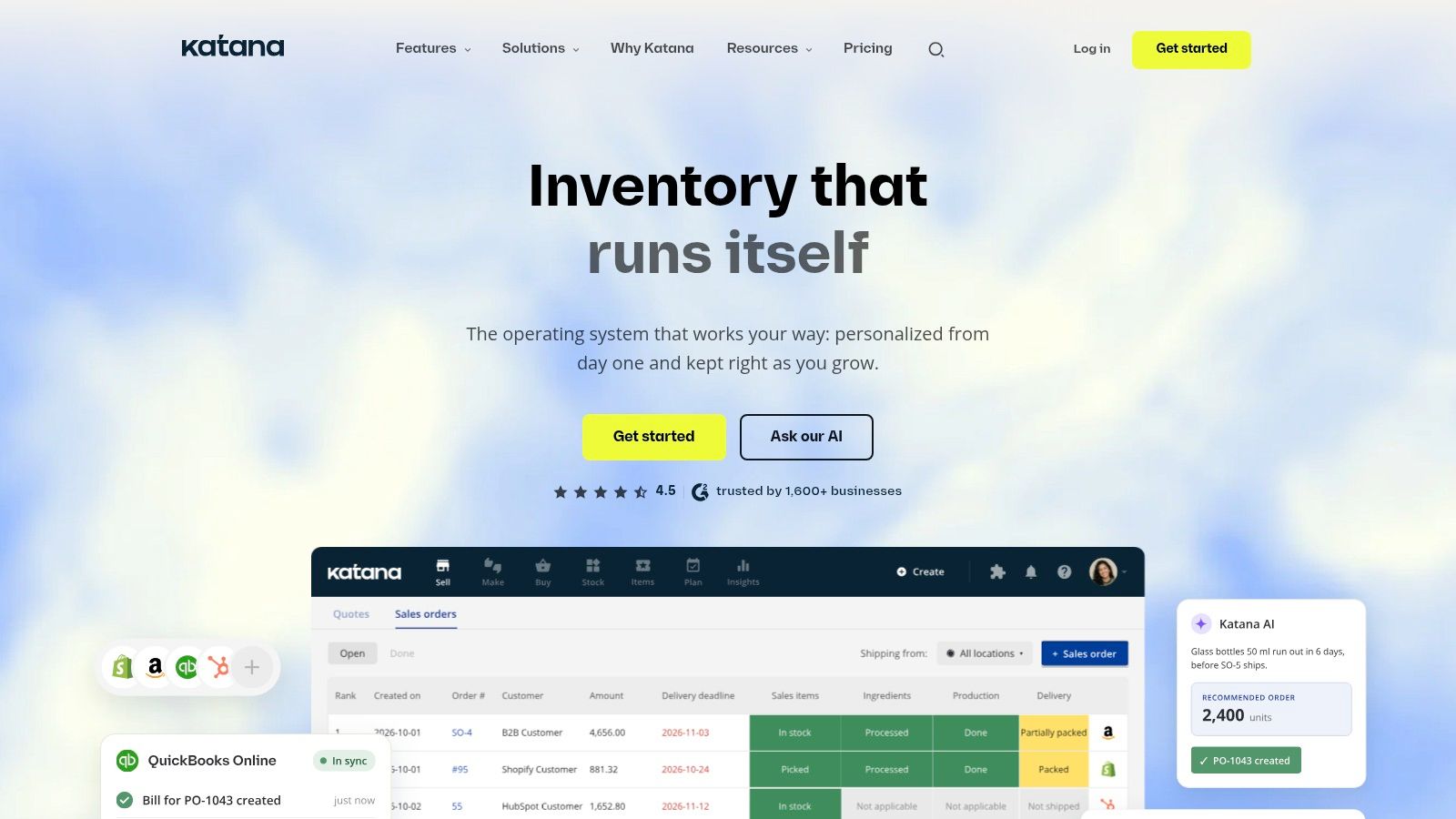
Real-time planning covers products and materials, sales and purchase orders across channels, and barcode scanning plus batch or serial tracking on eligible setups. Manufacturing tools and links to QuickBooks and Xero are part of the pitch. Unlimited users and integrations on Core are a genuine difference from per-seat tools, which matters if production staff, the shop floor and the office all need the same stock view.
The floor is high. A reseller with no production pays for capacity it never uses, and a plant that needs deep warehouse control should validate that fit before signing. Retail inventory visibility still hinges on allocation: a finished unit committed to a marketplace order is not free for the shop, even while it sits on the bench. Katana suits a small or midsize producer selling through a store plus one or two channels. A single-room seller shipping finished goods can get the same stock accuracy for less.
Test one real assembly order, one component shortage and one marketplace sale in the same afternoon. If any of those three stays on a spreadsheet, the platform has not solved your stock problem.
How the ten platforms compare on published pricing, trials and best fit
Read each row by the stock failure it solves, since the sticker price rarely shows channel depth.
| Item | Published starting price | Free trial or free plan | Best for |
|---|---|---|---|
| Cin7 | US$349/month | No free option stated | Growing multichannel sellers and wholesalers |
| Zoho Inventory | US$29/month, billed annually | 14-day free trial | Small and midsized businesses, especially Zoho users |
| QuickBooks Online | Inventory tracking on Plus and Advanced plans | No free option stated | Small businesses combining basic inventory and accounting |
| Fishbowl | US$229/month, billed annually | No free option stated | Businesses needing warehouse or inventory management depth |
| inFlow Inventory | C$224/month on monthly billing | No free option stated | Small and midsized wholesalers and distributors |
| Odoo Inventory | US$24.90/user/month | One App Free plan | Businesses wanting configurable inventory and business apps |
| Shopify | C$49/month for POS Pro add-on; ecommerce plan pricing depends on the plan chosen | No free option stated | Businesses already selling through Shopify |
| Lightspeed Retail | US$89/month | No free option stated | Retailers managing POS and inventory across locations |
| Unleashed | Package pricing in US$; core inventory on the base package | 14-day free trial | Product businesses, wholesalers, and manufacturers |
| Katana | US$299/month | Free plan available | Product businesses combining inventory and production |
Lower entry rows cover counting and accounting. Higher tiers pay for reservations, locations, batches or production depth.
Matching Your Sales Mix to the Right Stock Platform
Pick the platform for the failure you have. A double-sold jacket is a reservation problem. A warehouse that cannot find the carton is a location and scanning problem. A bookkeeper who cannot tie receipts to stock is an accounting problem. One product rarely leads to all three.
Work through this before you sign.
Map every channel and place: Website, marketplaces, tills, warehouses and any third-party fulfilment. If a location is missing, the live figure is already wrong.
Choose the depth that hurts: If month-end is the pain, an accounting-led count may be enough. If picks, bins and batches are the pain, pay for warehouse depth and skip the lighter tools.
Run real orders on trial: Place, reserve, fulfil, cancel and return the same SKU on two channels. Time the update. A demo walkthrough will not show a stuck marketplace acknowledgement.
Price the Canadian invoice: Confirm dollar currency, GST/HST, registers, locations, order caps, onboarding and add-ons. A US monthly sticker is only a starting reference.
An implementation partner can connect the stock system to the shop, the books and the channels without freezing the day's orders. Cleffex Digital Ltd builds custom and integrated ecommerce and retail software for that kind of fit, including where a packaged tool stops. You can review the Cleffex homepage or the ecommerce development service if a custom build is the honest next step rather than another subscription.
Do not buy forecasting, manufacturing and a free plan you will outgrow in a month. Buy the smallest system that keeps one available figure true for the channels you sell on this quarter, and leave room to add warehouse or production depth when the order volume forces it.
Frequently Asked Questions
How current does the stock figure need to be?
For most small sellers, real-time means the balance changes when a sale is accepted, a receipt is booked, a pick is confirmed, or a return is cleared. It does not require a sensor on every shelf. If staff batch-enter movements once daily, every channel is selling yesterday's stock.
Can a small catalogue stay inside accounting software?
Yes, when you have one main location, few SKUs and no production. Move to a dedicated inventory or POS tool when a second channel can sell the same unit, or when you need bins, lots or pick-pack-ship. Adding apps later is fine. Running two unofficial counts is not.
What should a Canadian buyer confirm on price?
Confirm the billing currency, GST/HST, user or register caps, location caps, order limits, onboarding and whether barcode, lot or API features are included. A trial in US dollars can look affordable until the annual invoice and the add-ons arrive.
Cleffex Digital Ltd builds retail and ecommerce software for omnichannel stock, including custom inventory workflows and AI tools that forecast demand and automate replenishment. If a packaged tool cannot keep one available figure true across your channels, we can integrate it with the systems you already run. Visit Cleffex Digital Ltd to talk through a build that fits your sales mix.