


A clinician opens a patient dashboard during a consultation and sees a lab result that looks current. The value is already hours old, however, and the patient has since been admitted to another facility. The clinician is making a reasonable decision with an unreliable view of the patient's present condition.
That gap is the central product problem behind real-time healthcare data. An electronic record isn't automatically a connected record, and a fast API isn't automatically a safe clinical product. Teams need data that arrives promptly, retains its meaning, shows its provenance, respects consent, and remains usable when systems fail.
This guide focuses on the engineering choices behind healthcare data streaming, real-time health analytics, and healthcare data integration. It covers semantic foundations, event architecture, security, measurable quality, practical use cases, and the operational habits that keep an integration dependable after launch. For Canadian teams, provincial consent requirements, CA Core+ profiles, and fragmented systems aren't edge cases. They shape the architecture from the beginning.
The Stale Lab Result on a Clinician's Screen
The clinician doesn't see an obviously broken system. The dashboard loads, the patient identity appears correct, and the result has a familiar label. The problem is hidden in freshness and context. A timestamp may be present, but the interface doesn't make the age of the result prominent, and the receiving system has no signal that a newer event exists elsewhere.
That failure changes the product requirement. The question isn't just whether a platform stores laboratory data. It is whether the platform can deliver a trustworthy clinical event to the right user, with enough context to support a decision. A nightly export can satisfy reporting needs while failing the consultation happening now.
The same distinction appears outside the examination room. An insurer may receive an eligibility update after a prior-authorisation decision has already been made. A clinic may have an electronic discharge summary that another affiliated site can't retrieve. An analytics team may process a complete-looking dataset that excludes the latest admission because the source system hasn't sent its update.
Practical rule: Treat freshness, provenance, and access status as part of the user experience, not just pipeline metadata.
Product teams also need to understand the physical environment producing the data. Laboratory workflows, instruments, specimen handling, and result release policies affect what an integration can safely expose. Teams documenting or redesigning laboratory environments may find it useful to browse our lab design options for context on how operational layouts influence information and sample flow.
Canada's direction makes the distinction especially important. The Pan-Canadian Interoperability Roadmap, endorsed by federal, provincial, and territorial governments excluding Quebec in 2023, frames interoperability rather than digitisation as the foundation for real-time health information exchange. The roadmap points product teams towards shared standards, not isolated electronic records. The Government of Canada's briefing also reported uneven public access, with about one-third of Canadians able to access some health information online, while a separate 2023 Statistics Canada survey found that 51% had accessed personal health information electronically. Those measures use different definitions, but both point to the same product challenge: electronic availability doesn't guarantee connected, current access.
What Real-Time Healthcare Data Actually Means
A useful definition starts with the delivery model.
Batch transfer moves a collection of records at a scheduled time. It can be appropriate for monthly finance reporting, historical analysis, or workloads where a delay doesn't affect the decision.
Near-real-time delivery reduces the interval between source creation and downstream availability. It may still depend on polling, scheduled jobs, staging tables, or reconciliation runs.
Event-driven delivery treats each clinically meaningful change as an event. A new result, admission, medication update, or eligibility change enters a pipeline when it occurs, and authorised consumers respond to that event.
Speed alone still doesn't make the data real-time in a clinical sense. Think of the pipeline as a postal service. A courier can move an envelope quickly, but the delivery fails if the address is ambiguous, the document uses unknown terms, or the recipient can't verify where it came from.
The meaning layer
Semantic interoperability preserves meaning as data crosses systems. The Canadian Institute for Health Information defines the Canadian Core Data for Interoperability, or CACDI, as standardised health-data elements and value sets intended to retain meaning across care settings. CIHI's broader content framework also addresses languages, formats, value sets, and business rules used to validate data when it is captured.
That means a pipeline must understand more than a JSON shape. It needs to preserve the diagnosis concept, unit, timestamp, source system, performer, status, and clinical context. HL7 FHIR provides resources and APIs for exchanging structured information, while controlled terminology such as SNOMED CT helps represent clinical concepts consistently. FHIR doesn't replace terminology governance, and terminology governance doesn't provide the transport layer.
A production pipeline should therefore:
Validate structure: Check incoming events against versioned, CACDI-aligned schemas.
Validate meaning: Apply controlled value sets and clinical terminology rules where applicable.
Preserve provenance: Retain source identifiers, timestamps, authorship, and update status.
Handle uncertainty: Distinguish missing information from a negative result and an unverified value.
Canada's roadmap places common interoperability standards at the centre of secure exchange, rather than treating digitisation as the end state. Teams working with device-linked data can also compare 2026 CGM models when assessing how device outputs, measurements, and provenance should be represented in a consumer or clinical product.
A real-time healthcare data product therefore has three essential qualities: low latency, consistent meaning, and trustworthy provenance. Remove any one of them and a fast stream can still create operational or clinical risk.
A Reference Architecture Product Teams Can Build On
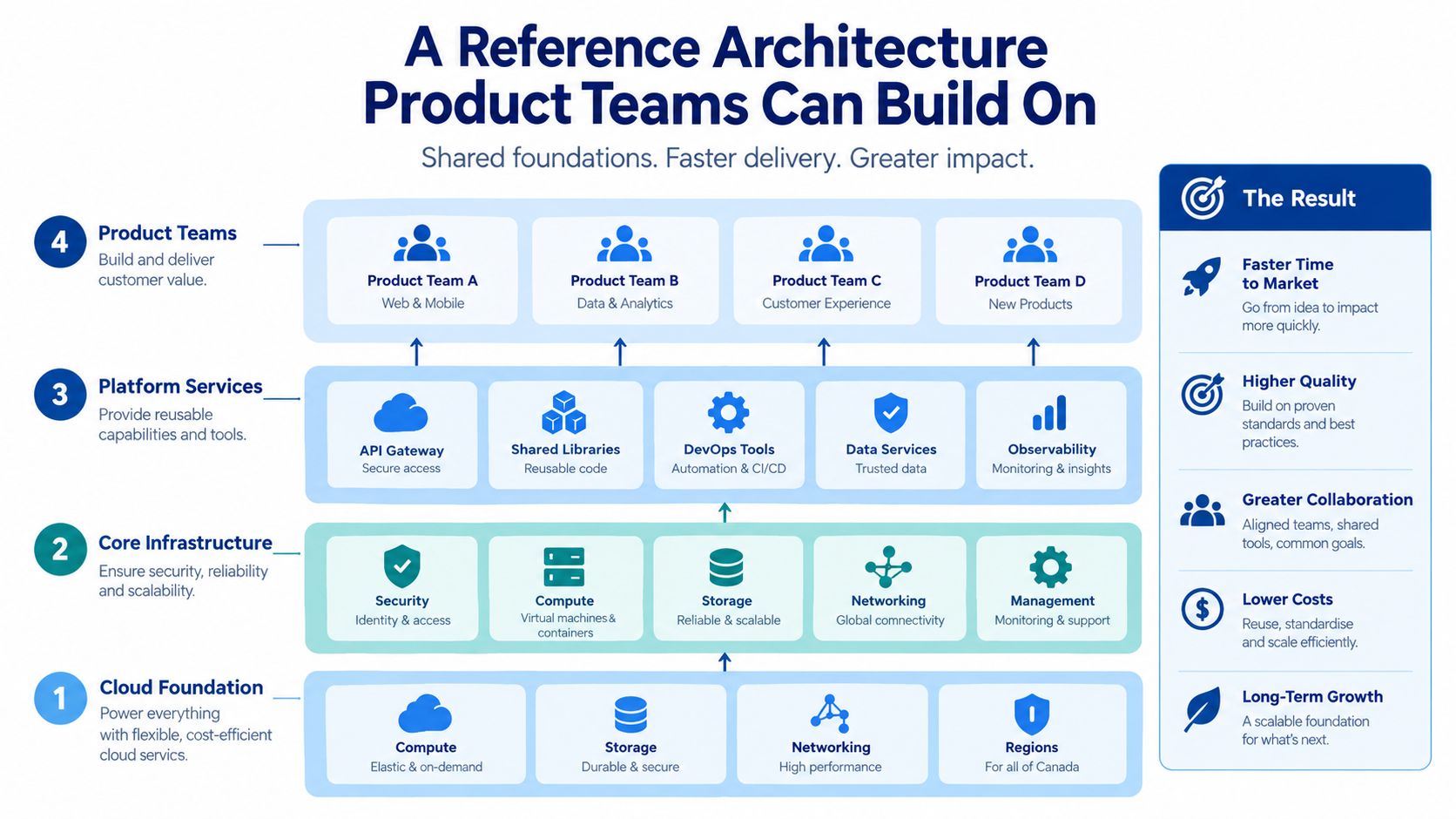
A practical architecture separates concerns without hiding the failure modes. The following model works across insurers, clinics, and health technology vendors, although each implementation must adapt to its source systems and governance environment.
Ingestion and event capture
The edge layer receives events from EHRs, laboratory systems, claims platforms, scheduling tools, and connected devices. Many established systems still emit HL7 v2 messages, so a modern platform needs adapters that can parse, acknowledge, and monitor those feeds. Pretending HL7 v2 has disappeared creates a migration plan that fails at the first hospital interface.
The ingestion service should attach correlation identifiers, source timestamps, message type, and delivery metadata. It should also separate malformed messages from valid events instead of allowing one bad payload to block an entire stream.
Streaming and normalisation
A streaming backbone such as Kafka, a managed equivalent, or a cloud-native event service provides buffering, partitioning, ordering controls, retry handling, and replay. Partition strategy matters. Patient-level ordering may be more important than global ordering, while excessive partitioning can increase operational complexity.
The normalisation layer converts legacy messages and vendor-specific payloads into canonical representations. It should keep the original message, the transformed event, and the validation result. That record makes troubleshooting possible when a downstream user asks why a value appeared on a dashboard.
FHIR and standards services
An HL7 FHIR facade exposes versioned resources and APIs to consumers that shouldn't need to understand every source format. FHIR resources should align with the relevant CA Core+ profiles, while CACDI-aligned validation protects the data's meaning.
CIHI and Canada Health Infoway are linking national content standards such as CACDI with technical specifications based on HL7 FHIR and CA Core+ profiles to guide provinces, territories, and industry towards common interoperability standards, as described in Health Canada's connected-care announcement.
The consent and identity services sit beside this layer, not after it. They determine whether a consumer may receive an event and whether records from different systems refer to the same person.
Consumers and storage
Downstream consumers may include clinician dashboards, prior-authorisation workflows, notifications, care-management tools, operational applications, and analytics warehouses. Each consumer should subscribe to the smallest useful event set rather than receiving a broad feed by default.
For teams assessing interface ownership, a practical guide to healthcare data integration offers a useful reference point. The engineering trade-off is clear: managed services can shorten delivery, but they may increase vendor dependence and constrain replay or portability. Self-managed infrastructure gives more control, but it transfers reliability work to the product team.
Design replay from the start. Outages, consumer bugs, and consent corrections will require historical events to be reprocessed without creating duplicate clinical actions.
Security, Privacy, and Governance by Design
Security becomes more reliable when the product treats it as a runtime behaviour rather than a document produced before release. A real-time feed crosses organisational boundaries, so authentication and authorisation need to operate for every producer, consumer, service account, and administrative action.
A baseline control set includes:
Strong identity: Use verifiable identities for people, systems, organisations, and service accounts.
Role-based access: Give users and applications only the permissions required for their function.
Minimum-necessary disclosure: Release the smallest useful data set for the stated purpose.
Encryption: Protect information in transit and at rest.
Immutable audit logs: Record who accessed, released, changed, replayed, or rejected an event.
Consent-state checks: Evaluate permission before releasing data, not only when a connection is created.
Replay-safe processing: Ensure retries don't create duplicate alerts, claims actions, or clinical updates.
Consider a patient who withdraws consent for a research feed. The consent service should emit a revocation event, update the authoritative permission state, stop future delivery, and make the change visible in audit records. If the pipeline has already placed events in a queue, the consumer must check permission again before processing them. Otherwise, the system may continue releasing data after the patient has changed their decision.
Privacy and usability have to work together
Excessive sign-ins, unclear access paths, and slow approval workflows can prevent legitimate information exchange. Weak controls create a different failure: loss of trust and unauthorised disclosure. Product teams need to measure both sides of that trade-off.
In 2024, 78% of Canadian healthcare providers reported at least one barrier to sharing patient information outside their main practice setting. 50% cited insufficient integration between digital health systems, while 15% cited privacy concerns, according to Statistics Canada. The same evidence identifies workflow friction, including systems that can't send information electronically and multiple sign-ins, as practical obstacles.
Teams should document consent purpose, jurisdiction, recipient role, retention, revocation behaviour, and downtime handling. The practical guide to healthcare data governance can help teams turn those decisions into operating controls rather than leaving them as policy language.
KPIs and Quality Metrics After Launch
Latency is easy to display and easy to misunderstand. A message can arrive quickly while carrying the wrong unit, a duplicate patient, or an expired consent state. Product teams need a scorecard that measures delivery, meaning, governance, and useful outcomes together.
| Metric family | Example metric | Question it answers | Typical source |
|---|---|---|---|
| Delivery | End-to-end event latency | How long does a valid event take to reach its authorised consumer? | Event timestamps and consumer telemetry |
| Delivery | Availability and delivery success | Did the service remain usable and deliver events reliably? | Platform monitoring and acknowledgements |
| Delivery | Replay correctness | Can the team reprocess an event without creating an unsafe duplicate? | Replay tests and idempotency logs |
| Semantic quality | CACDI-aligned validation rate | How many events pass the required structure and value rules? | Schema and terminology validation logs |
| Semantic quality | Duplicate-record rate | How often does identity or retry logic create duplicates? | Matching service and event store |
| Semantic quality | Missing-field rate | Which required fields arrive absent or unusable? | Validation results |
| Governance | Audit completeness | Can the team reconstruct access and release decisions? | Immutable audit store |
| Governance | Time to revoke access | How quickly does a permission change affect delivery? | Consent service and event logs |
| Clinical or operational impact | Alert usefulness | Do users act on the alert, or does it create noise? | Workflow outcomes and user feedback |
| Clinical or operational impact | Claims-cycle time | Does current information improve an operational decision? | Claims and authorisation systems |
CIHI reported that in 2025, 69% of Canadians could access at least one type of electronic health information, but only 13% had online access to all three core components identified in its report: laboratory and imaging results, immunisation records excluding COVID-19, and medication history and renewals.
Start with one metric from each family. Instrument the event at creation, ingestion, validation, authorisation, delivery, and consumer acknowledgement. That trace makes it possible to distinguish a slow source from a slow consumer, and a missing record from a rejected record.
Use Cases for Insurers, Clinics, and Enterprises
A shared real-time architecture can support very different workflows. The data contract and permission model should change with the use case, rather than forcing every consumer into the same broad feed.

Insurers
An insurer can subscribe to eligibility, coverage, clinical documentation, and prior-authorisation events. A new request enters the workflow, the system retrieves the minimum necessary information, and a reviewer sees current evidence with source and timestamp attached.
The failure modes are familiar. A member may be matched to the wrong record, a provider may send an incomplete document, or a retry may create two authorisation tasks. Idempotency keys, confidence-based identity matching, validation errors, and a human review queue keep automation auditable.
Clinics and hospitals
A clinic network can build an event-driven dashboard for admissions, discharges, laboratory results, and imaging updates across affiliated sites. The interface should identify the originating organisation, last update, result status, and permission state rather than presenting a single undifferentiated timeline.
The benefit comes from reducing the need to search several systems. The risk comes from making a partial record look complete. The interface needs explicit indicators for unavailable domains, delayed sources, and conflicting values.
Enterprises and employers
An employer or enterprise health programme may need population-level insights rather than identifiable clinical detail. A de-identification service can aggregate authorised events for wellness planning, absence management, or risk analysis while keeping individual clinical records outside the consumer workspace.
Consent purpose and re-identification risk determine whether a dataset is suitable. The platform should also support deletion, correction, and access review workflows instead of treating de-identification as a one-time export step.
Demand for consumer access is growing. Between 2021 and 2023, the share of Canadians who reported checking health information online rose from 32% to 39%, a 7-percentage-point increase. That demand raises the standard for patient-facing products: a mobile view needs to communicate what is current, what is missing, and what the system cannot yet retrieve.
Implementation Best Practices and Common Pitfalls
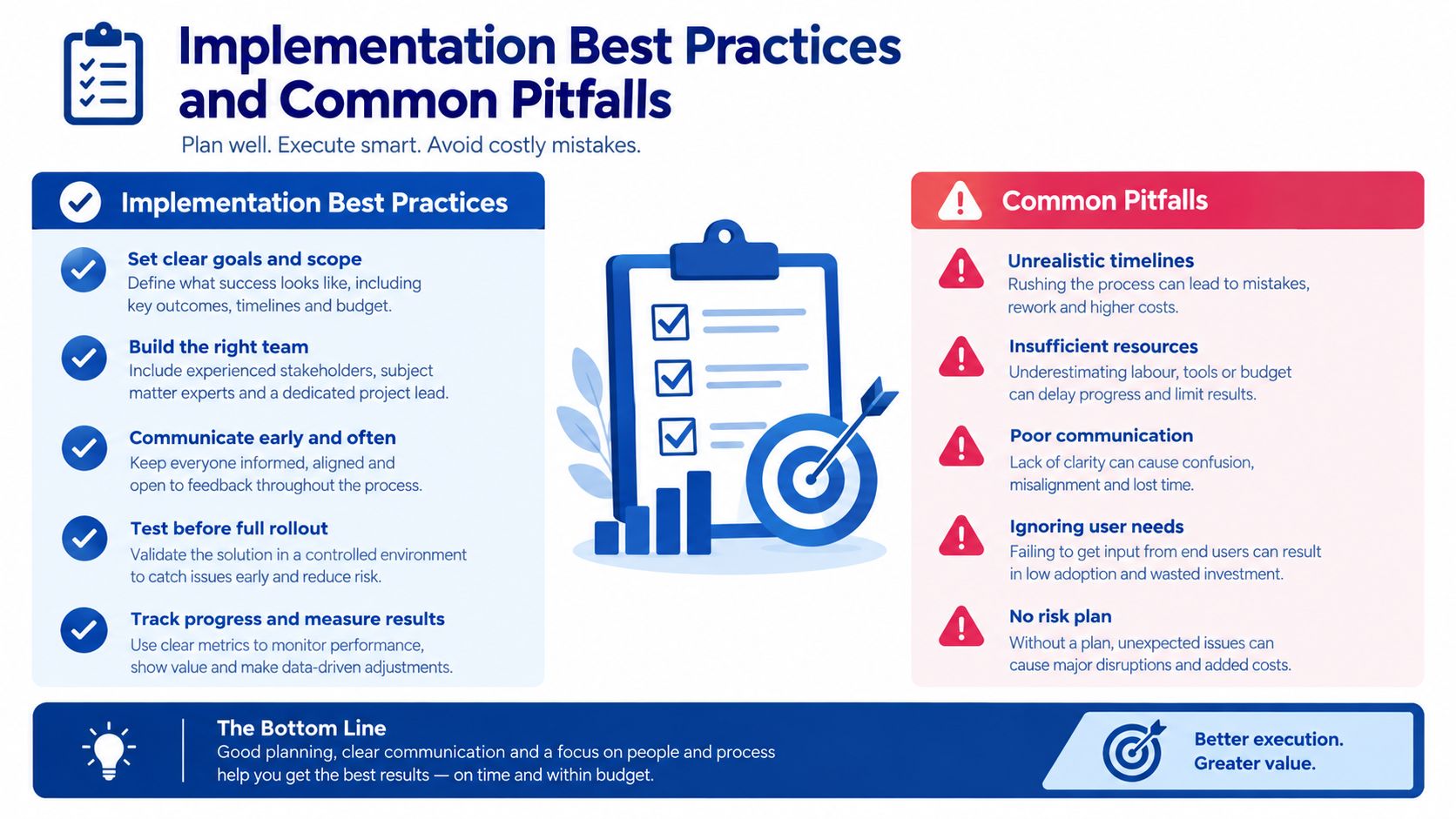
A reliable launch usually begins with a narrow clinical or operational slice, not a promise to connect every resource and consumer at once.
Choose one event and one consumer: Start with a bounded FHIR resource or event over an existing HL7 v2 feed. Define the source, authorised recipient, expected freshness, and safe failure behaviour.
Validate before expanding: Apply CACDI-aligned schemas, controlled terminology, required-field checks, and provenance capture before adding more event types.
Instrument from the first deployment: Track delivery, semantic quality, governance, and operational impact before the system has broad adoption.
Add replay and reconciliation: Test outages, duplicate messages, late events, consumer downtime, and corrected clinical information.
Expand by contract: Add resources and consumers only after producer and consumer contracts, consent rules, and monitoring are stable.
The most damaging mistake is treating integration as a one-off project. Source systems change, terminology evolves, provincial requirements differ, and downstream teams discover new interpretations of the same event. A service owner needs to manage versioning, incident response, support, and deprecation.
CIHI found that 17% of healthcare providers did not routinely access electronic information about patients from other care settings because of barriers such as poor integration between digital systems. A connection that exists technically but fails in the clinician's workflow hasn't solved the product problem.
Operational habits matter after launch:
Run contract tests: Verify that producers and consumers still agree on resource versions and required fields.
Maintain consent runbooks: Document revocation, emergency access, downtime, and replay procedures.
Review semantic drift: Compare source values and clinical terminology regularly.
Test identity exceptions: Route uncertain matches to review instead of forcing an automated link.
Reconcile business outcomes: For revenue workflows, teams can also review resources designed to reduce denials with Happy Billing, while keeping the clinical data contract separate from financial optimisation.
What Product Teams Ask Before They Ship
How should we scope a minimum viable real-time slice?
Choose one event with a clear decision attached to it, such as a laboratory result update or eligibility change. Limit the first consumer, define the minimum necessary fields, and enforce consent checks before delivery. A small slice with replay, audit, and validation is safer than a broad feed that nobody can explain.
How do we match one patient across several systems?
Keep source identifiers and maintain a governed cross-reference rather than replacing every identifier with one universal value. Match on approved demographic and organisational signals, record confidence and provenance, and send uncertain cases to human review. Never merge records automatically because two names look similar.
How do we demonstrate semantic quality to a clinical sponsor?
Show rejected events, missing-field trends, duplicate rates, terminology exceptions, and examples of corrected records. Pair those measures with workflow evidence, such as whether users can identify the source and freshness of a result. A fast pipeline is not safe if its consumers can't interpret the payload.
How can shared infrastructure respect provincial privacy requirements?
Separate common technical services from jurisdiction-specific policy decisions. Keep consent state, role permissions, retention, audit rules, and data residency controls explicit, and evaluate authorisation at the point of release. Shared infrastructure can support different governance policies, but it shouldn't assume that one permission model applies everywhere.
Cleffex Digital Ltd develops custom healthcare software and API-led, FHIR-based integrations that connect clinical and operational platforms while supporting secure data exchange. Visit Cleffex Digital Ltd to discuss a real-time healthcare data architecture that fits your systems, workflows, and governance requirements.