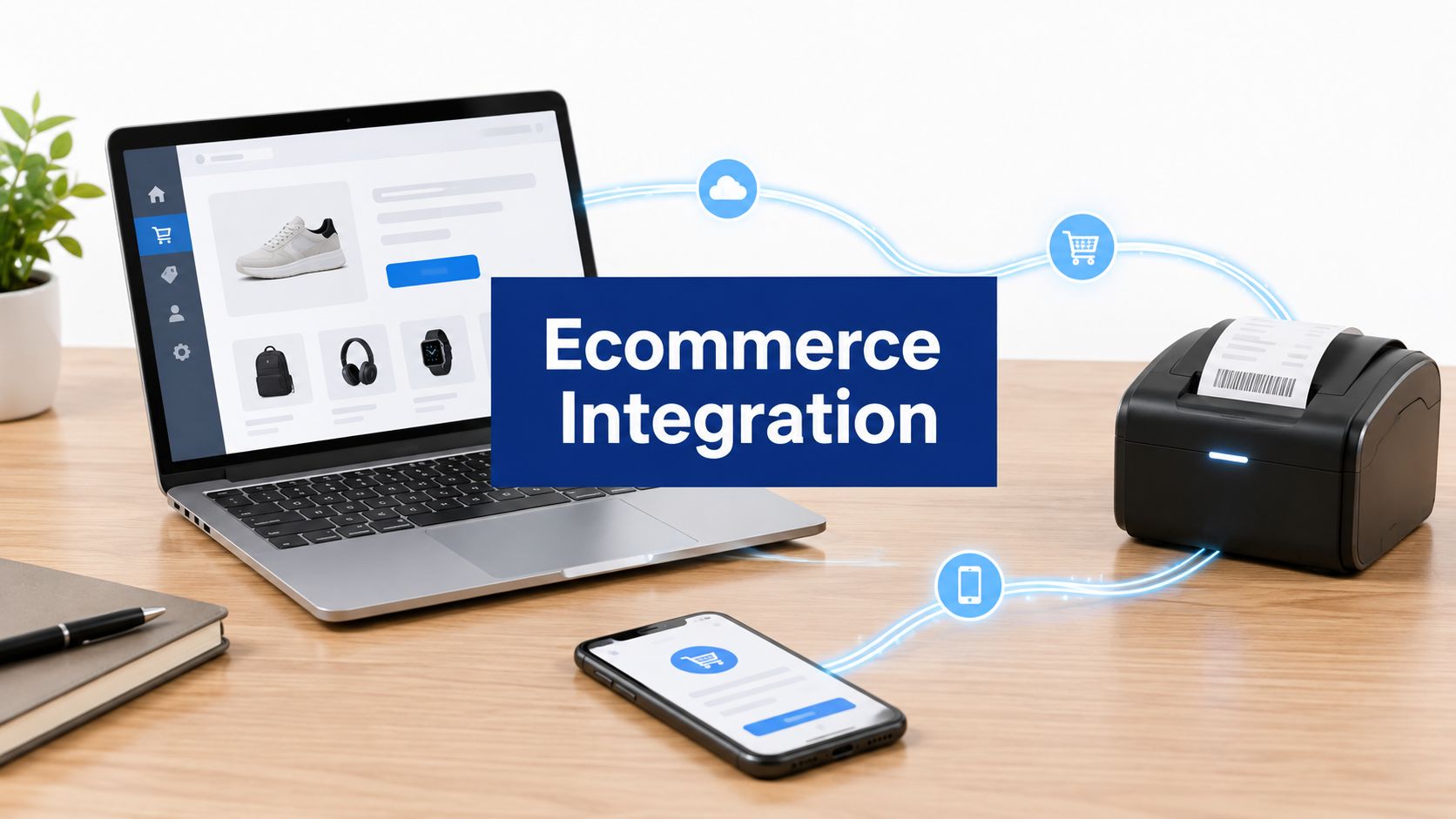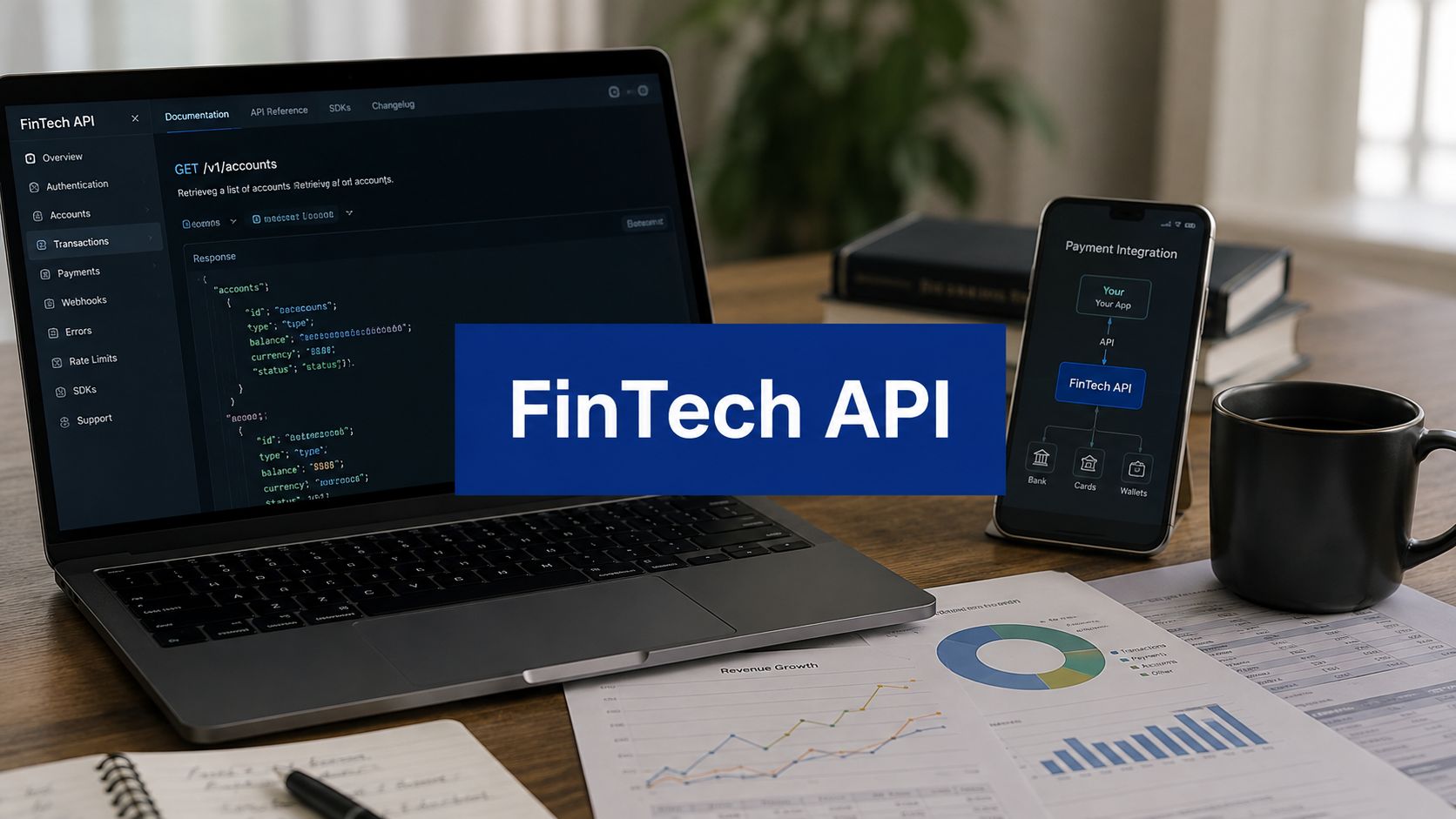


Global open banking API call volume rose from 44 billion in Q1 2024 to 72 billion in Q1 2025, and that jump changes how every product team should think about fintech. API work isn't a side feature any more; it's the operating system behind payments, onboarding, lending, insurance, and identity checks, and every weak integration now carries more operational and governance risk than many teams expect. In Canada, that pressure lands alongside tighter expectations on technology oversight and third-party controls, so a clean API connection is only the starting point.
Modern financial products are built by orchestrating external services, not by trying to own every system in-house. The hard part is choosing the right integration type, wiring it cleanly, and making sure the whole flow still passes compliance review when the partner bank is slow, the webhook is delayed, or the customer's consent needs to be audited later.
Why API Integrations Are the Backbone of Modern FinTech
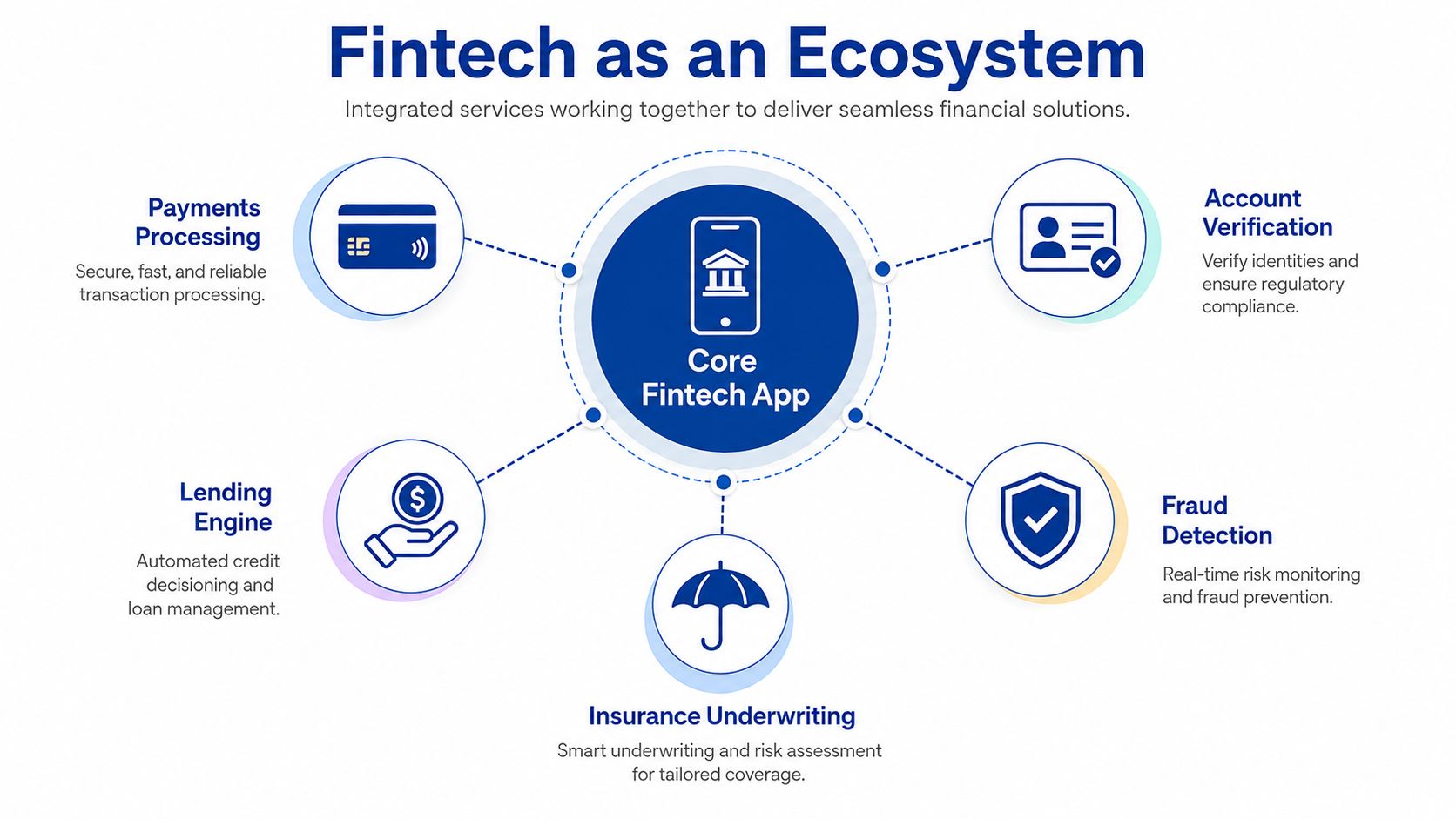
A lot of teams still talk about fintech apps as if they're self-contained products. They are not. A modern platform usually acts as an orchestration layer that sends requests to banks, card networks, payment processors, identity providers, fraud tools, and underwriting engines, then stitches the responses together into one customer experience.
That shift matters because FinTech API integration choices affect more than development speed. They shape reliability, auditability, and how much friction a compliance team adds before launch. Open banking research from CoinLaw's open banking adoption statistics shows that APIs have become a standard integration layer for financial institutions, which is why product teams should treat them as part of the core system design.
What sits behind the app
A lending platform may show a short form, but the system behind it can be verifying bank data, checking identity, looking for fraud signals, and setting up repayment rails in sequence. In practice, financial API integration services belong in the product architecture, not as a loose add-on.
The same logic applies to payment gateway API integration. A checkout page may look simple, but the application still has to handle tokenisation, payment authorisation, retries, settlement status, and sometimes a fallback route if a provider fails. If those decisions sit inside product code, teams usually feel the pain later when they need to switch providers or update a compliance rule.
Practical rule: if a feature depends on a regulated action, treat the API as infrastructure and design it like one.
For a grounded example of how payment flows are mapped in practice, Suby's integration guide is useful because it focuses on the mechanics rather than the marketing.
Why Canada makes this a governance question
Canadian teams also have to think about governance from the outset. OSFI's 2024 final guidance on technology and third-party risk means the question is no longer only whether a connection works; it is whether the relationship can hold up in production and under review. That is why banking API development and compliance planning need to move together.
Consent design sits in the same category. If a customer authorises access to account data, the team needs to know what was approved, how long that approval lasts, how it is stored, and how it can be proved later during an audit or a dispute. A clean request path is useful, but a defensible consent trail is what keeps the integration shippable.
Third-party risk controls matter for the same reason. Product teams need clear owner assignments, vendor review, incident response paths, and rollback plans before the first live transaction goes out. The platform may look like a single app on the surface, yet every external dependency creates a new control point that has to be monitored, documented, and tested.
The strategic takeaway is simple. A fintech platform does not win because its front end is polished. It wins because its integrations are modular, monitored, consent-aware, and governed well enough to survive real traffic, real failures, and real scrutiny.
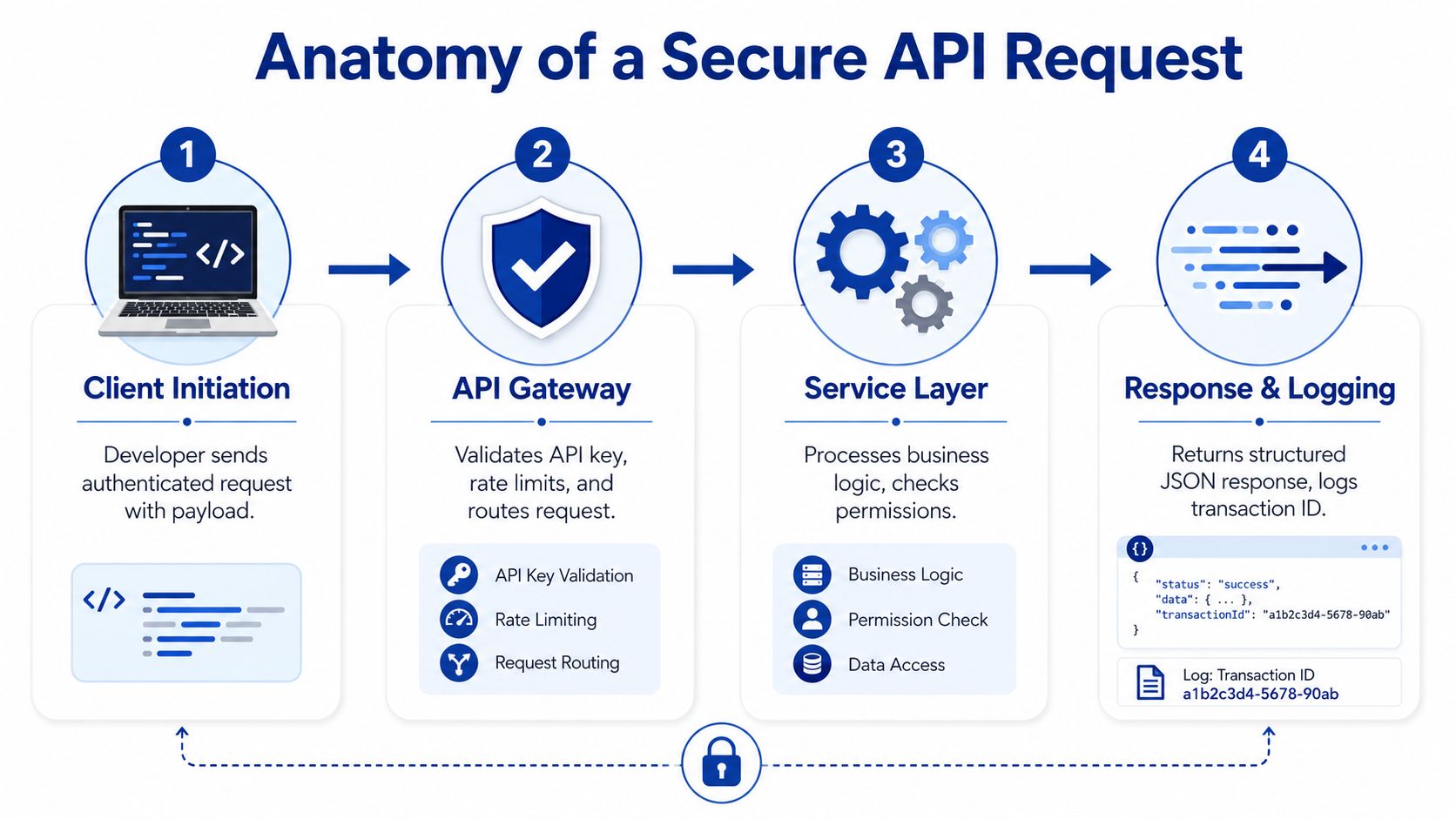
The Anatomy of a FinTech API Request
A serious integration rarely sends one clean request and gets one clean answer. It usually moves through layers, and each layer has a different job. The product layer creates the business intent, the adapter layer handles authentication and schema mapping, the provider executes the financial action, and webhooks or polling return the final state so internal systems can reconcile what happened.
The layered flow
That structure matters because it keeps provider-specific logic out of your main application. If a bank changes a field name, or a payments vendor changes its payload shape, you update the adapter instead of rewriting the whole product flow. That separation is the difference between a maintainable integration and a codebase full of hardcoded branches.
A practical Canadian example makes the flow easier to follow. A small business applies for financing on a lending platform; the platform verifies balances through an account-data API, confirms identity through a compliance service, then sets up repayment via Interac or another payment rail. Each step has its own state, and each state needs to be recorded before the next one is allowed to continue.
Where teams get the flow wrong
The most common mistake is to write provider calls directly inside product endpoints. That works for a demo and breaks under maintenance pressure. Once you need idempotency, retries, asynchronous status handling, and reconciliation, hardcoded logic becomes a liability.
Clean integration design is mostly about failure handling, not happy-path speed.
Open banking API integration and broader banking API development intersect with ledger discipline. If a callback arrives twice, your system should recognise the duplicate. If a provider times out after processing the transaction, your adapter should be able to check status without creating a second payment. If the webhook never arrives, polling should still let you resolve the state.
Funding shows where the market is headed
The infrastructure market reflects that reality. One report from Dataintelo's market report estimates the global financial data exchange API integration market at $3.8 billion in 2025, rising to $12.7 billion by 2034 at a 14.3% CAGR, with cloud-based deployment representing 67.8% of revenue. That points to teams buying systems built for layered, cloud-delivered financial workflows, not one-off connectors.
Open banking investment funding has also exceeded $7.4 billion globally. That reinforces the same point. This is infrastructure spending, and infrastructure needs proper request flow design.
Choosing the Right Integration Category for Your Use Case
Not every fintech problem needs the same kind of API. A team that reaches for a payment gateway when it really needs account data usually ends up paying for the wrong complexity. A better approach is to match the API category to the business job first, then review corridor coverage, licensing fit, and data-residency expectations.
Four categories that show up again and again
Account-data and aggregation APIs are for pulling balances, transaction history, and account verification details. They're common in lending, personal finance, and onboarding flows where the product needs permissioned customer data rather than a payment event.
Payment gateway APIs are for taking money, moving money, or confirming authorisations. They suit checkout, subscriptions, payouts, and wallet flows, but they don't solve the data-access problem on their own.
Banking and core-platform APIs connect directly into banking operations, ledger systems, or specialist financial workflows. These are the APIs that matter when the product is doing something operationally close to the institution itself.
Identity and compliance APIs help with KYC, onboarding, fraud checks, and document verification. They're the ones teams use when the question isn't “can we pay?”, but “should we allow this user to proceed at all?”.
| Integration Category | What It Does | Typical Providers | Selection Criteria |
|---|---|---|---|
| Account-data and aggregation | Pulls balances, transactions, and consented account data | Plaid, Yodlee, MX, TrueLayer | Coverage of banks, consent model, data quality |
| Payment gateway | Processes payments, payouts, and authorisations | Stripe, Adyen, Dwolla, Square | Corridor, settlement speed, local payment methods |
| Banking and core-platform | Connects to core banking or financial workflows | Treasury, ledger, and banking infrastructure providers | Licensing fit, reconciliation, enterprise controls |
| Identity and compliance | Verifies identity and supports risk checks | Onfido, Alloy, specialist KYC and fraud vendors | Regulatory coverage, audit trail, onboarding fit |
How to choose without overcomplicating it
Start with the business event. If the product needs to see account data, don't buy a payment tool and hope it fills the gap. If it needs to move money, don't settle for a read-only data API and assume the rest will sort itself out.
The second filter is corridor fit. Canadian teams need to know where the provider operates, how it handles regulated flows, and whether the data model fits the use case without forcing awkward workarounds. That's especially important for financial API integration services, because the wrong vendor can look fine in a demo and fail when compliance reviews the contract.
A useful mental model is this. Choose the smallest API category that fully supports the business event, then check whether it can survive legal, operational, and product review. That order saves more time than vendor comparison spreadsheets ever will.
Authentication, Security, and Webhook Verification Patterns
Production fintech integrations fail in predictable places. Tokens are exchanged too loosely. Retries create duplicate transactions. A webhook arrives from a system that should never have been trusted. Security is not a layer you add after the build is done; it is part of the business logic from the first request.
The security patterns that survive real traffic
OAuth2 is usually the right pattern when a customer is delegating access. JWTs can carry claims between services, but they do not replace session handling, revocation logic, or expiry checks. Mutual TLS adds a stronger transport layer for trusted service-to-service communication, while API key rotation keeps static credentials from living forever in a repo or secret store.
For money-moving requests, idempotency keys belong in the request path from day one. If a user clicks twice, or a client retries after a timeout, the provider should recognise the same business action and refuse to create a duplicate transaction. That pattern matters in payment gateway API integration, and it matters just as much in lending, payouts, and settlement workflows.
POST /payments
Authorization: Bearer access_token
Idempotency-Key: 9b2f1e3c-7d8a-4c5d-9b01-2a1b4f2f0f11
Content-Type: application/json

{
  "amount": "125.00",
  "currency": "CAD",
  "recipient_id": "acct_48291"
}
Webhooks need verification before state changes
A webhook should never be trusted just because it arrived. Verify the signature, compare the timestamp if the provider includes one, and only then mutate internal state. That blocks spoofed callbacks and replay attempts before they can change your ledger or status tables.
if verify_hmac_signature(request.body, request.headers["X-Signature"], shared_secret):
    event = parse_json(request.body)
    if event["type"] == "payment.settled":
        mark_payment_settled(event["transaction_id"])
else:
    return 401
This separation keeps teams from mixing up three different controls. Authentication says who can ask. Idempotency says whether the same request was already processed. Webhook verification says whether the callback is legitimate. If you blur those lines, the code looks tidy, and the production behaviour becomes hard to reason about.
The broader market for financial data exchange API integration keeps expanding, which is one reason security teams prefer controls they can repeat and audit rather than one-off fixes. The exact market numbers matter less here than the operational lesson. Once integrations are business-critical, security has to scale with them.
For a broader implementation view, Cleffex's secure fintech software development guide is a useful internal reference when teams need to align product, architecture, and security reviews.
Compliance lives inside the design
Tokenisation can reduce PCI DSS scope, but only if the payment flow is designed around it from the start. PSD2 strong customer authentication applies in the jurisdictions where it matters, and Canadian data residency rules still need to be checked against your provider stack and storage locations. A clean architecture diagram is not enough on its own. Review the consent flow, the logging path, the incident response steps, and the vendor controls together, because that is how an integration survives both security review and OSFI-aligned third-party risk checks.
That is why teams building financial API integration services often start with a secure development checklist before they write the first endpoint. A practical checklist forces you to ask who can call the API, how secrets are stored, what gets logged, how failed callbacks are handled, and how fast a credential can be revoked if something goes wrong.
The Part Most Guides Skip: Governance, Consent, and Third-Party Risk
Many API integration plans look complete right up until legal, security, and vendor review start asking harder questions. In Canada, that is usually where the launch slows down. A partner can have a working API and still fail approval if consent design, third-party controls, and incident handling do not hold up under scrutiny.
Consent is a product design problem
User-centred consent is more than a checkbox. The customer needs to understand what data is being accessed, why it is needed, and how long the permission lasts. If that language is vague, trust drops and support tickets rise. The permission screen should read like a clear handoff, not a legal trapdoor.
This is also where architecture decisions start to matter in a very practical way. A team that wants to compare design choices against compliance work can use Cleffex's fintech compliance solutions page as a reference point, because consent flow, logging, vendor review, and incident response all need to fit together. The Center for Financial Inclusion has noted that API deployments in inclusive finance often stumble because smaller banks and fintechs face market maturity issues, worry about competitive loss, and make strategic planning errors. The BIS open-finance work also stresses that interoperability, governance, and payment and data standards have to be in place before the API layer becomes economically useful.
Third-party risk is part of engineering
OSFI's 2024 final guidance on technology and third-party risk raises the bar for governance, resilience, and oversight in API-enabled partnerships. That means contracts, exit plans, incident response, logging, and audit rights all need to exist before the first live request. If the provider cannot show who gets notified, who can suspend access, and how evidence is preserved, the integration is still in design, even if the code already runs.
A practical governance checklist looks like this:
Consent wording: Make sure the permission screen matches the actual data use.
Vendor controls: Confirm who owns uptime, incident notices, and escalation paths.
Exit planning: Define how data and customer flows will move if the provider changes.
Auditability: Keep a clear record of request states, approvals, and callback outcomes.
Fallback design: Decide what happens when the bank API or third-party service is unavailable.
A clean API connection is necessary, but it is not enough. In Canadian fintech, the integration has to survive compliance review, procurement review, and operational review before anyone can call it finished.
Sandbox Testing, Monitoring, and a Pre-Launch Checklist
A sandbox can prove the code path. It cannot prove production readiness. Live traffic brings retries, duplicated callbacks, delayed events, and partial failures that a tidy demo environment usually hides.
Test the failures on purpose
Build sandbox personas that mirror your customer mix, not just one cooperative internal user. Replay webhook bursts, simulate timeouts, and send duplicate callbacks so you can see whether idempotency and state handling survive real conditions. If reconciliation cannot explain every state transition, the integration is not ready for launch.
A dry-run reconciliation before go-live helps engineering and finance operations compare what the provider says happened with what your ledger recorded. When those views do not match, the problem is usually state management, event ordering, or callback handling, not the API contract itself.
A pre-launch checklist the team can use
| Checklist item | What to verify |
|---|---|
| Sandbox success | Test transactions complete with realistic data |
| Error handling | Timeouts, retries, and duplicates are handled safely |
| Webhook verification | Callback signatures are checked before state changes |
| Rate limit awareness | The app handles provider limits without breaking flows |
| Monitoring dashboard | Alerts, logs, and transaction IDs are visible to the team |
Teams that are still building the plumbing from scratch can use Cleffex's banking API development guide as a reference for adapter logic, payload mapping, and integration structure.
What to watch after launch
The first week in production should be treated as a controlled observation period. Watch for missed callbacks, reconciliation mismatches, and state transitions that still require manual intervention. If the team cannot explain why a transaction is pending, failed, or completed, monitoring still needs work.
Production also has to satisfy governance, not just uptime. Consent screens, audit logs, access controls, and vendor oversight need to line up with the operating model you promised in review, or the integration will stall even if the code is stable. That is why a checklist has to cover more than test cases. It needs to cover the controls a risk team will ask about when the product moves from pilot to live service.
For a useful comparison point on how regional open banking patterns can shape product design, see OneSafe on open banking in Asia. As noted earlier, market maturity is only one part of the picture. The other part is whether your team has a clean consent flow, clear ownership, and a fallback plan for provider outages.
Scaling, Open Finance Readiness, and What Comes Next
Once the integration works, the next problem is keeping it stable as usage grows. Connection pooling, async workers, and regional failover help absorb traffic spikes without turning reconciliation into a mess. Teams that build these controls early usually spend less time on incident triage later.
Open finance readiness in Canada is still evolving, and that's the key strategic wrinkle. Policy is moving towards consumer-driven banking, but standards, governance, and interoperability are still catching up. That means teams should design for multi-provider fallback, consent portability, and clean data contracts now, so they don't have to rebuild the platform when the market settles.
If you want a broader view of how API-based finance is maturing in other markets, OneSafe's open banking discussion in Asia is a useful comparison point because it shows how regional adoption patterns can shape product design.
| Frequently Asked Questions About FinTech API Integration | Short Answer |
|---|---|
| What is FinTech API integration? | It connects a financial product to banks, payment rails, identity tools, or data providers through structured APIs. |
| Why does governance matter so much? | Because the integration has to pass security, compliance, and third-party risk review, not just engineering review. |
| Should I build directly to every provider? | Only when you need deep provider-specific control. Otherwise, an adapter layer usually keeps maintenance lower. |
| What should I test before launch? | Timeouts, duplicates, webhook verification, reconciliation, and fallback behaviour. |
| How does open finance change the design? | It increases the need for interoperable consent, portable data contracts, and multi-provider resilience. |
Cleffex Digital Ltd helps teams design and build API-led financial products, from integration architecture and adapter layers to compliance-aware implementation. If you're planning a FinTech API integration and want a partner that can turn product requirements into a production-ready flow, visit Cleffex Digital Ltd and start the conversation.