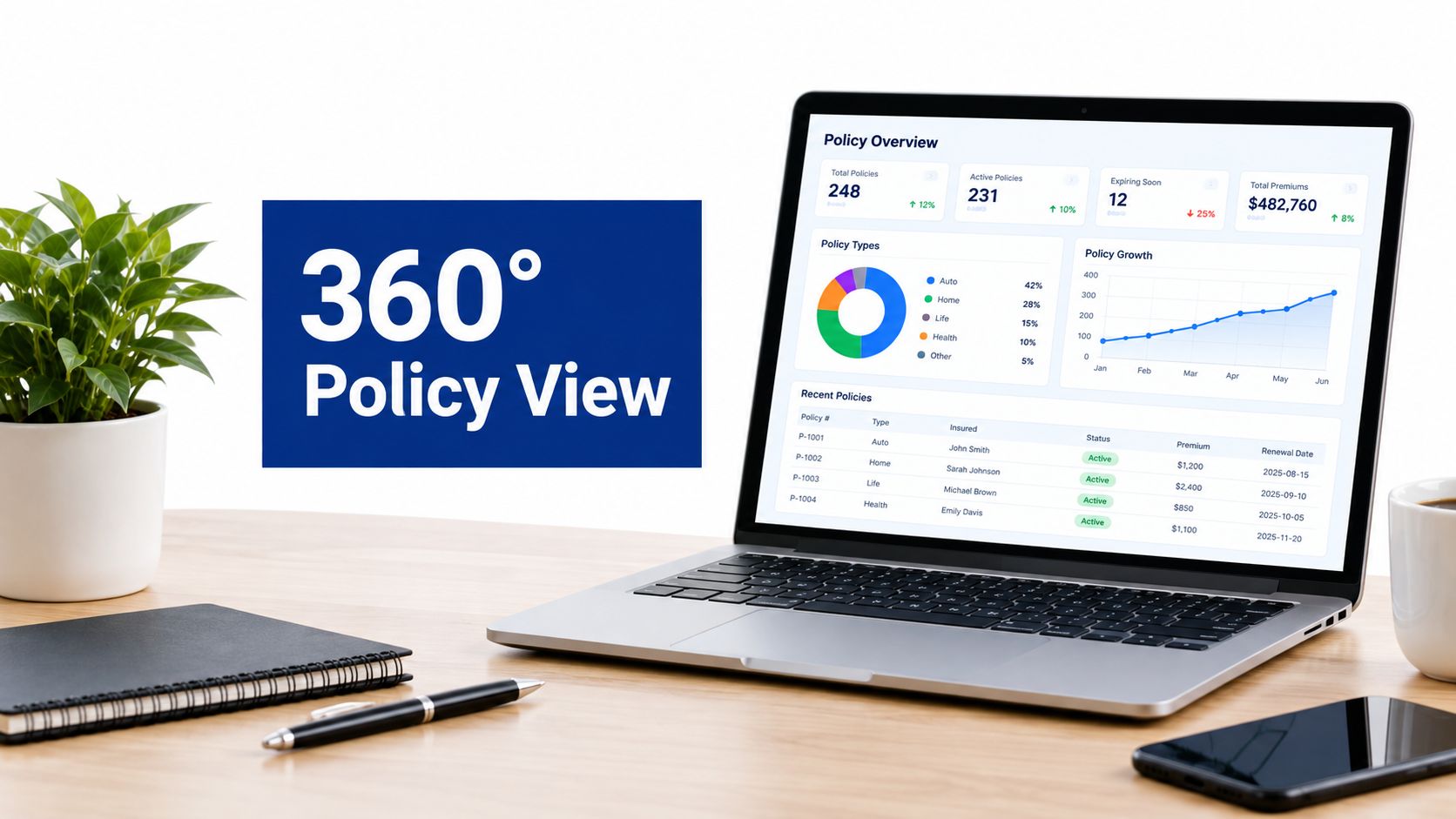


Let's be blunt: the pressure on traditional insurers to modernise is immense. So, what exactly is an insurtech development partner? Think of them as a specialist tech firm that lives and breathes insurance. They bring together deep industry insight and serious technical chops to build the digital tools you need, like custom underwriting platforms, slick mobile claims apps, or AI-driven analytics engines that actually work.
Why Staying Competitive Means Partnering Up

The insurance world is being reshaped by nimble start-ups and customers who now expect a flawless digital experience for everything. For established insurers, trying to go digital all on your own is a huge, expensive gamble. This is precisely where bringing in a specialist partner becomes a game-changer.
Here's a simple analogy: you wouldn't ask a general home builder to construct a hospital. You'd find a firm that understands the incredibly complex and unique requirements of a medical facility. It's the same principle here. A dedicated insurtech partner has a grasp of the insurance industry that a generic IT firm just can't offer.
Navigating Market Pressures With an Expert Guide
This kind of partnership is about so much more than just writing code; it's about gaining a strategic ally who gets it. They already understand the fine print, from complex regulatory hurdles to the messy realities of claims processing. That expertise means they can see problems coming and build solutions that are not only technologically sound but also commercially smart and compliant from day one.
The wider Canadian insurance industry is growing, with projections showing it could reach a total value of around USD 112.5 billion by 2027. This growth is fuelling massive investment in digital projects. Big trends like telematics, personalised products, and AI for risk management are no longer just buzzwords; they're becoming core to how business gets done. A good partner helps you get ahead of these trends instead of just trying to keep up.
Turning Challenges Into Strategic Advantages
Working with an insurtech development partner helps you sidestep the expensive mistakes that are all too common in big IT projects. Their experience lets you speed up development and get new products in front of customers faster. In today's market, that kind of agility is everything.
Ultimately, collaborating with a specialist frees you up to focus on what you do best, serving policyholders and managing risk, while they handle the technical heavy lifting. It shifts "going digital" from a daunting internal headache to a clear strategic move that gives you an edge. This teamwork paves the way for a more responsive, efficient, and profitable future. To see what's on the horizon, you might find it helpful to explore the key insurtech trends in Canada for 2026.
What a Specialist Insurtech Partner Actually Does
Let's clear something up right away. An insurtech development partner is not just a group of coders you hire. That's like confusing an architect with a general contractor; both are essential for building a house, but only one designs the blueprint with a deep understanding of your vision and the environment.
A true specialist partner doesn't need a crash course in insurance. They already speak the language of underwriting, claims, policy administration, and brokerage operations. They've been in the trenches and know the friction points because they’ve built solutions to solve them before.
More Than Code, Strategic Guidance
This is where the real value comes in. A genuine insurtech partner does more than just follow orders and write code. They act as a strategic guide, helping you see around corners and translate complex tech into real-world business results.
A generalist IT firm might build you a perfectly functional customer portal. But an insurtech specialist builds one that deeply integrates with your claims system for smooth First Notice of Loss (FNOL) submissions, automates policy updates, and is built from the ground up to respect privacy regulations. The focus is on the entire insurance workflow, not just the front-end.
Their industry focus is what makes the difference. They offer comprehensive solutions for insurance that tackle specific industry headaches, from automating data entry to streamlining entire workflows. It’s a holistic approach.
Core Areas of Specialised Expertise
A specialist partner brings a very particular, battle-tested skill set to the table. Their services aren't generic; they’re sharpened specifically for the insurance sector. This usually includes:
Custom Platform Development: Building bespoke core systems from scratch for underwriting, policy admin, or claims management to finally replace or enhance that ageing legacy software.
Mobile Application Creation: Designing intuitive apps that let policyholders manage their cover, file a claim with a few photos from their phone, or chat instantly with an agent.
Advanced AI and Machine Learning: Putting AI to work for practical tasks like flagging suspicious claims, predicting risk with far greater accuracy, or using chatbots to handle common customer questions 24/7.
IoT and Telematics Integration: Building the backend systems that connect to IoT devices, think usage-based insurance (UBI) powered by vehicle telematics or smart home sensors that help prevent property claims before they happen.
Navigating the Regulatory and Security Maze
This might be the most crucial role of all. An experienced insurtech partner is already an expert in navigating the daunting regulatory landscape. They have an ingrained knowledge of compliance rules, like those from Canada's Office of the Superintendent of Financial Institutions (OSFI), and data privacy laws like PIPEDA.
This isn't just a checkbox they tick at the end of a project. Security and compliance are woven into the fabric of the development process from day one. They design systems to protect sensitive policyholder data from the ground up, ensuring your new digital tools are not only efficient but also ironclad and compliant. That’s how you protect your reputation and maintain your customers’ trust.
The Core Capabilities That Drive Real Results
Beyond just offering advice, a top-tier insurtech development partner brings a serious technical toolkit to the project. These aren't just abstract concepts; they’re the practical skills and technologies that create real, measurable value for your business. It's about turning all that technological promise into tangible results that show up on your bottom line.
A great partner has mastered the modern tech stack that insurance innovation is built on. We’re talking about deep fluency in cloud platforms like Amazon Web Services (AWS) and Microsoft Azure, which provide the flexible, secure backbone for any new digital product. This cloud expertise is what finally frees you from the constraints of old, on-premise servers and lets you embrace a more agile and cost-effective way of working.
This is where you see a partner's true value, uniting strategy, technology, and compliance into a single, cohesive approach.

As you can see, it's the integration of these three areas that leads to a complete solution. This connected approach ensures every technical decision is strategically sound and fully compliant, which prevents costly rework and keeps the project moving forward.
Bringing these capabilities together is what turns a simple development project into a genuine competitive advantage. Below is a breakdown of how specific technologies translate directly into business impact.
| Technology/Capability | Description | Impact on Insurance Operations |
|---|---|---|
| API-First Architecture | Designing systems around Application Programming Interfaces (APIs) to allow seamless communication between different software platforms. | Enables embedded insurance, opens new sales channels (e.g., travel sites, mortgage portals), and simplifies integration with third-party data sources. |
| AI-Powered Claims Processing | Using Artificial Intelligence to automate the analysis, validation, and settlement of claims by reviewing documents, images, and data. | Slashes claim settlement times from weeks to hours, reduces manual processing costs by over 70%, and frees up adjusters for complex cases. |
| Cloud-Native Infrastructure | Building and running applications on scalable cloud platforms like AWS or Azure, rather than on-premise servers. | Drastically lowers infrastructure costs, improves system reliability and security, and allows for rapid scaling to meet customer demand. |
| Predictive Analytics & ML | Applying Machine Learning models to vast datasets to identify risk patterns, predict customer behaviour, and forecast loss ratios. | Leads to more accurate underwriting and pricing, reduces loss ratios, and helps in personalising customer offers and retention strategies. |
Ultimately, a good partner doesn't just build software; they build a more efficient, resilient, and profitable insurance business.
Driving Business Value Through an API-First Approach
One of the most powerful skills an insurtech partner brings is expertise in API-first architecture. Think of an API (Application Programming Interface) as a secure translator that lets different software systems talk to each other. When you build your systems around APIs from day one, your insurance products become incredibly flexible and easy to connect with other platforms.
This is the secret sauce behind embedded insurance. An API-first approach is what allows you to offer travel insurance directly on an airline’s booking website or home insurance at the point of a mortgage application. This seamless integration meets customers exactly where they are, opening up new distribution channels you couldn't access before. It fundamentally changes insurance from a standalone chore into a convenient, natural part of another transaction.
This shift is critical. Instead of forcing customers to seek you out, an API-first design lets you take your products to them. It’s the technical foundation for making insurance more accessible and contextually relevant, which boosts both sales and customer convenience.
The Power of AI and Machine Learning in Practice
Another core capability is the practical application of Artificial Intelligence (AI) and Machine Learning (ML). A seasoned insurtech development partner knows how to get past the buzzwords and actually build models that solve real-world insurance problems.
This is where the magic really happens for your operations. For example:
AI-Powered Claims Processing: Instead of a manual review that can drag on for weeks, an AI model can analyse claim submissions, photos, and reports in minutes. It can automatically approve straightforward claims, cutting settlement times from weeks to hours and letting your adjusters focus their expertise on more complex cases.
Predictive Analytics for Underwriting: By analysing massive datasets, ML models can pinpoint risk factors with far greater precision than traditional actuarial tables. This lets you price policies more accurately, reduce potential losses, and offer more competitive rates to low-risk customers.
Fraud Detection: AI algorithms are brilliant at spotting subtle patterns in claims data that are invisible to the human eye. They can flag suspicious submissions for investigation with incredible accuracy, directly protecting your bottom line from fraud.
These technical capabilities are the engine of modern insurance. They're what allow you to build a more efficient, customer-focused, and profitable business. You can learn more about how these technologies fit together in our guide to custom insurance platform development solutions. By connecting technology directly to business outcomes, an expert partner ensures every pound spent on development delivers a measurable return.
How a Partnership Can Forge New Revenue Streams

While streamlining operations is a great starting point, the real game-changer of working with an insurtech development partner is its power to act as an engine for new growth. This is about more than just efficiency; it’s about collaborating to build entirely new products and capture markets you couldn't reach before.
Suddenly, your development budget stops being a cost centre and starts becoming a revenue-generating force. You’re no longer just maintaining old systems; you’re actively creating new markets. A good partner’s expertise in rapid prototyping and agile development means you can test, launch, and refine new insurance offerings in a fraction of the time it would traditionally take.
Think about what that speed-to-market does for your competitive edge. Imagine having an idea for a new, data-driven home insurance product and getting it to market in three months instead of the usual eighteen. That’s the kind of acceleration a specialist team makes possible.
Building Innovative Products for Untapped Markets
One of the most valuable things an insurtech partner brings to the table is the technical skill to build products for needs that don’t fit into neat, traditional boxes. They help turn your most ambitious ideas into real, profitable solutions.
Here are a few examples of what this looks like in practice:
Usage-Based Insurance (UBI): Your partner can build the telematics platform you need to offer car insurance where premiums are tied directly to driving behaviour. This is a massive draw for safer drivers and a modern alternative to one-size-fits-all policies.
On-Demand Cover: They can develop a mobile-first app for gig economy workers, allowing a freelance photographer to insure thousands of pounds of equipment for a single day’s shoot with just a few taps on their phone.
Embedded Insurance: Using an API-first approach, they can weave your insurance products directly into other platforms, like offering travel insurance right at the point of checkout on an airline’s website.
This marks a fundamental shift in how insurance is sold. It moves the product from something customers have to actively seek out to a seamless, almost invisible service offered at the exact moment of need. This contextual approach unlocks entirely new channels for revenue.
The Canadian market is a perfect example of where these opportunities lie. Recent data shows that while health insurance remains the largest segment, home insurance is the fastest-growing category. This points to a market ripe for innovation. In fact, the overall Canadian insurtech market is projected to grow with a staggering CAGR of 53.2% through 2030. You can see the complete analysis from Grand View Research to dig into the numbers. An expert partner helps you zero in on these high-growth niches.
From Prototype To Profit
A seasoned insurtech development partner lives and breathes rapid prototyping. They can quickly stand up a minimum viable product (MVP) to let you test a new concept with a small, real-world market segment. This agile method allows you to get honest feedback early and often, all without a massive upfront investment.
This "test-and-learn" cycle is your best defence against risk. If an idea doesn’t land, you can pivot or park it with minimal losses. But when a concept hits the mark, you have a proven foundation and invaluable market data to scale it up quickly and with confidence. This is the capability that lets you get ahead of trends, respond to what customers are actually asking for, and consistently open up new streams of revenue.
When you're in the insurance game, compliance and security aren't just IT concerns; they're the very foundation of customer trust. One wrong move on a digital project can lead to staggering fines and a damaged reputation that’s almost impossible to repair. This is where a specialist insurtech development partner proves their worth, transforming these heavy obligations into a source of real confidence.
An experienced partner doesn't just know the rules; they live and breathe them. They’re already fluent in the complex web of data privacy laws, like Canada’s Personal Information Protection and Electronic Documents Act (PIPEDA), and other financial regulations that govern our industry. Their deep expertise means your digital solutions are built to be compliant from the ground up, not as a panicked afterthought.
This built-in approach is the key. A generalist IT firm might see compliance as a box to tick at the end. An insurtech specialist, however, weaves these regulations into the software's DNA from the very first line of code.
Building Security Into the Core
You can’t just add a layer of security paint to a finished product and hope for the best. A proactive strategy means baking multi-layered security protocols directly into the software to shield sensitive policyholder information. In an industry that’s a constant target for cybercriminals, this is non-negotiable.
A specialist partner brings a "defence-in-depth" mindset to the table. This typically includes:
Secure Coding Practices: Following established guidelines like the OWASP Top 10 to stamp out common vulnerabilities during the development phase itself.
End-to-End Encryption: Making sure all data is completely unreadable to unauthorised eyes, whether it’s sitting on a server or moving across a network.
Rigorous Penetration Testing: Actively trying to break the system through simulated cyber-attacks to find and fix weak spots before criminals can.
When security is part of the foundation, you get a system that’s naturally resilient, not just reactive to threats.
Handing these critical tasks over to a specialist is one of the smartest ways to de-risk your entire digital journey. It shifts the burden of compliance and security from your team to experts who handle these challenges every single day, freeing you up to focus on what you do best: serving your customers.
De-Risking Your Digital Projects
Ultimately, bringing on an insurance technology expert is an act of risk management. They don’t just write code; they build a fortress around your most valuable asset, your customer data. The cost of a data breach isn't just about the fines; it’s about the erosion of trust, which is the real currency of the insurance business.
For example, a partner will run thorough code reviews and automated security scans all the way through the development lifecycle. This constant vigilance catches potential problems early, long before a product ever goes live. It’s a methodical approach that’s far more effective than a last-minute security audit. For a closer look at this topic, you can find more on the essentials of cybersecurity in the insurance industry in our detailed article.
Navigating the maze of regulations and defending against a constant barrage of security threats requires highly specialised knowledge. By choosing a partner who has already mastered this domain, you're not just ensuring your projects are secure and compliant; you're also getting to market faster. This strategic move lets your internal resources concentrate on innovation and customer service, knowing your digital foundation is rock-solid.
Your Roadmap for Choosing the Right Partner
Finding the right insurtech development partner is one of the most important decisions you'll make. This isn't about hiring a simple vendor to write code; it's about finding a long-term collaborator who genuinely gets your vision and the nuances of the insurance world. This guide is your roadmap to finding a partner who can help you build solutions that lead the market, not just follow it.
The first thing to do is cut through the sales pitches and get a real look at their experience. A true specialist will have a portfolio brimming with successful insurance projects. Don't be shy about asking for detailed case studies, especially ones that mirror what you’re trying to achieve, whether that's a new claims automation engine or a better mobile app for your policyholders.
This level of scrutiny is crucial because the right partner brings far more than just technical skill. They come with a built-in understanding of the insurance lifecycle, from the complexities of underwriting to the ever-present demands of regulatory compliance. That ingrained knowledge is what saves you from costly mistakes and accelerates your path to launch.
Your Evaluation Checklist
To keep your search organised, a solid checklist is your best friend. It helps you compare potential partners apples-to-apples, focusing on what really matters for a successful partnership in this industry.
Here are the key areas to dig into:
Proven Industry Expertise: Have they actually launched products for other insurers? Can they show you case studies that demonstrate a clear grasp of insurance workflows and, most importantly, a positive return on investment?
Technical Depth and Fluency: Look past the buzzwords. Can they show you their mastery of modern tech stacks that are essential for today's insurtech, like cloud architecture, AI/ML model deployment, and API-first design?
Regulatory and Security Knowledge: Do they have hands-on experience navigating Canadian regulations like PIPEDA? Ask them how they bake security and compliance into the development process from day one, not as an afterthought.
Cultural Alignment: Does their team communicate clearly? Does their working style mesh with yours? A partnership is a human relationship, and you need good chemistry to get through the inevitable challenges.
A big part of this evaluation involves defining your ideal partner persona. This simple exercise forces you to articulate exactly what capabilities you need and how they fit your long-term goals. It’s what stops you from picking a partner based on price and helps you focus on genuine value.
Choosing the Right Engagement Model
Once you've got a shortlist of qualified candidates, you need to think about how you'll actually work together. The right collaboration model depends entirely on your project's scope, your in-house resources, and your bigger strategic picture.
These are the most common models you'll encounter:
Project-Based: Perfect for a well-defined project with a clear beginning and end, like building a specific mobile app. The partner manages the entire project for a fixed scope and budget.
Dedicated Team: If you're tackling a long-term or complex initiative, this model gives you a team that functions as an extension of your own. You get a group of professionals focused exclusively on your projects, offering maximum flexibility and control.
Team Augmentation: Already have an in-house IT team, but are missing a few key skills? This model lets you "rent" the specific experts you need, like a data scientist or a cloud architect, to fill those gaps.
The explosive growth in Canada's insurtech market really puts the pressure on to choose wisely. The market hit USD 206.00 Million in 2024 and is projected to climb to an astonishing USD 3,532.94 Million by 2033, thanks to a compound annual growth rate of 32.87%. This boom offers incredible opportunities, but only for insurers who build on a solid tech foundation with a skilled insurtech development partner like Cleffex Digital. You can find more details in this in-depth analysis of the Canadian insurtech market.
Preparing for the First Conversation
To make that first meeting truly productive, you need to do a little homework. Don't walk in with a vague idea. Come prepared with clear, well-defined business objectives.
For instance, instead of saying, "We need a new app," be specific. Try something like, "Our goal is to cut claims processing time by 30% by creating a mobile FNOL (First Notice of Loss) feature for our policyholders." That kind of clarity allows a potential partner to give you a concrete, valuable response right away.
By following this roadmap and focusing on proven expertise, technical skill, and cultural fit, you can find a partner who won't just build your software. You'll find one who will help you build a more competitive and resilient future.
Frequently Asked Questions
Thinking about bringing on an insurtech development partner? It’s a big decision, and you probably have a few practical questions. Let's tackle some of the most common ones we hear from leaders in the industry to give you the clarity you need.
How Much Does It Cost To Hire an Insurtech Partner?
There’s no single price tag for this kind of work. The investment really depends on what you want to achieve. The biggest factors influencing the cost are the project’s scope and complexity, how you choose to work with the team (a fixed project versus a dedicated team), and the specific technologies needed.
For example, building a straightforward mobile app for policyholders is a very different undertaking than creating a sophisticated, AI-powered underwriting platform from the ground up. The best first step is to clearly define your business goal. That way, a potential partner can give you a realistic estimate based on the actual work required.
Who Owns the Intellectual Property?
This is a crucial point, and the answer should be simple: you do. In any standard professional agreement, the intellectual property (IP) for the software being built, including all the source code and unique logic, belongs entirely to you, the client.
This isn't something to leave to chance.
Make sure your contract has an explicit IP assignment clause before any work starts. This legally confirms that the custom solutions built for your company are your exclusive assets. It gives you total control over their future, and it's something your legal team should definitely review.
How Does a Partner Integrate With Our Existing Legacy Systems?
This is where an experienced insurtech development partner truly proves their value. The goal is rarely to "rip and replace" everything, which is massively disruptive. Instead, the key is smart integration, usually through what we call an API-first approach.
Think of an Application Programming Interface (API) as a secure bridge. It allows your brand-new applications to talk to your trusted legacy systems, sharing data back and forth without breaking anything. This lets you modernise in phases. Your team can build modern tools that pull information from, or send information to, your core systems, minimising risk and downtime. A good partner will start by analysing your current setup to map out the most effective and least disruptive way to build those bridges.
Ready to build the future of your insurance business? Cleffex Digital Ltd has the specialised expertise and technical skill to turn your digital vision into a powerful reality. Discover how our dedicated team can become your strategic insurtech development partner by visiting us online.