

Digital transformation in healthcare isn't just about swapping out old tech for new gadgets. It’s a complete overhaul of how Canadian healthcare providers operate, from the front desk to the operating theatre. Think of it as moving from a paper-based, analog world to a smart, interconnected digital ecosystem designed to improve patient outcomes and boost efficiency.
What Digital Transformation in Healthcare Really Means

Imagine your clinic’s workflow as a series of winding country roads—functional, but slow and disconnected. Now, picture that being upgraded to a smart, interconnected superhighway. That’s the core idea behind digital transformation in healthcare. It's a strategic shift away from siloed, manual tasks and toward a unified digital framework where the patient is always the priority.
This is far more than just installing new software or scanning old paper files. It’s a fundamental organisational change that weaves technology into the very fabric of care delivery. The ultimate goal is to build a healthcare system for all Canadians that is more responsive, efficient, and resilient.
The Three Pillars of Healthcare Transformation
To really get a handle on this, it helps to break it down into three core pillars. These pillars act as a guide for every decision and investment, making sure the technology serves the mission of improving health and wellness.
- Patient-Centric Care: This puts the patient in the driver's seat. It means giving them tools for online appointment scheduling, digital prescriptions, and easy access to their own health records. Empowered patients become active partners in their own care journey.
- Data-Driven Decisions: Instead of relying solely on experience and intuition, clinicians and administrators can use real-time data to make better-informed choices. This could be anything from analysing population health trends to predict flu outbreaks, to optimising hospital workflows to slash wait times.
- Operational Agility: This pillar is all about making the back-end of healthcare run smoother. By automating routine administrative tasks like billing and record-keeping, staff are freed up to focus on what actually matters—providing direct care to patients.
A successful digital transformation isn’t measured by the technology you buy, but by the real-world improvements it brings to patient experience, clinical outcomes, and operational efficiency. It’s about making healthcare better, simpler, and more accessible for everyone.
Beyond Digitising Old Processes
One of the biggest mistakes people make is thinking digital transformation just means doing the same old things on a computer. For example, replacing a paper appointment book with a digital calendar isn't transformation; it's just digitisation. It's a simple one-to-one swap.
True transformation goes deeper. It rethinks the entire process. So, instead of just a digital calendar, a truly transformed system lets patients book their own appointments online, sends them automated text reminders, and allows them to fill out intake forms from home before they even walk in the door. This new workflow saves a ton of time for both staff and patients, cuts down on no-shows, and creates a much better overall experience.
At its heart, this is about building a system that is proactive rather than reactive, connected instead of siloed, and personalised rather than one-size-fits-all. It's the essential groundwork for a future where Canadian healthcare is smarter, faster, and far more in tune with the needs of every individual.
The Core Technologies Powering Modern Healthcare
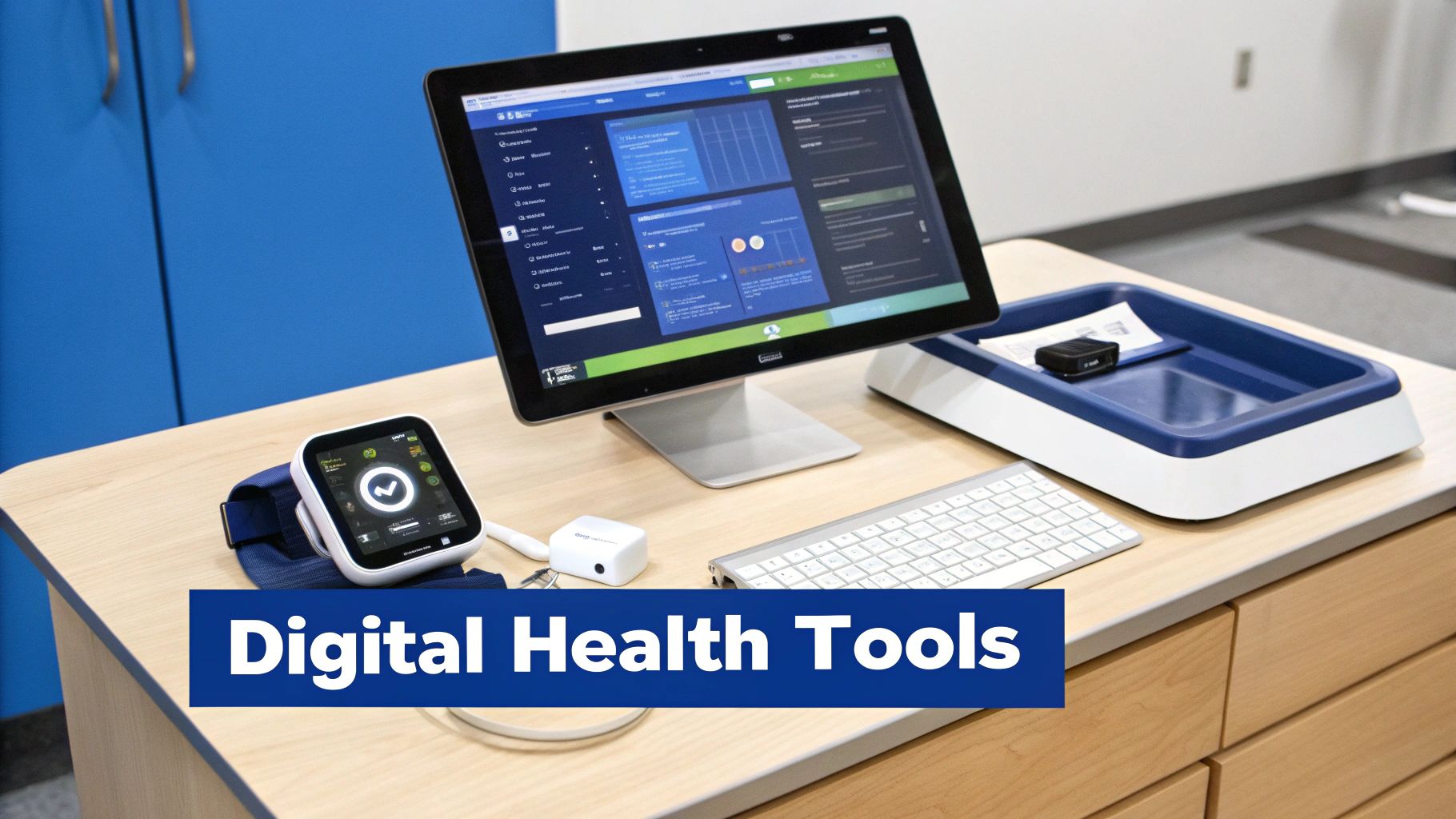
This shift in healthcare isn't some far-off idea; it’s happening right now, built on a foundation of powerful, interconnected technologies. These are the tools actively modernising how care is delivered across Canada. To really grasp what's changing, you need to understand the building blocks.
Think of it like a highly skilled surgical team. Each technology has a specific job, but their true strength is unlocked when they work together. From creating a single, reliable patient story to bringing expert care into the most remote corners of the country, these tools are the engine driving modern medicine forward.
Electronic Health Records: The Digital Patient Story
The heart of it all is the Electronic Health Record (EHR). This is so much more than a digital filing cabinet. An EHR is a living, breathing, patient-centred record, giving authorised clinicians secure and instant access to a patient’s entire medical history—diagnoses, medications, treatment plans, allergies, lab results, and more.
In Canada, EHRs are nearly universal, but there's a catch. While an impressive 95% of physicians use them, a massive 73% say that poor integration between different systems is a serious roadblock to providing smooth, continuous care. This digital disconnect means only 29% can electronically share a patient's clinical summary with a specialist or hospital outside their own practice. All too often, they're forced to fall back on old-school fax machines.
The industry is pushing for better connected care standards, because effective data handling is non-negotiable. It's why robust platforms like modern medical document management systems are so critical for wrangling everything from patient charts to billing.
Telehealth Platforms: Erasing Distance
Telehealth uses digital communication tools to bring the clinic to the patient. It shot into the spotlight during the recent global health crisis, but its value goes far beyond that. We’re talking about virtual consultations, remote health monitoring, and patient education, all without needing an in-person visit.
For Canadians living in rural or remote communities, this isn't just a convenience; it's a lifeline. Telehealth opens up access to specialists who might be hundreds of kilometres away, saving people huge amounts of time and money on travel. It also allows for more frequent, low-effort check-ins for those managing chronic conditions, which leads to much better health outcomes.
Artificial Intelligence: A Partner In Care
Artificial intelligence (AI) is quickly moving from the lab to the bedside, acting as an indispensable partner for clinicians. At its core, AI uses sophisticated algorithms to sift through immense volumes of medical data, spotting patterns and connections that would be impossible for the human eye to see alone.
AI is already making a real impact in Canadian healthcare in several ways:
- Predictive Analytics: Some hospitals in Ontario are using AI models to forecast daily patient admission numbers and flag potential bed shortages, helping administrators manage resources before a crisis hits.
- Medical Imaging: AI algorithms can review MRIs, CT scans, and X-rays to pinpoint the earliest signs of diseases like cancer or stroke. They act as a second set of expert eyes, boosting accuracy for radiologists.
- Operational Efficiency: AI is great at automating tedious administrative work like medical coding and billing. This cuts down on errors and, more importantly, frees up staff to focus on caring for patients. If you're curious, you can explore the full potential of AI-powered healthcare solutions.
The goal of AI in medicine is not to replace clinicians but to augment their abilities. By handling data-intensive tasks, AI empowers healthcare professionals to make faster, more informed decisions, ultimately elevating the quality of care.
The Internet of Medical Things: Proactive Monitoring
The Internet of Medical Things (IoMT) is a network of connected gadgets—wearables, sensors, and medical devices—that collect and share health data in real time. This technology is fundamental to shifting healthcare from a reactive "fix-it-when-it's-broken" model to a proactive one.
Picture this: a patient with diabetes wears a continuous glucose monitor that streams live data to their doctor's clinic. If their blood sugar levels start to drift into a danger zone, the system can automatically alert the care team, who can then intervene before it becomes a serious medical event. The same principle applies to smart inhalers that track usage for asthma patients, giving doctors a clear picture of how well the condition is being managed.
Cloud Computing: The Essential Foundation
Finally, none of this works without cloud computing. It's the unsung hero, the foundational tech that provides the secure, scalable, and on-demand power needed to store and process the torrents of data generated by EHRs, telehealth calls, and IoMT devices.
By moving information to the cloud, healthcare organisations ensure that critical data is available to the right people, at the right time, from anywhere. This fuels better collaboration between different providers and gives every clinician the complete patient picture they need to deliver effective and secure care.
The Real-World Payoff: Unlocking Better Care and a Stronger Bottom Line
Bringing new technology into a healthcare setting isn't just about keeping up with the times. It’s about making a real, measurable difference to both patient outcomes and the long-term health of the organisation itself. This two-sided benefit is what makes the push for digital transformation in healthcare so powerful. On one hand, you see clear improvements in the quality of care. On the other, you get major operational wins that strengthen your business.
It’s important to see these two things as connected. A well-run, digitally-savvy organisation is simply in a better position to deliver exceptional patient care. In the same way, achieving better clinical results builds a stronger reputation and, ultimately, a healthier financial future. Let's dig into what this looks like on the ground.
Elevating Patient Care and Clinical Outcomes
For doctors, nurses, and specialists, digital tools are like a new set of senses. They help them diagnose conditions faster, manage chronic diseases with more precision, and open up access to care for people who might otherwise go without. The entire model begins to shift from just treating sickness to proactively managing wellness, all thanks to better data and communication.
You can see this happening in a few key areas:
- Catching Problems Sooner: AI-powered diagnostic tools are getting incredibly good at analysing medical images like MRIs and CT scans. They can often spot tiny anomalies a person might overlook, leading to earlier cancer detection and a much better chance for successful treatment.
- Breaking Down Geographic Barriers: In a country as vast as Canada, telehealth platforms have been a game-changer. A person living in a remote northern community can now have a virtual consultation with a top specialist in Toronto, eliminating the massive hurdles of travel and time off work. Geography no longer has to determine your quality of care.
- Getting Ahead of Chronic Disease: The Internet of Medical Things (IoMT) is all about continuous monitoring. Imagine someone with a heart condition wearing a small device that tracks their vitals 24/7. Their care team gets an alert if something looks off—long before it becomes a full-blown emergency. This proactive approach keeps people out of the hospital and improves their health over the long haul.
Driving a More Efficient and Sustainable Operation
While patient health will always be the top priority, the business benefits of going digital are what make these improvements possible for the long term. By automating tedious tasks and using data to make smarter decisions, healthcare organisations can cut costs, use their resources more effectively, and become much more nimble.
Think about the ripple effect of small efficiencies across an entire hospital. Every hour saved by automating appointment reminders is an hour a staff member can spend with a patient. This not only makes the patient experience better but also helps reduce the administrative burden that leads to employee burnout.
Digital transformation creates a powerful cycle where operational excellence directly fuels clinical innovation. A financially healthy organisation has the resources to invest in better technology, which in turn leads to better patient outcomes.
A Clear Return on Investment
The business case really comes into focus when you look at specific operational improvements. For instance, predictive analytics can forecast patient traffic, allowing a hospital to schedule staff more effectively and avoid being dangerously shorthanded or wastefully overstaffed. Likewise, a digital supply chain system ensures that crucial medical supplies are always on hand without tying up a ton of money in unnecessary inventory.
This table breaks down how a single digital change can benefit both the clinical and business sides of the operation.
Clinical vs. Business Benefits of Healthcare Digital Transformation
| Area of Impact | Benefit for Patients & Clinicians (Clinical Outcomes) | Benefit for the Organisation (Business Outcomes) |
|---|---|---|
| Data Management | Clinicians get a complete, real-time view of a patient's history, leading to safer and more informed treatment decisions. | Centralised digital records cut down on administrative work, reduce errors, and make it easier to meet regulatory requirements. |
| Patient Scheduling | Patients can easily book, change, and get reminders for appointments, which means fewer missed visits and better continuity of care. | Automated systems dramatically lower no-show rates, which maximises clinic revenue and makes practitioner schedules more efficient. |
| Communication | Secure messaging and telehealth give patients a direct and convenient way to ask questions or have follow-up consults with their care team. | Better communication channels mean fewer administrative phone calls, smoother internal workflows, and higher patient satisfaction scores. |
At the end of the day, investing in the right digital tools isn't just another expense. It's a strategic move toward building a healthcare system that is more resilient, efficient, and truly centred around the patient.
Tackling the Tough Stuff: Canadian Regulations and System Integration
Kicking off a digital transformation in healthcare isn't just a matter of installing new software. Especially in Canada, with its tightly regulated environment, the path is loaded with unique challenges. Getting this right is what separates a project that genuinely improves care from one that just adds more complexity.
You have to go in with a clear-eyed strategy. This means anticipating the roadblocks, from our nation's strict data privacy laws to the technical headache of making brand-new systems talk to ancient ones. It’s all about careful planning and knowing the Canadian landscape inside and out.
Data Privacy Isn't a Suggestion—It's the Law
In healthcare, we're not just dealing with data; we're handling the intimate details of people's lives. Protecting this information isn't just good practice—it's a legal and ethical imperative. In Canada, this is governed by a serious framework of both federal and provincial laws.
Two big pieces of legislation are at the core of it all:
- PIPEDA (Personal Information Protection and Electronic Documents Act): This is the federal law that sets the rules for how private organizations handle personal information.
- PHIPA (Personal Health Information Protection Act): This one is specific to Ontario and gets granular about how personal health information is collected, used, and shared, giving patients real control over their own data.
There's no room for error here. A single data breach can lead to massive fines, a shattered reputation, and a complete loss of patient trust. That’s why a solid, proactive cybersecurity strategy has to be the bedrock of any digital initiative. If you want to dive deeper into these rules, check out our guide on AI in healthcare and data privacy in Canada.
Solving the Interoperability Puzzle
One of the biggest technical mountains to climb is interoperability. In simple terms, it's getting different systems and software to talk to each other and share data smoothly. It's a huge issue because many Canadian hospitals and clinics are still running on legacy systems built decades ago—long before anyone was thinking about a connected health ecosystem.
Imagine trying to plug a new iPhone charger into an old flip phone. They both deal with power, but they speak completely different languages. This digital disconnect creates "data silos," trapping critical patient information in one system and making it invisible to other doctors or specialists who need it.
The whole point is to have a patient's information follow them seamlessly on their care journey—from the family doctor's office, to a specialist, to the hospital—without anyone having to re-enter it or, worse, send a fax.
This is where modern Application Programming Interfaces (APIs) come in. They act like universal translators, building bridges between the old and the new. A well-thought-out integration plan is the key to breaking down these silos and unlocking the real value of shared health information.
Getting Past the Implementation Roadblocks
Beyond the tech and the regulations, you've got the human element. The upfront cost of these projects can be significant, so you need a solid budget and a clear picture of the return you expect to see. But the money is only one piece of the puzzle.
Here’s the hard truth: the best technology in the world is worthless if your team doesn't use it. Change management is absolutely critical, but it’s often an afterthought. Your staff needs more than a quick tutorial; they need thorough training that shows them not just how to use the new tools, but why these new digital workflows will make their jobs easier and improve patient outcomes.
Canada's healthcare sector is moving quickly on AI, with 87% of organizations using it in some form as of 2026. But progress is being held back by some serious concerns. Only 36% have put AI-specific security in place, and a whopping 73% of organizations report that frequent technical glitches and device downtime are slowing things down. To see the full picture, you can discover more insights on Canada's digital crossroads at The Safety Magazine. Overcoming these hurdles means focusing squarely on staff training and support to ensure the promised benefits of digital health actually become a reality.
Your Actionable Roadmap to Digital Implementation
Jumping into a digital transformation project without a clear plan is like trying to navigate a new city without a map. To get where you're going, you need a structured roadmap that breaks your ambitious vision down into a series of clear, manageable steps.
This guide lays out a four-phase approach, designed to walk healthcare leaders from the initial idea all the way to a fully optimised, organisation-wide system. Think of it less like a chaotic sprint and more like a well-planned marathon, with crucial checkpoints along the way to measure progress and adjust your course.
Phase 1: Assessment and Strategy
Before you can even think about new technology, you have to get an honest look at where you are right now. This first phase is all about discovery. It means doing a deep dive into your current systems, workflows, and the everyday frustrations your staff and patients face. What legacy software is holding you back? Where are the biggest bottlenecks?
Once you have that clear picture, you can start defining what success actually looks like. Vague goals like "improving patient care" won't cut it. You need to get specific.
A strong digital strategy is built on concrete targets. Instead of just aiming to "be more efficient," set a Key Performance Indicator (KPI) like "reducing patient no-show rates by 20%" or "improving claims processing speed by 30%."
These precise metrics give you a clear destination and a reliable way to measure your return on investment down the line.
Phase 2: Planning and Vendor Selection
With your goals set, it's time to draw up the blueprints. This is where you create a detailed project plan, secure a budget, and put together your dedicated team. It's also when you start the critical hunt for the right technology and partners.
Choosing a vendor is about much more than just comparing features and price tags. In healthcare, you absolutely must prioritise partners who have a deep understanding of Canadian data privacy laws like PHIPA and PIPEDA. The right partner isn't just a supplier; they're a guide who can help you navigate tricky integrations and complex compliance rules. For many, this is the point where they explore options like custom software development for healthcare to build a solution that fits them perfectly.
Phase 3: Pilot Programs and Implementation
Trying to roll out a massive new system across the entire organisation all at once is a recipe for disaster. The smarter approach? Start small. A pilot program lets you test your new solution in a controlled setting, like a single clinic or department. This keeps the risk low while giving you an incredible opportunity to gather real-world feedback from the people who will use it every day.
This infographic highlights the three major hurdles—security, integration, and training—that you’ll need to clear for a smooth implementation.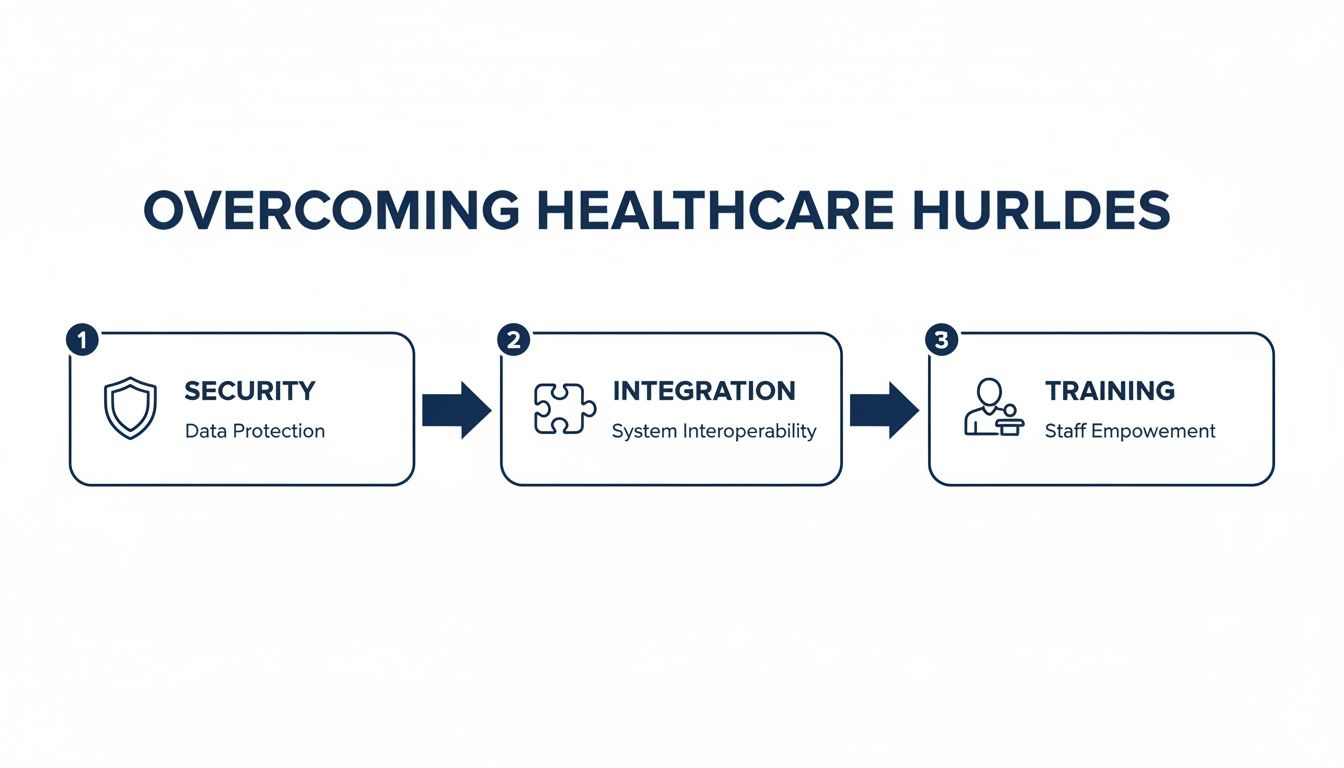
As you can see, the technical side and the human side have to be addressed together for any project to really stick.
During the pilot, you'll uncover unexpected challenges, fine-tune workflows, and make crucial adjustments before you go big. This iterative process means that by the time you're ready for a full launch, the system is already tailored to your unique needs, which dramatically boosts your chances of success.
Phase 4: Scaling and Optimization
Once your pilot is a proven success and you’ve hit those initial KPIs, it’s time to scale up. This final phase is about methodically expanding the solution across the rest of the organisation. But the work doesn’t stop once everyone is on board. True digital transformation isn't a one-and-done project; it’s an ongoing process.
The key to lasting success is a commitment to continuous improvement. That means constantly watching your performance metrics, listening to user feedback, and always looking for new ways to make things better. The data you gather will tell you exactly how the technology is being used and shine a light on where you can make the next enhancement. By building a culture of constant optimisation, you ensure your organisation doesn't just keep up with change—it leads the way.
Why an Expert Partner Is Your Greatest Asset
Let’s be honest: navigating the world of digital transformation in healthcare isn't something you should do alone. You might have a crystal-clear vision for a modern, connected practice, but the road to getting there is paved with technical and regulatory potholes specific to the Canadian healthcare system. This is precisely where a seasoned software development partner becomes indispensable.
Think of it like this: your expertise is in patient care, and theirs is in building the secure, compliant digital tools that elevate that care. Their job is to take your clinical and business headaches and turn them into a high-performance digital solution that actually works for you.
Bridging the Gap Between Technology and the Clinic
A dedicated partner brings a depth of technical knowledge that most healthcare organizations just don't have on staff. They know how to build systems that solve today's problems while being flexible enough to grow with you as new challenges and opportunities arise tomorrow.
This kind of expertise is crucial in a few key areas:
- Staying Compliant: Building software that follows strict Canadian privacy laws like PHIPA and PIPEDA isn't optional—it's the law. An expert partner knows these regulations inside and out.
- Connecting Your Systems: A good partner can design solutions that talk to your existing, older systems, finally breaking down those frustrating data silos that slow everyone down.
- Building Flexibly: Using agile development methods, they build and test your solution in small, iterative steps. This keeps the project flexible and guarantees the final product fits perfectly into your daily workflows.
A true technology partner doesn't just build what you ask for—they work with you to figure out what you really need. They become a strategic guide, making sure every technical choice directly supports your goal of better patient outcomes and a smoother-running practice.
When you hand off the complex technical heavy lifting to a team you trust, your own people are free to concentrate on what they do best: delivering outstanding patient care. This partnership approach ensures your investment pays off with a powerful, custom-built solution that delivers real results and sets you up for success well into the future.
Frequently Asked Questions
Even with a clear plan, the idea of overhauling your clinic’s technology can feel overwhelming. It’s completely normal. Many Canadian healthcare providers we talk to have the same questions about where to start, how to manage the budget, and what the process really looks like.
Let’s tackle some of the most common questions head-on to give you some practical, real-world answers.
What Is the First Step My Clinic Should Take?
Before you even think about new software, start by looking closely at how your clinic runs right now. Take a step back and map out your daily workflows. What's the single biggest headache for your team or your patients?
Is it the constant phone tag just to book an appointment? The nightmare of tracking down physical patient charts? Or maybe the endless manual follow-ups that eat up your staff's time?
Pick that one, high-impact problem and focus on solving it first. Nailing a small, tangible win right out of the gate builds momentum and gives you valuable experience for the bigger projects you'll tackle later on.
How Can Small Healthcare Practices Afford This?
You don’t need a multi-million dollar budget to get started. The idea that digital transformation has to be a massive, one-time expense is a myth. For smaller practices, the trick is to think smart and start small.
Many of the best modern healthcare tools are cloud-based, working on a subscription model (often called Software as a Service, or SaaS). This means you avoid the huge upfront cost of buying and maintaining your own servers. You could begin with something as simple as a secure telehealth platform or an automated patient reminder system.
Think about it this way: if a simple automated reminder system prevents just a few patient no-shows each week, it can easily pay for its own subscription cost. The technology pays for itself while making your clinic run more smoothly.
How Long Does a Typical Project Take?
There’s no one-size-fits-all answer here—it really depends on the project's size and complexity. Implementing a simple tool, like an automated system for appointment reminders, could be up and running in just a few weeks.
On the other hand, rolling out a brand new Electronic Health Record (EHR) system across an entire hospital network is a much bigger undertaking that could easily take over a year.
The best approach is to break down your big goals into smaller, manageable phases, each with its own timeline. For example, you could run a pilot program for a new tool in a single department over three to six months. This gives you crucial feedback and real-world data before you commit to a full-scale launch.
Navigating digital transformation in healthcare requires a partner who gets both the technology and the unique challenges of the Canadian system. Cleffex specializes in building secure, compliant, and reliable software that helps clinics and hospitals provide better care. To see how we can help guide your journey, learn more about our work at https://www.cleffex.com.