

Welcome to the future of online retail, where data-driven decisions and automated workflows are no longer a luxury but a necessity for survival and growth. As customer expectations rise and competition intensifies, leveraging the right AI tools for ecommerce is critical to delivering personalised experiences, optimising operations, and ultimately, boosting your bottom line.
From intelligent search and dynamic pricing to generative AI for product descriptions and 24/7 customer support chatbots, artificial intelligence is reshaping every facet of the digital storefront. The sheer number of options, however, can make choosing the right solution a challenge. Which tools genuinely deliver a return on investment? How do you integrate them effectively without disrupting your existing operations? To dive deeper into specific AI applications relevant for your online store, explore the various available options, including the best AI content creation tools.
This comprehensive guide cuts through the noise. We will explore 11 of the most impactful AI tools and platforms, categorised by their primary function, to help you make informed decisions. Each entry includes direct links and screenshots to clarify its value proposition. We'll delve into specific use cases, weigh their pros and cons, and provide practical implementation advice. For businesses looking to go beyond off-the-shelf solutions, a skilled software development company can provide the custom integrations and AI-powered ecommerce development needed to unlock AI's full potential and create a truly unique competitive advantage.
1. Shopify App Store
For businesses built on Shopify, the official App Store is the most direct and integrated starting point for leveraging AI. It’s not a single tool, but a vast marketplace featuring a rapidly expanding catalogue of AI-powered applications designed specifically for the platform. This makes it an essential hub for any Shopify merchant looking to implement AI tools for ecommerce with minimal friction. The key advantage is the deep data access these apps have, tapping directly into your store’s product, customer, and order information for more accurate and effective outcomes.
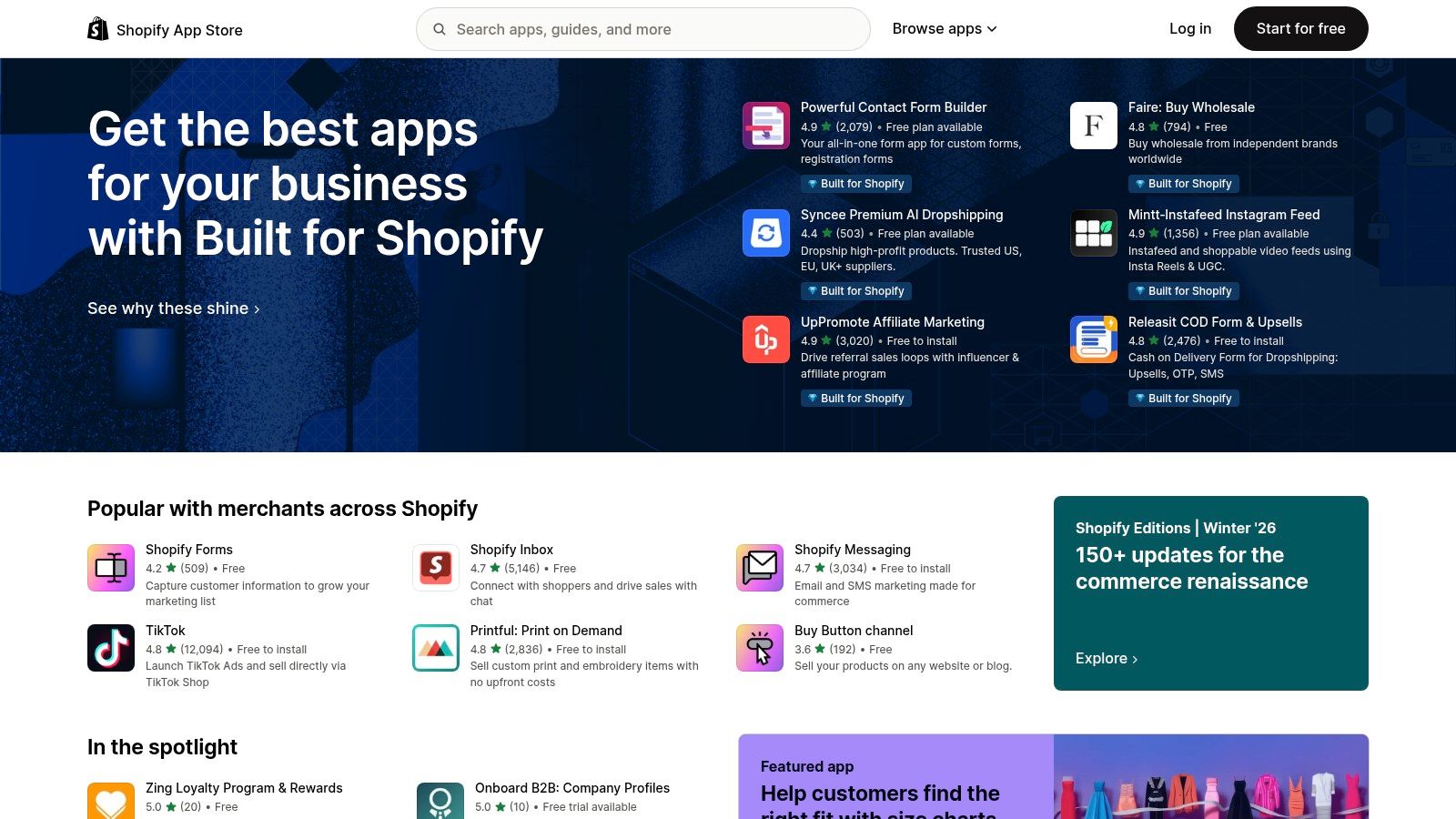
Unlike standalone platforms, Shopify apps benefit from one-click installations, consolidated billing through your existing Shopify account, and a built-in review system to help gauge quality. This ecosystem simplifies the entire process, from discovery to implementation. Many apps also offer freemium tiers or free trials, allowing merchants to experiment with different AI solutions without significant upfront investment. While app quality can vary, the sheer breadth of choice ensures there are powerful options for personalisation, AI-driven search, customer support chatbots, and content generation. For businesses seeking a more tailored approach beyond off-the-shelf apps, working with a software development company can help create custom solutions that integrate seamlessly.
Key Features & Use Cases
Integrated AI Search: Apps like Searchanise or Doofinder use AI to deliver smarter, faster search results and personalised product recommendations.
Automated Customer Support: Install chatbots like Tidio or Gorgas to handle common customer queries 24/7, freeing up human agents.
Content Generation: Use apps to auto-generate product descriptions, blog posts, and SEO meta tags, saving countless hours.
Native Shopify AI: Leverage built-in features like Shopify Magic to simplify store setup and content creation directly within the Shopify admin panel.
Website: https://apps.shopify.com
2. BigCommerce Apps Marketplace
For merchants on the BigCommerce platform, the official Apps Marketplace serves as a curated ecosystem for integrating powerful AI tools for ecommerce. Similar to Shopify's offering, it is not a singular tool but a comprehensive directory of third-party applications. What sets it apart is its strong focus on enterprise-level functionality and its suitability for more complex, headless, and composable architectures. This makes it an ideal hub for B2B and multi-storefront businesses looking to add sophisticated AI capabilities without being locked into a rigid structure.
The marketplace’s key strength lies in its verified partner ecosystem. BigCommerce rigorously vets its partners, ensuring a high standard of quality and seamless integration. This is particularly valuable for larger businesses that require robust, scalable solutions for AI-driven search, merchandising, and recommendations. While discovery can sometimes require navigating to partner pages to complete a purchase, the platform’s architecture ensures that these tools can deeply integrate with your store’s data for highly effective, personalised customer experiences. This makes it a strong foundation for any AI-powered ecommerce development project.
Key Features & Use Cases
Advanced AI Search & Merchandising: Integrate with partners like Klevu or Searchspring to deliver AI-powered search, personalised product recommendations, and automated merchandising rules.
B2C and B2B Functionality: Leverage apps designed for complex B2B workflows, such as intelligent reorder prompts or recommendations that are aware of minimum order quantities (MOQs).
Composable and Headless-Friendly: Many apps are built with APIs first, making them perfect for custom, headless commerce setups where flexibility is paramount.
Verified Partner Integrations: Rely on a curated list of certified partners, ensuring high-quality, reliable, and secure integrations for enterprise-level implementations.
Website: https://www.bigcommerce.com/apps
3. WooCommerce Marketplace
For the millions of businesses running on the WordPress and WooCommerce ecosystem, the official WooCommerce Marketplace serves as a crucial starting point. It functions as an extension store, not a single tool, offering a wide array of add-ons that bring the power of AI tools for ecommerce directly into the WordPress dashboard. This deep integration is its core strength, allowing plugins to seamlessly access your product catalogue, customer data, and order history for more contextual and effective AI implementation.
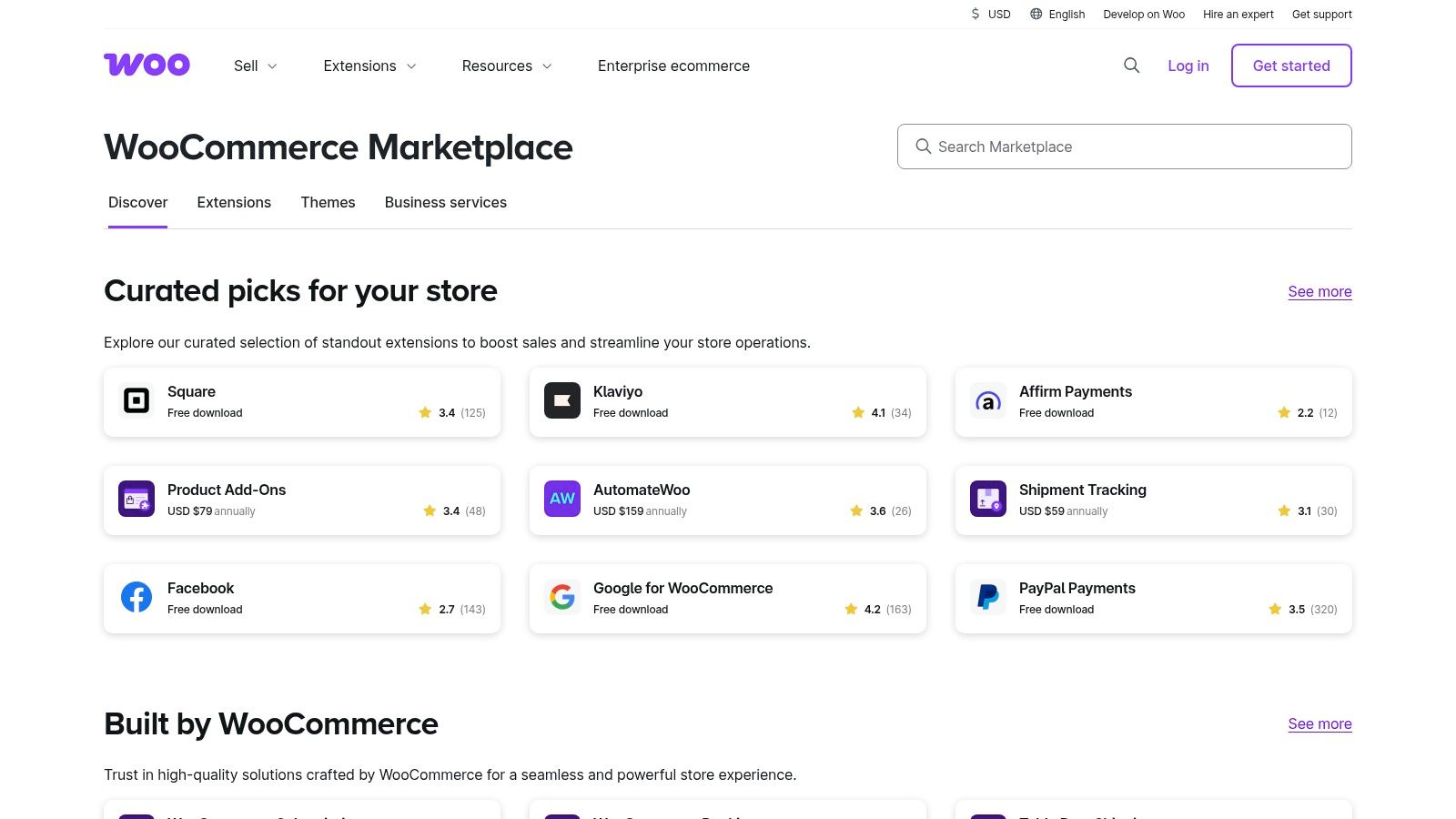
Unlike closed-platform app stores, the WooCommerce Marketplace offers significant flexibility and often more transparent pricing, with many extensions available for a one-time fee or a clear annual licence. This makes it particularly accessible for small to medium-sized businesses looking to experiment with AI without committing to high monthly subscriptions. While the quality can vary between third-party developers, the 30-day money-back guarantee on many products provides a safety net. For businesses needing more advanced capabilities or custom-built AI features, an experienced ecommerce development provider can create bespoke plugins that perfectly match specific operational needs.
Key Features & Use Cases
AI Content Generation: Install extensions to auto-generate compelling product descriptions, SEO-optimised titles, and even entire blog posts directly within your product editor.
Intelligent Chat & Shopping Assistants: Deploy AI chatbots that act as personal shopping assistants, helping users find products and answering queries.
Personalised Recommendations: Use AI-driven plugins to analyse customer behaviour and display highly relevant product recommendations on shop and product pages.
Direct WooCommerce Integration: All extensions are built to work natively with WooCommerce, ensuring smooth access to product data, categories, and tags.
Website: https://woocommerce.com/products
4. Adobe Commerce (Magento) Marketplace
For enterprise-level merchants using Adobe Commerce (formerly Magento), the official marketplace is a critical resource for advanced AI tools for ecommerce. Similar to Shopify's ecosystem, it serves as a centralised hub for extensions but is tailored to the complex needs of larger, more sophisticated online stores. Its primary strength lies in the deep integration with Adobe's powerful AI engine, Adobe Sensei, which drives native features like live search and intelligent product merchandising, providing a robust foundation for personalisation.
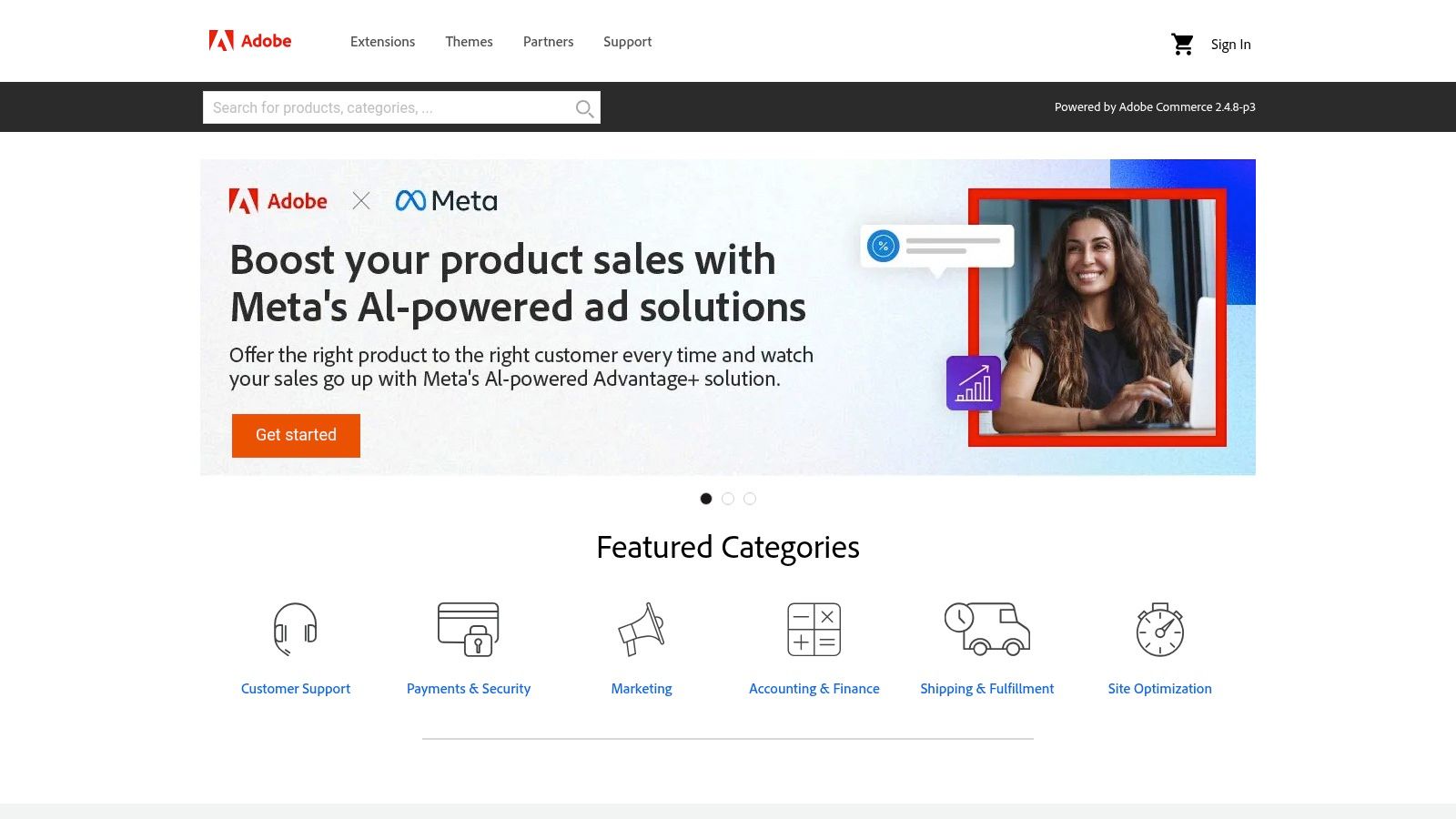
Unlike simpler platforms, the Adobe Commerce Marketplace offers a mix of native AI and best-in-class third-party extensions, giving businesses the flexibility to choose solutions that fit their specific technical stack and budget. While many solutions are geared towards enterprise clients with custom pricing, this reflects the platform's capacity for handling complex catalogues and high-volume traffic. For businesses requiring custom functionality or integration support, partnering with an ecommerce development provider is often a necessary step to fully leverage these powerful tools and realise their potential. This ensures that even the most advanced AI features are configured correctly within a complex architecture.
Key Features & Use Cases
Adobe Sensei AI: Powers native features like Live Search for highly relevant, real-time search results and Product Recommendations to boost average order value.
Intelligent Merchandising: Automatically sorts category pages based on shopper behaviour, conversion rates, or other business rules to optimise product visibility.
Third-Party AI Extensions: The marketplace is rich with partner-built tools for advanced recommendations, personalised content, fraud detection, and automated marketing.
Enterprise-Grade Capabilities: Extensions often support multi-language, multi-store, and complex B2B functionalities, making them suitable for global operations.
Website: https://commercemarketplace.adobe.com
5. G2
For businesses navigating the complex landscape of AI tools for ecommerce, G2 serves as an essential peer review and software discovery platform. Rather than being a single tool, it’s a comprehensive marketplace where you can compare different AI-enabled ecommerce solutions side-by-side, from personalisation engines to chatbots. Its value lies in providing aggregated, real-world user feedback, which helps cut through marketing hype and identify tools that genuinely deliver on their promises. This makes it an indispensable research hub before committing to a vendor.
G2 empowers decision-makers by offering detailed vendor profiles, satisfaction ratings, and unfiltered reviews from verified users. You can quickly see how platforms like Nosto, Kameleoon, or Optimizely stack up against each other based on ease of use, quality of support, and feature sets. This peer-driven insight is critical for shortlisting potential partners and understanding the practical pros and cons of each solution before investing time in demos. While detailed pricing is often omitted, the platform excels at facilitating the initial discovery and comparison phase of your procurement process.
Key Features & Use Cases
Peer Reviews and Comparison: Access authentic user reviews and use comparison tools to evaluate vendors based on satisfaction ratings, features, and implementation ease.
Detailed Filtering: Use filters specific to AI and machine learning capabilities to narrow down the options for ecommerce personalisation, pricing optimisation, or automated support.
Vendor Shortlisting: Quickly create a shortlist of top-rated AI tools and directly request demos or quotes from vendors through the platform.
Aggregated Pros & Cons: View synthesised lists of the most commonly cited advantages and disadvantages for each tool, saving hours of manual research.
Website: https://www.g2.com/categories/e-commerce-personalization
6. Capterra
While not an AI tool itself, Capterra is an indispensable research platform for discovering and comparing thousands of software options, including a vast array of AI tools for ecommerce. As a Gartner-owned software directory, it provides a crucial starting point for businesses to survey the market, understand pricing landscapes, and identify potential vendors. Its structured layout, featuring user reviews, feature grids, and side-by-side comparisons, allows you to quickly shortlist solutions for everything from AI-powered personalisation engines to automated inventory management. This makes it an essential first step before committing to demos or trials.
The platform’s real value lies in its breadth and organisational structure. You can filter by business size, industry, and specific features, narrowing down a crowded market to the most relevant tools for your needs. Capterra’s focus on providing pricing snapshots and direct comparisons helps businesses create a realistic budget and understand the competitive landscape. However, it's important to remember that some profiles are sponsored, and listed pricing may be indicative rather than final. For complex needs that off-the-shelf tools can't meet, partnering with a software development company can provide a bespoke solution tailored to your specific operational requirements.
Key Features & Use Cases
Cross-Category Research: Compare solutions across different ecommerce functions like AI chatbots, pricing optimisation, and marketing automation, all in one place.
Feature Comparison Grids: Use detailed grids to see how top contenders stack up against each other on key functionalities, speeding up your evaluation process.
Vendor Shortlisting: Leverage user reviews and alternative vendor recommendations to build a high-quality shortlist of tools to investigate further.
Price Benchmarking: Get an initial understanding of market rates and subscription models to inform your budget before engaging with sales teams.
Website: https://www.capterra.com
7. Algolia
Algolia is a developer-centric AI search and discovery platform that has become a staple for high-performance ecommerce sites. It moves beyond basic keyword matching by using a sophisticated hybrid model, blending traditional keyword search with modern vector-based semantic search. This allows it to understand user intent and context, delivering highly relevant results even for long-tail or vaguely worded queries. As one of the most powerful AI tools for ecommerce, its strength lies in providing a lightning-fast, intuitive search experience that directly impacts conversion rates.
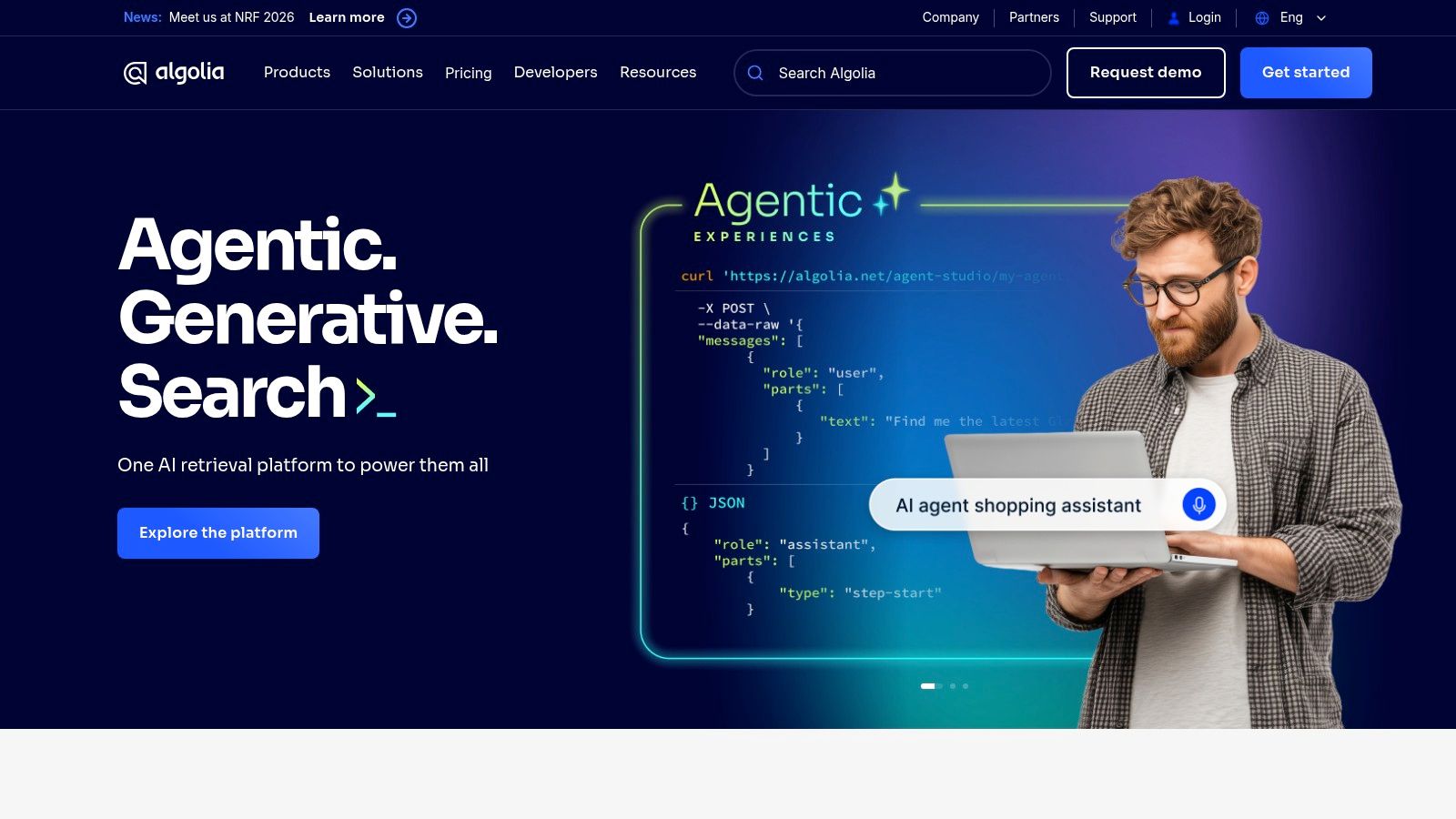
The platform is renowned for its speed and scalability, processing queries in milliseconds regardless of catalogue size. Algolia offers robust SDKs and pre-built connectors for major platforms like Shopify and Adobe Commerce, which simplify integration. While it's highly accessible with a generous free tier for testing, unlocking its full potential often requires development resources to fine-tune its implementation. For businesses needing a more customised integration, partnering with an AI-powered ecommerce development expert can ensure the search solution is perfectly aligned with specific business logic and data models. Its transparent entry-level pricing and strong analytics make it a quantifiable investment in customer experience.
Key Features & Use Cases
NeuralSearch: A hybrid engine combining semantic and keyword search to better understand customer intent and improve the relevance of results.
AI Synonyms & Dynamic Re-ranking: Automatically detects and suggests synonyms while dynamically re-ordering search results based on user behaviour and business metrics.
Personalised Recommendations: Delivers tailored product suggestions and merchandising rules to personalise the shopping journey for each user.
Broad Connectivity: Offers extensive SDKs and connectors for seamless integration into both monolithic platforms and composable commerce stacks.
Website: https://www.algolia.com
8. Bloomreach
For mid-market and enterprise retailers, Bloomreach provides an end-to-end Commerce Experience Cloud, unifying AI-driven product discovery with powerful marketing automation. It moves beyond single-point solutions to offer a connected platform covering search, merchandising, personalisation, and conversational commerce. This integrated approach allows businesses to create cohesive, intelligent customer journeys from the first click to the final purchase, making it one of the more comprehensive AI tools for ecommerce available for larger operations. Its strength lies in its massive commerce data set, which fuels its AI to deliver highly relevant and contextual experiences.
Bloomreach is engineered for businesses that have outgrown simpler tools and require a sophisticated, data-centric platform to manage complex catalogues and customer segments. Its modular structure allows companies to adopt the features they need, such as AI-powered search, email personalisation, or conversational agents, and expand as they grow. However, its enterprise focus means pricing is typically customised and requires sales engagement, making it less accessible for smaller merchants. For businesses seeking similar capabilities through a custom build, an AI-powered ecommerce development partner can deliver tailored solutions.
Key Features & Use Cases
AI-Powered Discovery: Utilise intelligent search, visual search, and dynamic merchandising to help customers find relevant products faster.
Engagement Platform: Create personalised marketing campaigns across email, SMS, and web channels using a single, unified customer data view.
Conversational Commerce: Deploy AI chatbots and conversational agents (Loomi AI) to guide shoppers, answer questions, and facilitate purchases.
Advanced Merchandiser Controls: Give merchandising teams powerful tools to fine-tune AI recommendations, set business rules, and analyse performance.
Website: https://www.bloomreach.com
9. Nosto
Nosto is a specialised Commerce Experience Platform that leverages AI to deliver a deeply personalised shopping journey. It focuses on the entire customer lifecycle, from initial site search and product discovery to post-purchase upsells. This makes it one of the most comprehensive AI tools for ecommerce for brands aiming to optimise every touchpoint. The platform is particularly popular with enterprise-level merchants and Shopify Plus stores due to its robust infrastructure and granular control over merchandising rules.
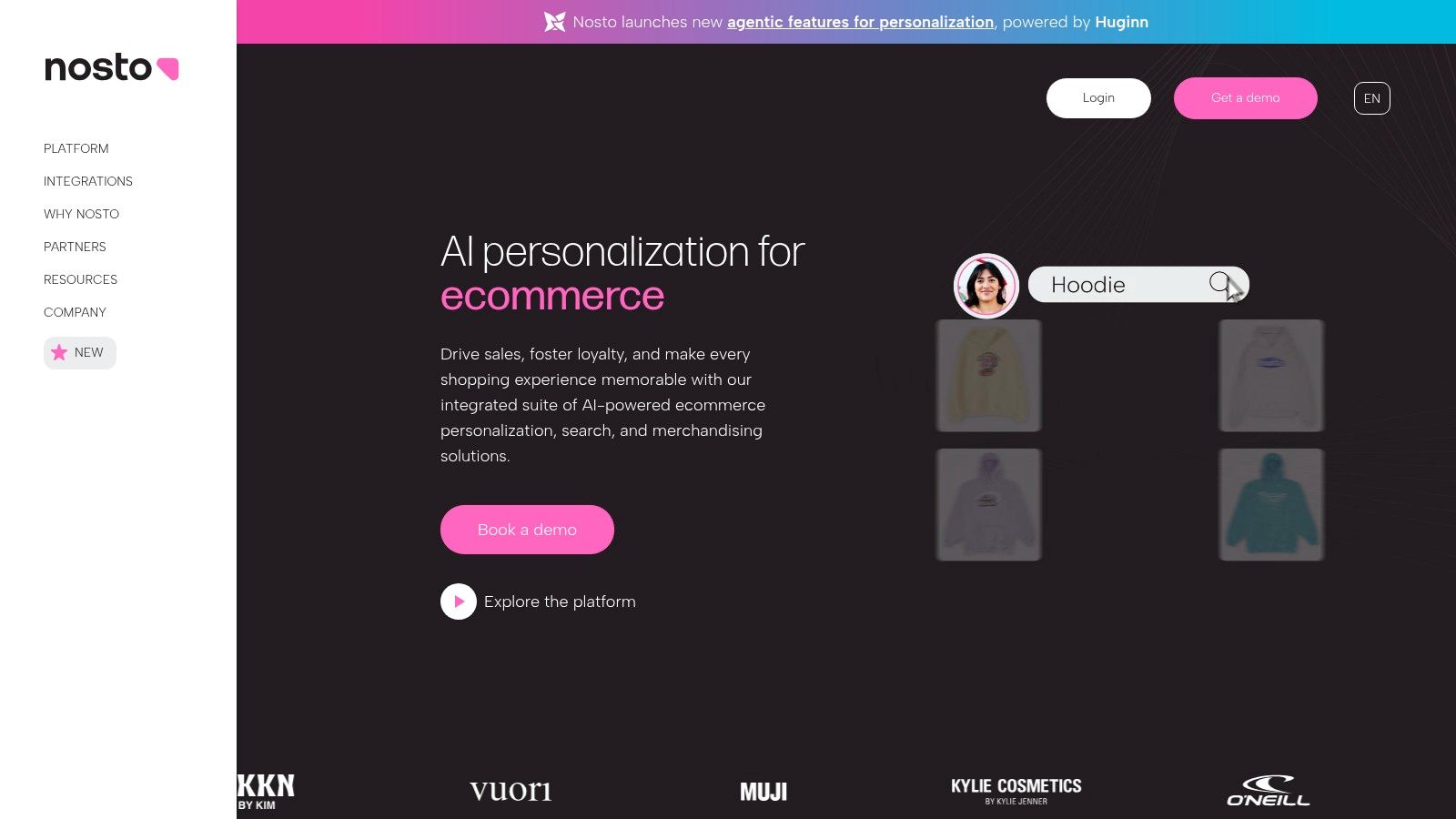
Unlike more generalised tools, Nosto is built exclusively for retail, allowing its algorithms to be finely tuned for commerce-specific behaviours and outcomes. Its strength lies in combining AI automation with manual merchandising controls, giving brands the power to override algorithms for specific campaigns or business goals. While pricing is customised and requires contacting their sales team, the platform's proven scale and dedicated support make it a top contender for serious online retailers. You can learn more about ecommerce personalisation to understand how these advanced features drive revenue.
Key Features & Use Cases
AI-Powered Personalisation: Delivers dynamic product recommendations, personalised content, and targeted pop-ups based on real-time user behaviour.
Intelligent Site Search: Goes beyond keyword matching to provide context-aware results, visual search, and personalised search experiences.
Category Merchandising: Allows for AI-driven sorting of category pages while giving merchandisers manual control to pin products or apply specific rules.
Post-Purchase Upsells: Includes powerful tools for creating personalised recommendations on the checkout and thank-you pages, a key feature for Shopify Plus merchants.
Website: https://www.nosto.com
10. Rebuy
Rebuy is a powerful personalisation engine designed primarily for Shopify stores, focusing on maximising average order value (AOV) and lifetime value. It uses an intelligent merchandising platform to deploy AI-driven upsells, cross-sells, and product recommendations at the most critical touchpoints in the customer journey. By analysing historical purchase data and real-time user behaviour, Rebuy’s AI tools for ecommerce can present the right offer to the right customer at the right time, from the homepage to the post-purchase thank you page.

What sets Rebuy apart is its laser focus on revenue-generating actions through its Smart Cart™, checkout, and post-purchase offer widgets. These components are not just static recommendations; they are dynamic, A/B testable, and deeply integrated with the Shopify checkout flow. This allows merchants to experiment and optimise their strategies for maximum impact. While the platform is incredibly robust out of the box, its full potential for enterprise-level brands is often unlocked through customisation, an area where an ecommerce development provider can add significant value by tailoring the logic to specific business goals. The pricing is transparent but scales with order volume, making it more suitable for stores with established traffic.
Key Features & Use Cases
Smart Cart™ and Checkout Upsells: Add AI-powered product recommendations directly within the cart or at checkout to increase AOV before payment.
Post-Purchase Offers: Present one-click offers on the thank you page, converting a completed order into another sales opportunity.
Dynamic Bundles: Automatically suggest and create product bundles based on what customers are viewing or have in their cart.
A/B Testing: Test different offers, placements, and AI models against each other to continuously improve conversion rates and revenue.
Website: https://www.rebuyengine.com
11. Ada
Ada is an enterprise-grade platform that moves beyond simple chatbots to deliver generative AI customer service across every channel, including chat, email, voice, and social media. Designed for high-volume ecommerce brands, it excels at automating complex customer workflows like checking order status, processing returns, and answering detailed product questions at a massive scale. This positions it as one of the premier AI tools for ecommerce for businesses focused on operational efficiency and providing consistent, high-quality support. The platform’s strength lies in its ability to orchestrate multiple large language models (LLMs) and integrate deeply into backend systems to fetch live order data and authenticate customers.
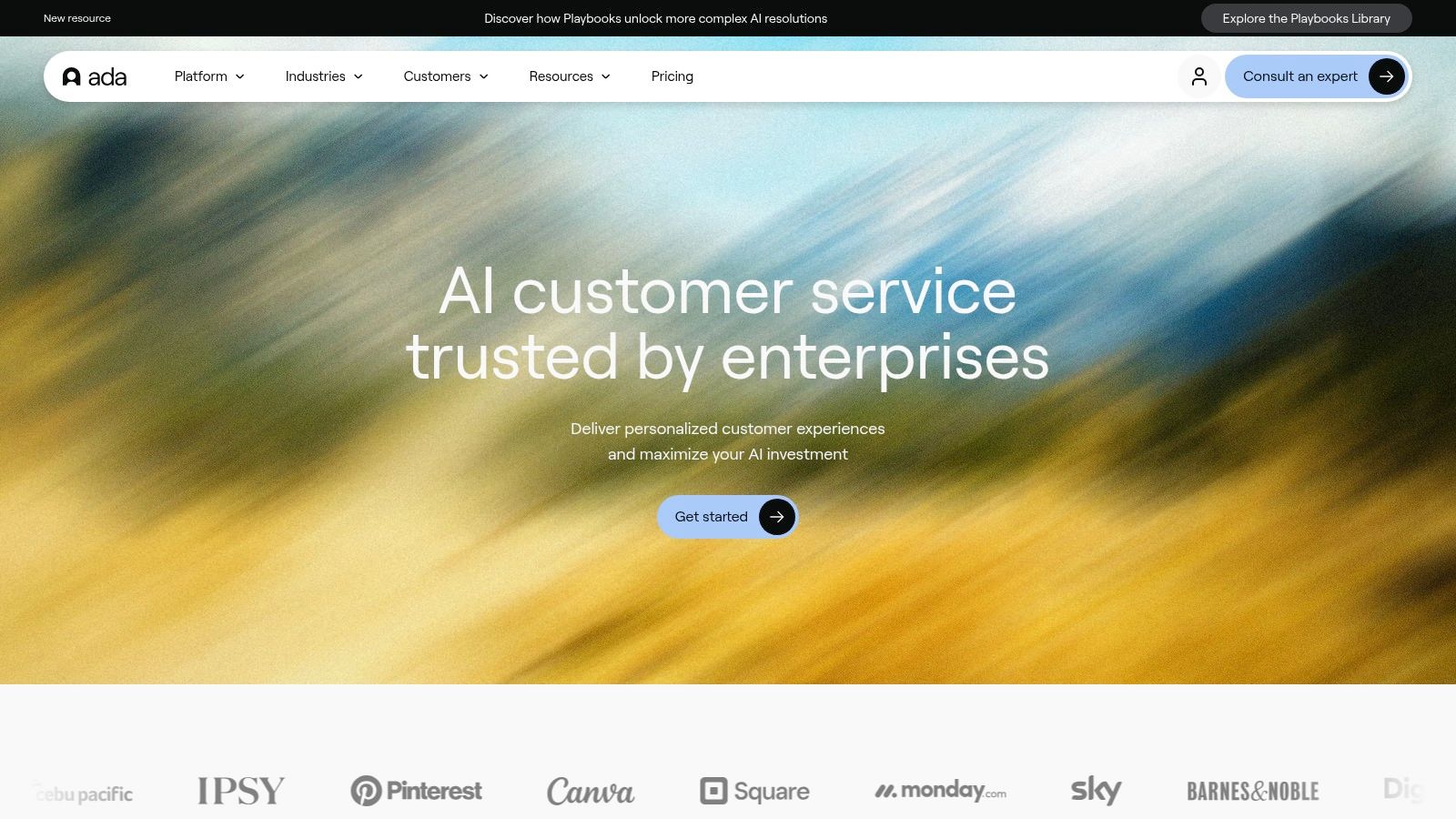
Unlike simpler tools, Ada is built for security and compliance, with SOC 2, GDPR, and HIPAA options available, making it a strong choice for retailers in regulated markets or those handling sensitive data. Its proven case studies demonstrate significant reductions in human agent workload and measurable improvements in customer resolution times. While pricing is not public and geared towards enterprise contracts, its capabilities for brands requiring multilingual support and secure human agent handoffs are unparalleled. For those interested in the strategic benefits, you can learn more about how an AI chatbot for ecommerce can boost sales.
Key Features & Use Cases
Multichannel AI Agents: Deploy a single, consistent AI agent across your website chat, email, voice channels, and social media platforms.
Deep Integrations: Authenticate customers and pull real-time data from ecommerce platforms and CRMs to resolve order, shipping, and return queries.
Enterprise-Grade Security: Meets stringent compliance standards like SOC 2, GDPR, and HIPAA, ensuring customer data is handled securely.
Secure Human Handoff: Provides a seamless and secure transition from the AI agent to a human support representative when necessary.
Website: https://www.ada.cx
Top 11 AI eCommerce Tools – Comparative Overview
| Product | Core features | UX & Key benefits | Target audience | Pricing / Deployment |
|---|---|---|---|---|
| Shopify App Store | Marketplace of apps (search, recommendations, chat, content, SEO); one-click install; native Shopify AI | Lowest-friction deployment; many freemium trials; deep Shopify data access | SMB → enterprise merchants wanting quick AI add-ons | Freemium/tiers; immediate install; vendor quality varies |
| BigCommerce Apps Marketplace | Curated partners for AI search, recommendations, merchandising; headless/composable connectors | Enterprise-friendly, verified partners; good for B2B/composable stacks | Enterprises, B2B merchants, headless architectures | Partner-based pricing; moderate integration effort |
| WooCommerce Marketplace | AI extensions for content, chat, recommendations; WordPress/WooCommerce integration | Low-cost entry; transparent one-time/annual licences; fast to test | SMBs on WordPress/WooCommerce | One-time or annual licensing common; easy installs; vendor quality varies |
| Adobe Commerce (Magento) Marketplace | Adobe Sensei + third-party AI extensions for search, merchandising, content | Deep enterprise integrations; native merchandising with Adobe stack | Enterprise merchants and complex stores | Custom/vendor pricing; heavier technical setup |
| G2 | Review marketplace with filters, ratings, peer reviews, comparisons | Up-to-date peer insights and satisfaction ratings; helps shortlist vendors | Buyers researching and shortlisting vendors | Free to browse; pricing often not listed on profiles |
| Capterra | Software directory with pricing snapshots, feature grids, alternatives | Useful for price benchmarking and initial market scans | Procurement teams and initial vendor research | Free to browse; some sponsored profiles; verify vendor pricing |
| Algolia | NeuralSearch (semantic + keyword), AI synonyms, re-ranking, recommendations, SDKs/connectors | Fast, scalable search; transparent entry pricing and free tier; strong analytics | Developer-focused merchants; mid-market → enterprise | Free tier; tiered pricing; enterprise features require higher plans |
| Bloomreach | Commerce Experience Cloud: AI search, merchandising, marketing automation, conversational | End-to-end personalisation stack; strong analytics and merch tools | Mid-market → enterprise retailers | Module/usage-based pricing; sales engagement required |
| Nosto | AI personalisation, site search, checkout/thank-you recommendations, upsell | Proven enterprise scale; deep Shopify integration; granular merchandising | Shopify / Shopify Plus merchants and enterprise brands | Contact sales; pricing not public; app/account required |
| Rebuy | AI upsell/cross-sell, Smart Cart, dynamic bundles, post-purchase offers, A/B testing | Clear pricing tiers; quick to launch; revenue-focused at checkout | Shopify merchants focused on checkout and post-purchase revenue | Transparent tiers; pricing scales with order volume |
| Ada | Multichannel generative AI agents for chat/email/voice/social; LLM orchestration; order integrations | Enterprise-grade compliance and controls; proven operational savings | Enterprise ecommerce brands needing automated CX at scale | Enterprise contracts; custom pricing; higher cost |
Choosing Your Path: How to Integrate AI for Maximum Impact
Navigating the landscape of AI tools for ecommerce can feel overwhelming, but the journey from consideration to implementation is a strategic one that can redefine your business. We've explored a wide array of solutions, from the foundational marketplaces of Shopify and BigCommerce to specialised platforms like Algolia for search and Ada for customer interaction. The key takeaway is that artificial intelligence is no longer a futuristic concept; it's a practical, accessible, and powerful lever for growth available to businesses of all sizes today.
The central theme is not about adopting AI for its own sake, but about strategically deploying it to solve your most pressing business challenges. Your path forward begins with a clear diagnosis of your operational pain points. Is your team bogged down by manual product content creation? Are you losing customers due to a clunky site search experience? The tools we've detailed offer targeted solutions for these very issues, providing a clear starting point.
A Strategic Framework for AI Adoption
A successful AI integration is a measured, iterative process. Rushing to implement multiple tools at once can lead to fragmented data, a disjointed customer experience, and a poor return on investment. Instead, consider this phased approach:
Identify High-Impact Areas: Pinpoint the one or two areas where AI could deliver the most significant, immediate value. For many, this is either enhancing customer support with a chatbot or improving product discovery with intelligent search and personalisation.
Start Small and Measure: Select a single tool that directly addresses your primary pain point. Set clear key performance indicators (KPIs) before you begin, such as conversion rate, average order value, or customer satisfaction scores. This allows you to quantify the tool's impact objectively.
Analyse and Iterate: After an initial period, analyse the results. What worked well? What were the limitations? This data-driven feedback loop is crucial for refining your strategy and deciding where to invest next.
Beyond Off-the-Shelf: When Customisation is Key
While platforms like Nosto and Rebuy offer powerful, ready-made solutions, they are built to serve a broad market. Your business is unique, with its own specific workflows, customer segments, and integration needs. There will be times when an off-the-shelf tool doesn't quite align with your brand's bespoke requirements or fails to integrate seamlessly with your existing tech stack.
This is where a custom-built solution becomes a competitive advantage. Partnering with a skilled software development company like Cleffex allows you to move beyond the constraints of pre-packaged software. We specialise in AI-powered ecommerce development, creating tailored AI engines that are woven directly into the fabric of your business operations. When considering the best approach for integrating AI into your customer support, for instance, it's helpful to explore the various options available, as we explored in our software development company solutions guide, including comparing different models for AI-driven help desk services to understand if a custom, in-house, or outsourced model fits best.
By choosing a dedicated ecommerce development provider, you gain an AI toolkit designed exclusively for your goals. The future of online retail is intelligent, personalised, and efficient. The right AI tools for ecommerce, whether out-of-the-box or custom-developed, are your key to unlocking that future and building a more resilient, customer-centric brand. To learn more about our expertise and how we help businesses like yours thrive, get to know our team by visiting our about us page.
Ready to unlock the full potential of AI for your online store, but not sure where to start? Cleffex Digital Ltd specialises in building and integrating custom AI solutions that drive real business results. Contact us today to discuss how we can tailor an AI strategy that fits your unique ecommerce needs and sets you apart from the competition.